Rechargeable or battery? And how bright do you really need?
Before you compare a single spec, settle two things: how the torch is powered, and how much light you actually need. A USB-rechargeable headlamp like the Nitecore NU25 or the Petzl Actik Core means no more buying AAAs - you top it up from any phone charger - which is cheaper and tidier over time. A battery model like the Energizer takes a fresh set of AAAs and keeps going, which is the safer bet deep in the bush where there is no power point for days. Brightness, measured in lumens, is the other half: around 250 to 350 lumens handles camping, the shed and dog walks comfortably, while 450 lumens and up is for spotting distant trail markers and fast night running.
The six picks below run from an Energizer up to a Petzl Actik Core, and they cover every use: a budget all rounder, a 5 pack so you always have one to hand, two trusted trail lamps, the lightest rechargeable, and a premium do everything torch. The other things worth weighing as you read are beam type - wide flood for close-up tasks versus a tighter spot for distance - a red mode to protect your night vision, water resistance shown as an IPX rating, and weight, because anything sitting on your forehead for hours needs to be light.
Energizer Vision HD+ 360 Lumen Head Torch
If you just want a bright, reliable head torch without overthinking it, the Energizer is the entry point and the easy budget winner. It is the cheapest pick here, yet it puts out 360 lumens, plenty for camping, the shed and walking the dog after dark, with custom optics that spread light to the sides as well as straight ahead.
It runs seven modes, including dedicated red and green settings that drop it to a dim, night-vision-friendly glow that is easier on your eyes and attracts fewer insects. It is IPX4 water-resistant with a shatterproof lens and survives a 1 metre drop, so it copes with the knocks a torch actually gets. The trade-off at this price is that it runs on 3 AAA batteries rather than a USB charge, so you carry spares on long trips - though the batteries are included, so it works straight out of the box.
EverBrite Headlamp 5-Pack
The EverBrite 5-pack is the pick when your real problem is never having a head torch to hand. For roughly the price of one mid-range lamp you get five, so you can keep one in the car, one in the camping tub, one in the shed and still have spares - which is exactly the moment a torch earns its keep.
Each lamp weighs just 60 g, runs five modes across white, red and green, and has a memory function that remembers your last setting, which is handy if you mostly reach for red. They put out 300 lumens on high and run on AAA batteries, all included. The honest trade-offs are that these are dimmer than the single premium lamps in this guide and they run on batteries rather than recharging, so this is about coverage and always having one within reach rather than outright performance.
Petzl Tikkina Headlamp
The Petzl Tikkina is the pick if you want a head torch from a brand hikers trust, kept refreshingly simple. One button cycles three brightness levels up to 250 lumens and that is the entire interface, which is precisely what you want fumbling around a dark campsite rather than scrolling through menus.
Its standout number is runtime: up to 120 hours, so it lasts a multi-day trip on one set of batteries, and at 81 g with an IPX4 rating and a 5-year guarantee it is built to be carried and trusted. It uses Petzl's hybrid design, so it takes 3 AAA batteries now and can later run on the rechargeable CORE pack. The honest caveats are that 250 lumens is the dimmest top-end here, so it is not the torch for picking out distant trail markers, and it has no red night-vision mode.
Black Diamond Spot 325 Headlamp
The Black Diamond Spot 325 is the pick if you want a noticeably brighter, better-built beam and you head out in real weather. At up to 325 lumens of warm white light it throws further than the Tikkina, and the warm tint is gentler on the eyes than harsh cool-white LEDs, with a red night-vision mode to protect your dark adaption.
Its PowerTap feature lets you dim the beam by tapping the side of the housing, and it is properly waterproof - water can even get into the battery compartment without stopping the lamp, you simply dry it out afterwards. It runs on 3 AAA batteries, giving around 4 hours at full power or 8 hours at a 160 lumen medium setting. The honest trade-off is that it is a battery rather than USB lamp, so for long nights you either drop to the medium setting or carry spare cells.
Nitecore NU25 Rechargeable Headlamp
The Nitecore NU25 is the pick if you are done buying AAA batteries and want the lightest thing on your forehead. It charges over USB and weighs under an ounce, so it all but disappears on a run or a long hike, and one cable replaces a drawer full of cells.
Its 360 lumen wide beam from a CREE LED floods close-up work well, and a high-CRI auxiliary light renders colours far more naturally than most headlamps - genuinely useful when you need to tell wires or map colours apart - with a red LED for night vision. The honest trade-offs are that the wide beam favours flood over long-distance throw, so it is better for close tasks than spotting far-off markers, and being rechargeable you cannot just swap in fresh batteries mid-trip, so off-grid you plan your charging around it.
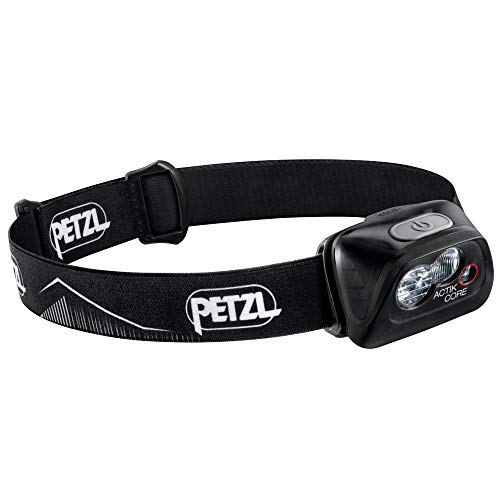
Petzl Actik Core Rechargeable Headlamp
The Petzl Actik Core is the standout in this guide and the head torch serious hikers, runners and mountaineers keep returning to. At up to 450 lumens it is the brightest beam here, its multi-beam optics blend flood and distance, and a red mode preserves your night vision - all in a 75 g, IPX4-rated package backed by a 5-year guarantee.
The clever part is power. It ships with the rechargeable CORE battery that tops up over USB in 3 hours, but the same lamp still accepts 3 AAA batteries, so on a long off-grid trip you carry spare cells as backup and never get caught flat - the best of both worlds. Two honest caveats: it is comfortably the dearest pick here, and stock runs low, so it is not always available the moment you want it.
How to choose the right headlamp for you
The single biggest mistake is buying for the adventure you imagine rather than the one you actually have. If the honest answer is camping, the shed, dog walks and the odd power cut, a 300 to 360 lumen battery lamp does everything you need, and a premium rechargeable would mostly add features you never use. If you genuinely hike, trail-run or head off-grid for days, then brightness, beam quality and a rechargeable-plus-backup power setup earn their keep - which is where the Petzl and Nitecore lamps pull ahead. For evenings out with a metal detector, include lighting in your kit planning.
Power type is the other deciding factor. Rechargeable lamps like the Nitecore NU25 are cheaper and tidier over time and perfect if you can charge every night, while battery lamps let you carry spare AAAs for trips where there is no power for days. The smartest of the bunch, the Actik Core, does both - rechargeable with AAA backup - which removes the gamble entirely. Be realistic about where you will actually use the torch, because the best headlamp is the one whose power source matches your trips rather than the one with the biggest lumen number on the box.
What the key specs mean
A few specs do most of the work when you compare head torches. Lumens measure brightness: more is not always better, because a very bright beam drains batteries faster, so match the figure to the job - around 250 to 350 lumens for general use, 450-plus for distance and speed. Beam type matters just as much: a wide flood lights up everything close in front of you, which suits cooking, reading a map or working in the shed, while a tighter spot throws light further down a trail. Many lamps blend both.
The red light mode is not a gimmick - red light preserves your night vision, so your eyes stay adapted to the dark and you are not dazzled when you glance at a map, and it attracts far fewer insects than white light around camp. Water resistance is shown as an IPX rating, where IPX4 means splash-proof in rain and a waterproof lamp like the Black Diamond shrugs off heavier wet. Finally, weight decides comfort: anything riding on your forehead for hours needs to be light, which is why the 60 to 81 gram figures here matter. Read lumens, beam type, red mode, IPX rating and weight together and any product page starts to make sense.
Frequently Asked Questions
How many lumens do I actually need in a headlamp?
For most people, less than the marketing suggests. Around 250 to 350 lumens is plenty for camping, the shed, dog walks and general close-up tasks - the Petzl Tikkina at 250 and the Energizer at 360 cover this comfortably. Step up to 450 lumens or more, like the Petzl Actik Core, only if you genuinely need to spot distant trail markers or run fast on dark trails. A very high lumen count looks impressive but drains batteries faster, so match the brightness to the job rather than buying the biggest number on the box.
Rechargeable or AAA battery headlamp - which is better?
It depends on where you use it. A USB-rechargeable lamp like the Nitecore NU25 is cheaper and tidier over time because you never buy AAAs again, and it is ideal if you can charge it every night. A battery lamp like the Energizer or Black Diamond is the safer bet deep off-grid, where you can carry spare AAAs and keep going for days with no power point. The smartest option is a hybrid like the Petzl Actik Core, which recharges over USB but also accepts AAA batteries as backup, so you get the convenience of rechargeable without the risk of being caught flat.
What is the red light mode on a headlamp for?
Red light has two real benefits around camp and on the trail. First, it preserves your night vision: your eyes stay adapted to the dark, so you are not dazzled when you check a map or move around at night, and your vision recovers instantly. Second, red light attracts far fewer insects than white light, which makes a noticeable difference around a campsite at dusk. Most of the lamps here - the Energizer, EverBrite, Black Diamond, Nitecore and Petzl Actik Core - include a red mode, so you can drop to a dim, eye-friendly glow whenever you do not need full brightness.
Are these headlamps waterproof?
They are water-resistant to varying degrees, shown by an IPX rating. Most here, including the Energizer, Petzl Tikkina and Petzl Actik Core, carry an IPX4 rating, which means they shrug off splashes and rain from any direction - fine for a wet hike or a downpour at camp. The Black Diamond Spot 325 goes further and is genuinely waterproof: water can even enter its battery compartment without stopping the lamp, and you simply dry it out afterwards. For everyday Australian conditions IPX4 is enough, but if you expect heavy rain or accidental dunkings, the more waterproof option is worth it.
What is the difference between flood and spot beam?
It comes down to whether you want to light up everything close or see further away. A wide flood beam spreads light across a broad area right in front of you, which is ideal for cooking, reading a map, working in the shed or close-up tasks where you want even, glare-free coverage - the Nitecore NU25 is built around a wide flood. A spot beam is tighter and throws light further down a trail, which helps you pick out markers, obstacles or the path ahead at distance. Many lamps, like the Petzl Actik Core with its multi-beam design, blend both so you can switch depending on the task.
How long do headlamp batteries last?
It varies hugely with brightness and the lamp, which is why runtime figures are worth reading. Run a lamp on full brightness and it drains fast - the Black Diamond gives around 4 hours at its 325 lumen maximum - while dropping to a medium setting stretches that to 8 hours or more. Simpler, less powerful lamps last far longer: the Petzl Tikkina runs up to 120 hours on low. As a rule, use the lowest brightness that does the job and your batteries last dramatically longer, and on rechargeable lamps plan a top-up before any long night out.
Can I use a headlamp for work and DIY, not just hiking?
Absolutely - a head torch is one of the most useful tools in any shed or toolbox precisely because it keeps both hands free. For working under the sink, in the roof space, on the car or anywhere a fixed light will not reach, a wide flood beam gives even, close-up coverage without you holding a torch in your teeth. The Nitecore NU25 is a strong choice here thanks to its high-CRI light, which renders colours more naturally so you can tell wires apart, while the budget Energizer and the EverBrite 5-pack are inexpensive enough to leave permanently in the shed. Any of these doubles happily between the trail and the workbench.