The Best Car Polishers in Australia for 2026: Dual Action and Rotary Compared
By Anish Puri·10 June 2026·Last updated 5 October 2026·11 min read
A car polisher drives a foam pad to cut swirls and bring gloss back to tired paint. The big decision is dual action versus rotary: a dual action oscillates as it spins, which makes it hard to burn the paint.
Prices checked 27 October 2026 on Amazon AU and subject to change.
We link to Amazon Australia listings, and sellers vary. Please check the seller, plug, voltage and warranty on the listing before you buy.
How to choose a car polisher in Australia
A car polisher drives a foam pad to cut swirls, remove light scratches and bring a deep gloss back to dull paint, work that is almost impossible to do well by hand. The best car polisher in Australia for 2026 is the SPTA 780W dual action, a corded machine with a long 15mm orbit, six speeds and a kit with two sponges and two handles, and the most ratings of any corded dual action we compared at our 5 October 2026 check. The single most important decision is the type of action. A dual-action, or random-orbital, polisher oscillates as it spins, so the pad never grinds in one fixed spot, which makes it very hard to burn the paint: the SPTA 780W, the Meguiar's, the SPTA 5in, the DEWALT, the Milwaukee, the Ryobi and the SPTA mini all work this way, and this is the right choice for almost everyone and every beginner. A rotary polisher, like the AOBEN 1200W, spins in one direction only and cuts faster, but it can strike through the clear coat on edges and panels in unskilled hands, so treat it as an advanced tool only. After the action, it comes down to orbit or throw size, corded against cordless power, the voltage and plug the listing states, and whether the machine reaches tight areas. This guide compares fifteen polishers, fourteen of them in stock, each suited to a different job, including six US-market tools whose listings state 110 or 120 volts or no voltage at all.
Polisher
Best for
Key spec
Power and plug at our 5 October 2026 check
SPTA 780W Dual Action with D-Handle
Corded 780W dual action, 15mm orbit, six speeds, two sponges and two handles
Listing states 220 volts, plug not stated; sold and dispatched by SPTA AU, delivery 9 to 13 October
Meguiar's AutoCosmetica Hornet M15
Forced rotation with a long warranty
Corded 1000W forced rotation dual action, 5 inch plate, 3 year warranty
Voltage and plug not stated on the listing; buy box rotated between Amazon AU and a merchant seller
AOBEN 1200W Rotary Car Polisher
Heavy correction with experience
Corded rotary, 1200W, no oscillation
Listing states 120 volts; sold and shipped by Amazon US through the Global Store
SPTA 5in 780W Dual-Action Polisher
Balance of speed and control
Corded dual action, 15mm orbit, 780W, pad and compound kit
Listing states 220 volts; sold and shipped by Amazon UK through the Global Store
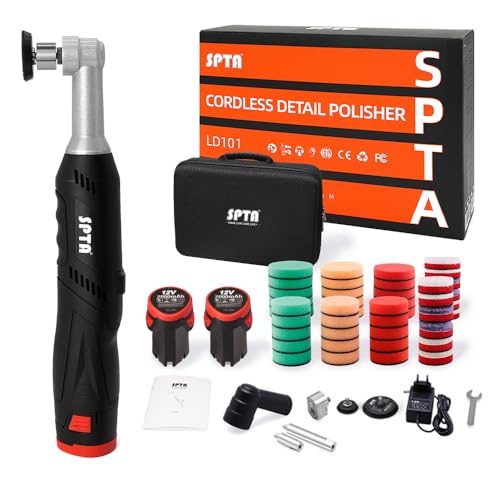
SPTA 12V Cordless Mini Polisher
Badges, trim and tight spots
Cordless 12V mini, used alongside a full-size machine
Battery tool; a reviewer reported a non-Australian charger plug; dispatched by NY-MALL, late October delivery
DEWALT DCM848 18V XR Brushless Polisher
Trade cordless if you own the batteries
Cordless 18V XR brushless dual action, bare tool
No battery or charger in the box; sold by Camden Tools, a UK-based seller
Milwaukee M18 FUEL M18FROP15-0X
M18 battery owners
Cordless 125mm random orbital, 15mm stroke, body only
No battery or charger in the box; sold and dispatched by JJS Corporation, delivery 12 to 13 October
RYOBI R18P-0 PRO
ONE+ battery owners, light correction
Cordless eccentric polisher, 8mm orbit, three pads in the box
No battery or charger; the listing reads as a European model; dispatched by SydneyGrandBazaar, delivery 22 to 23 October
GEVEELIFE 1600W Rotary
Heavy correction with experience
Corded 1600W rotary kit, 6 and 7 inch plates
Voltage not stated; sold and shipped by Amazon US through the Global Store
DEKOPRO 6 Inch DA
A short-orbit US kit
Dual action, 9mm orbit, four pads
Listed as 120V; needs a step-down transformer; Amazon US through the Global Store
HONE 750W DA
A US kit with handles and sandpaper
Random orbital, 750W, three pads
Listed as AC120V; needs a step-down transformer; sold and dispatched by BLOOD SHOPPING
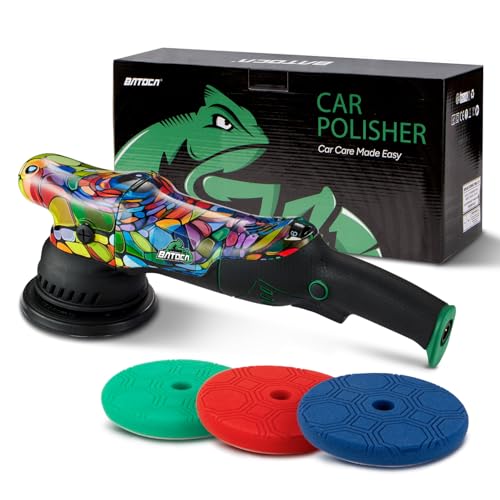
BATOCA P1
15mm orbit with a long cord
Dual action, 15mm orbit, 1000W, detachable cord (25 feet in the title, 16.4 feet in the description)
Voltage not stated, UL listed cord; Amazon US through the Global Store
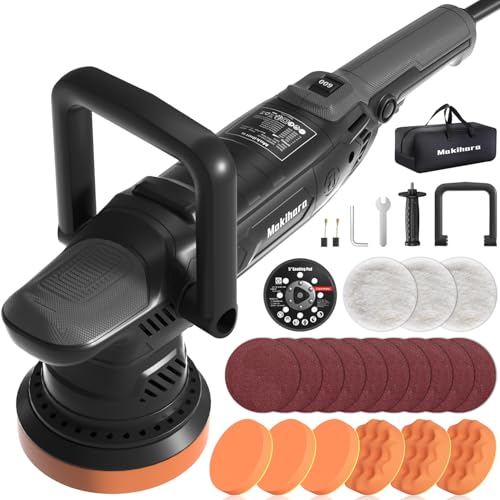
Makihara 5 Inch
A big US accessory kit
Random orbital, 1600W, 26 attachments
Listed as 110V; needs a step-down transformer; Amazon US through the Global Store
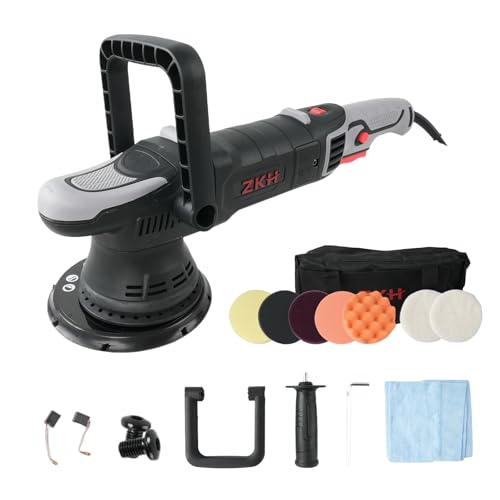
ZKH 21mm DA
The longest orbit here
Dual action, 21mm orbit, 1000W
Listed as 120V; needs a step-down transformer; Amazon US through the Global Store
SPTA 780W Dual Action with D-Handle
SPTA
SPTA 780W Dual Action Polisher with D-Handle (DA502)
4.6(819)
A corded 780W dual action with a 15mm orbit, six speeds and a kit of two sponges and two handles. At the 5 October 2026 check it was sold and dispatched by SPTA AU; the listing states 220 volts and no plug type.
As an Amazon Associate, NestPath earns from qualifying purchases.
The SPTA 780W is the machine we would point most buyers to. It is a corded dual action, so you get the beginner-safe random-orbital action and unlimited sustained power for a full-car correction, and its long 15mm orbit moves more pad across the paint than the 12mm machines the listing compares it with, so swirls come out faster. Six variable speeds cover both cutting and finishing, and it ships as a kit with 125mm and 150mm polishing sponges, a removable D-handle, a side handle and a 4 metre cable. It also has the most ratings of any corded dual action we compared: 4.6 stars from 819 ratings on Amazon Australia.
At the 5 October 2026 check it was sold and dispatched by SPTA AU, with delivery to Sydney between 9 and 13 October. SPTA is a car care tool brand that sells through its own online stores and on AliExpress as well as Amazon, and its Amazon seller profile lists business hours in US Pacific time; we found no Australian business number for the seller.
Flaws but not dealbreakers
The listing states 220 volts and the model code ends in EU, but it does not say which plug is fitted, so check the plug when it arrives and use a proper adapter if it is not Australian. It is a heavier machine than the cordless options, so long sessions on vertical panels will tire your arms, and pads and compound beyond the two sponges are extra.
Forced rotation with a 3 year warranty: Meguiar's AutoCosmetica Hornet M15
A corded 1000W forced rotation dual action with a 3 year maker warranty; 10 ratings on Amazon Australia. The buy box rotated between Amazon AU and a merchant seller; confirm the seller.
$386.93
Amazon.com.au price as of 11:01 pm AEDT, subject to change
As an Amazon Associate, NestPath earns from qualifying purchases.
The Hornet M15 is a corded 1000W dual action that the listing describes as forced rotation, combining dual action with the efficiency of forced rotation. Forced rotation keeps the pad turning even under pressure, so it cuts more decisively than a free-spinning dual action; begin on a finishing pad at a low speed while you learn it. It ships with a 5 inch backing plate, and the listing gives a 3 year manufacturer warranty, the longest any listing here states. The listing names the brand as AutoCosmetica and does not state the orbit, voltage or plug, so we do not quote them.
Flaws but not dealbreakers
The review base is thin: 10 ratings on Amazon Australia, so long-term reliability is not proven in reviews yet. The buy box rotated between Amazon AU and a merchant seller, so confirm who is selling it before you buy. Only the backing plate is listed in the box, so budget for pads and compound, and it is the most expensive corded machine here.
Dual-action versus rotary: the decision that matters most
Get this one right and the rest is detail. A dual-action machine spins the pad while also moving it in a small orbit, so the cutting point is constantly travelling rather than sitting still; that is what makes it forgiving and very hard to burn paint with, which is why it is the safe default for beginners and most enthusiasts. Thirteen of the fifteen polishers here are dual-action for exactly that reason. A rotary, the AOBEN 1200W, drives the pad in one direction only; it cuts heavy oxidation and deep defects faster, but with no oscillation the heat and cut concentrate in one place, so it can strike through the clear coat on a panel edge or a high spot if your technique is not there yet. If you are learning, buy a dual-action. Reach for a rotary only once you genuinely know how to manage heat, edges and pad pressure. The AOBEN rotary on this page also needs a note on power: its listing states 120 volts and it ships from the US, so it is built for US mains rather than Australian 240V power.
Also great
AOBEN
AOBEN 1200W Rotary Car Polisher
4.3(223)
A 1200W rotary for experienced hands. At the 5 October 2026 check it was sold and shipped by Amazon US through the Global Store, and the listing states 120 volts, so it is built for US mains, not Australian 240V.
$123.88
Amazon.com.au price as of 05:00 pm AEDT, subject to change
As an Amazon Associate, NestPath earns from qualifying purchases.
Orbit or throw size: how fast it corrects
On a dual-action machine, the orbit (also called the throw) is the width of the small circle the pad travels in, and it trades speed for control. A bigger throw moves more pad across the paint per rotation, so it corrects swirls and scratches faster, but it needs a steadier hand to keep flat and controlled. The SPTA 780W, the SPTA 5in and the Milwaukee run a 15mm throw, a true all-rounder. The long 21mm throw machine we recommended before, the BATOCA, was unavailable on Amazon AU at the 5 October 2026 check. Short-throw 8mm machines, like the Ryobi R18P-0 PRO here, move the least pad and are the most controlled, which is why finishers favour them for the final polishing pass. One honest note: the Meguiar's listing does not state its throw, so we do not quote one for it.
Also great
SPTA
SPTA 5in 780W Dual-Action Polisher
4.6(386)
A 780W dual action with a 15mm orbit and a kit of pads and compound. At the 5 October 2026 check it was sold and shipped by Amazon UK through the Global Store; the listing states 220 volts and plugs may differ.
$196.78
Amazon.com.au price as of 05:00 pm AEDT, subject to change
As an Amazon Associate, NestPath earns from qualifying purchases.
Corded versus cordless: power against mobility
The next split is how the machine is powered. Corded polishers, like the SPTA 780W, the Meguiar's, the SPTA 5in and the AOBEN rotary, give you unlimited sustained power for a full-car correction without ever stopping to charge, and they tend to cost less to buy. Cordless machines, the DEWALT, the Milwaukee, the Ryobi and the SPTA mini, free you from the cord entirely, so there is no cable to drag across a freshly corrected panel and you can walk right around the car, but you pay for that in battery cost and you are limited by runtime. For a big once-a-year correction on a budget, corded makes sense; for convenience, mobility and tight-area work, cordless wins. Check the voltage on each listing before you buy a corded machine. At the 5 October 2026 check the AOBEN rotary listing stated 120 volts and it ships from the US, so it needs a step-down transformer to run on Australian power, and the SPTA 5in listing stated 220 volts and ships from the UK, so expect a UK plug and use a proper adapter. The SPTA 780W listing also states 220 volts without naming the plug, and the Meguiar's listing does not state its voltage.
Bare tool warning: what is actually in the box
One thing catches people out on the premium end: the DEWALT DCM848 is sold as a bare unit, meaning the tool only, with no battery and no charger included. That is normal for professional cordless gear, because the buyer is assumed to already own batteries, but it changes the real cost dramatically. If you are already in the DEWALT 18V system you simply add the tool and you are ready to go; if you are not, you have to budget for a battery and a charger on top, which can add a serious amount to the headline price. Always read whether a cordless polisher is a kit or a bare tool before you buy, and do not under-budget the bare option; it is the most expensive machine here once you account for the cells. At the 5 October 2026 check it was sold and dispatched by Camden Tools, a UK-based seller, with delivery in about a week.
Runner-up
DEWALT
DEWALT DCM848 18V XR Brushless Polisher
4.8(128)
A cordless 18V XR brushless dual action sold as a bare tool with no battery or charger. At the 5 October 2026 check it was sold and dispatched by Camden Tools, a UK-based seller.
$627.52
Amazon.com.au price as of 11:00 am AEDT, subject to change
As an Amazon Associate, NestPath earns from qualifying purchases.
For Milwaukee M18 owners: Milwaukee M18 FUEL M18FROP15-0X
Milwaukee
Milwaukee M18 FUEL Random Orbital Polisher M18FROP15-0X
4.7(79)
An M18 FUEL random orbital polisher with a 15mm stroke and a lock-on switch, sold body only. At the 5 October 2026 check it was sold and dispatched by JJS Corporation, with delivery in about a week.
$499.00
Amazon.com.au price as of 11:01 pm AEDT, subject to change
As an Amazon Associate, NestPath earns from qualifying purchases.
If your garage already runs on Milwaukee M18 batteries, the M18FROP15-0X is the cordless dual action to add. It is a 125mm random orbital polisher with a 15mm stroke, the same all-rounder orbit as the SPTA machines, and a lock-on function for longer sessions. Milwaukee turns the battery slot 90 degrees with more than 50mm of clearance so the pack never touches the paint and the tool can rest on its side. It is sold body only, with no battery or charger. At the 5 October 2026 check it was sold and dispatched by JJS Corporation, with delivery to Sydney on 12 or 13 October.
Flaws but not dealbreakers
It is only good value if you already own M18 packs; buying the battery and charger as well puts it near the top of this page on cost. The review base on Amazon Australia is modest, and the seller is a third party rather than Amazon.
For Ryobi ONE+ owners: RYOBI R18P-0 PRO
RYOBI
RYOBI 18V ONE+ Cordless Eccentric Polisher PRO R18P-0
4.6(357)
An 18V ONE+ cordless polisher with an 8mm orbit and three pads, no battery or charger; the listing reads as a European model. Sold and dispatched by SydneyGrandBazaar.
$289.95
Amazon.com.au price as of 11:01 pm AEDT, subject to change
Available to order at Amazon AU, ships after a lead time, last verified on 26 October
As an Amazon Associate, NestPath earns from qualifying purchases.
The Ryobi R18P-0 PRO is the gentlest machine on this page: an 18V ONE+ cordless eccentric polisher with a short 8mm orbit, a 125mm plate and 3,000 to 7,500 oscillations per minute, which the listing pitches at removing scratches, swirl marks and light scuffs as well as applying wax. A wax pad and two polishing pads come in the box, and it runs on any ONE+ battery, a system that covers more than 200 Ryobi tools. At the 5 October 2026 check it was sold and dispatched by SydneyGrandBazaar, dispatched within 4 to 5 days, with delivery to Sydney on 22 or 23 October.
Flaws but not dealbreakers
There is no battery or charger in the box. The listing reads as a European model (it gives EU spare part availability and a translated title), so register the warranty with Ryobi and check the terms. The short 8mm orbit moves less pad per pass than the 15mm machines here, so expect more passes on deeper swirls.
US-market polishers on Amazon Australia: check the voltage first
Six more polishers were in stock on Amazon Australia at the 5 October 2026 check, all made for the US market. Five ship from Amazon US through the Global Store and one, the HONE, is sold and dispatched by a third-party seller. Most of their listings state 110 or 120 volts, which means they need a step-down transformer rated for the tool to run on Australian 230V power; a plug adapter alone is not enough. We list them on evidence, most reviewed first.
GEVEELIFE
GEVEELIFE 1600W Rotary Polisher, 6 and 7 inch
4.3(894)
A 1600W rotary kit with 6 and 7 inch plates and pads, for experienced hands. At the 5 October 2026 check it was sold and shipped by Amazon US through the Global Store; the listing does not state the voltage.
$120.10
Amazon.com.au price as of 05:00 pm AEDT, subject to change
As an Amazon Associate, NestPath earns from qualifying purchases.
The GEVEELIFE is a 1600W rotary kit with 6 and 7 inch plates, sponge and wool pads, sandpaper and two handles, and it has the deepest review base of the six. Its listing does not state the voltage, so confirm it with the seller before you buy, and treat it like any rotary: a tool for experienced hands.
DEKOPRO
DEKOPRO 6 Inch Dual Action Polisher
4.2(113)
A 6 inch dual action with a 9mm orbit and four pads. Listed as 120V, so it needs a step-down transformer in Australia. At the 5 October 2026 check it was sold and shipped by Amazon US through the Global Store.
$115.69
Amazon.com.au price as of 11:00 am AEDT, subject to change
As an Amazon Associate, NestPath earns from qualifying purchases.
The DEKOPRO is a 6 inch dual action with a short 9mm orbit, six speeds from 1,800 to 5,500 RPM, a soft start and four pads. It is listed as 120V.
HONE
HONE 6 Inch 750W Random Orbital Polisher
4.4(33)
A 750W random orbital kit with pads, sandpaper and two handles. Listed as 120V, so it needs a step-down transformer in Australia. At the 5 October 2026 check it was sold and dispatched by BLOOD SHOPPING.
$256.21
Amazon.com.au price as of 11:01 pm AEDT, subject to change
As an Amazon Associate, NestPath earns from qualifying purchases.
The HONE is a 750W random orbital kit with three foam pads, sandpaper, a U-handle and a side handle, and the listing gives a 12 month warranty. It is listed as AC120V, 60Hz, and at the 5 October 2026 check it was sold and dispatched by BLOOD SHOPPING rather than shipped by Amazon.
BATOCA
BATOCA P1 15mm Dual Action Polisher, 1000W
4.1(22)
A 1000W dual action with a 15mm orbit and a long detachable cord. At the 5 October 2026 check it was sold and shipped by Amazon US through the Global Store; the listing gives a UL listed cord but no voltage.
$238.28
Amazon.com.au price as of 11:00 am AEDT, subject to change
As an Amazon Associate, NestPath earns from qualifying purchases.
The BATOCA P1 is a 1000W dual action with a 15mm orbit, a detachable cord (the title says 25 feet, the description 16.4 feet or 5m) and a 2 year warranty, from the same brand as the 21mm machine we used to recommend. Its listing describes a UL listed cord, a US certification, and does not state the voltage.
Makihara
Makihara 5 Inch Random Orbital Polisher, 1600W
4.8(17)
A 5 inch random orbital kit with 26 attachments. Listed as 110V, so it needs a step-down transformer in Australia. It could not be bought on Amazon Australia on 14 October 2026, when the listing showed as currently unavailable.
As an Amazon Associate, NestPath earns from qualifying purchases.
The Makihara is a 5 inch 1600W random orbital with six speeds from 600 to 3,600 RPM and 26 attachments, and it is listed as 110V. Its rating is high but rests on few reviews.
ZKH
ZKH 6 Inch 21mm Orbit Dual Action Polisher, 1000W
3.8(11)
A 1000W dual action with a long 21mm orbit. Listed as 120V, so it needs a step-down transformer in Australia. At the 5 October 2026 check it was sold and shipped by Amazon US through the Global Store.
As an Amazon Associate, NestPath earns from qualifying purchases.
The ZKH is the long-orbit option: a 1000W dual action with a 21mm orbit, the longest here alongside the out-of-stock BATOCA below, plus a D-handle, an auxiliary handle and a tool bag. It is listed as 120V and its rating is the lowest of the six, on few reviews.
Out of stock at our 5 October 2026 check: BATOCA 21mm Dual Action
BATOCA
BATOCA 21mm Dual Action Polisher, 700W
4.5(523)
Currently unavailable on Amazon AU at the 5 October 2026 check, with no buy box on the listing. A 700W dual action with a long 21mm orbit and a pad kit.
As an Amazon Associate, NestPath earns from qualifying purchases.
The BATOCA 21mm was our top pick until the 5 October 2026 check, when it was currently unavailable on Amazon AU with no buy box on the listing. We keep it here for reference, and the SPTA 780W above is the dual action to buy now. Per the listing it is a 700W machine with a random orbit up to 21mm, six speeds from 1,000 to 3,800 RPM, and a kit with four sponge discs, two wool pads, microfibre cloths, sandpaper and a carry bag.
Pads and compound: the polisher is only half the job
A polisher on its own will not correct anything; it is the machine that drives the pad, and the pad plus the compound does the actual cutting. Foam pads are colour-coded by aggressiveness, running from firmer cutting pads that remove defects through to soft finishing pads that lay down the final gloss, and you pair each with a matching cutting or polishing compound. Several machines here include a starter kit: the SPTA 780W comes with two polishing sponges, the AOBEN rotary with polishing pads, the Ryobi with a wax pad and two polishing pads, and the well-stocked SPTA 5in adds compound too, so a first-timer has the full chain from cut to finish. The Meguiar's lists only its backing plate in the box. If a machine does not include them, factor the cost of pads and polish into your budget, because you cannot use the tool without them. Correcting the paint is only half the story, though: once the swirls are gone, seal the finish with a coat of car wax or paint sealant, or you have left fresh, bare clear coat to the Australian sun. Never run a pad over a panel that has not been properly washed and decontaminated first, so a car wash kit is a prerequisite rather than an extra, and keep a stack of microfibre cloths beside you to buff each section off. For the cabin finishing touch after cleaning, compare a car air freshener.
Tight spots and the brands missing from Amazon Australia
Some areas a full-size 6in machine simply cannot reach (badges, sharp body lines, wing mirrors, narrow trim and door pillars), and that is where the SPTA 12V cordless mini earns its place, with small 1in and 3in plates made for exactly those spots. It is worth owning alongside a main machine rather than instead of one. Once the paint is corrected, a car cover is the cheapest way to keep it that way if the car lives outside. On brands, a quick honesty note: the famous detailing-icon names RUPES and FLEX are effectively absent from Amazon Australia (you will only find their parts and accessories there, not the machines), so for those you are better shopping the Australian detailing retailers like Bowdens Own, Just Car Care or the Detailing Shed. Note that Bowdens Own, the iconic Australian detailing brand, makes the pads and compounds rather than the machines themselves. On the SPTA mini itself, one Australian reviewer reported a charger plug that was not Australian, and at the 5 October 2026 check it was sold and dispatched by NY-MALL with delivery in late October.
Also great
SPTA
SPTA 12V Cordless Mini Polisher
4.4(1,272)
A cordless 12V mini for badges and trim. At the 5 October 2026 check it was sold and dispatched by NY-MALL with delivery in late October, and a reviewer reported a charger plug that was not Australian.
$398.55
Amazon.com.au price as of 11:00 am AEDT, subject to change
As an Amazon Associate, NestPath earns from qualifying purchases.
How we picked these car polishers
We compared the machines on the things that decide how a polisher treats your paint: the type of action, orbit or throw where the listing states it, corded or cordless power, what is in the box, and the voltage and plug the listing states. The specifications come from the manufacturer's details on each Amazon Australia listing, and we checked every listing on 5 October 2026 for stock, the seller, who dispatches it and the delivery window to Sydney. We do not test polishers ourselves.
The AOBEN 6in dual action's listing was gone at the 5 October 2026 check, so it is no longer compared here. The BATOCA 21mm dual action we previously named our top pick was currently unavailable on Amazon AU, so it sits at the end of the page with that line rather than among the picks. We included every relevant in-stock polisher we found and give each card its seller, dispatch, import and voltage line rather than leaving any out for who sells it. Three listings we did not include: the Hyundai kit showed a dispatch time of 6 to 7 months, so it was not in stock to deliver; the Makita DPV300Z had no featured offer, so it could not be bought; and we include the Ryobi R18P-0 PRO rather than the R18P-0 that ships from Amazon UK. The six US-market tools are included with their voltage line, because a voltage is a fact to check rather than a reason to hide a listing.
Frequently Asked Questions
Is a dual-action or rotary car polisher better?
For almost everyone a dual-action is better. A dual-action, or random-orbital, polisher oscillates as it spins, so the cutting point keeps moving and it is very hard to burn the paint; thirteen of the fifteen polishers here, including our overall pick the SPTA 780W, work this way. A rotary like the AOBEN 1200W spins in one direction only and cuts heavy defects faster, but because it does not oscillate it can strike through the clear coat on edges and high spots in unskilled hands. Choose a dual-action unless you are an experienced detailer who genuinely needs the extra cutting speed of a rotary.
Can a beginner use a car polisher without burning the paint?
Yes, as long as you buy a dual-action machine. The random-orbital action constantly moves the cutting point, so the pad never grinds in one fixed place, which makes it very forgiving; every dual action here is beginner-safe for this reason, and with the Meguiar's forced rotation start on a soft pad at a low speed. The main way beginners damage paint is with a rotary, like the AOBEN 1200W, which can burn through the clear coat on edges, so avoid that as a first machine. Keep the pad flat, use a light touch, do not linger on one spot, and start on a flat panel rather than a sharp edge.
What orbit or throw size do I need on a car polisher?
The throw is the width of the small circle the pad travels in, and it trades speed for control. A bigger throw corrects swirls and scratches faster but needs a steadier hand; the SPTA 780W, the SPTA 5in and the Milwaukee run a 15mm throw, which is a good all-rounder. Short-throw 8mm machines, like the Ryobi R18P-0 PRO, are the most controlled and are favoured for the final finishing pass. For a first machine the 15mm to 21mm range is the sweet spot of fast correction and manageable control. One note: the Meguiar's listing does not state its throw, so we do not quote one for it.
Do you need a corded or cordless car polisher?
It depends on how you will use it. Corded polishers like the SPTA 780W, the Meguiar's, the SPTA 5in and the AOBEN rotary give unlimited sustained power for a full-car correction, but check the voltage each listing states: the AOBEN states 120 volts and both SPTA machines 220 volts. Cordless machines like the DEWALT, the Milwaukee, the Ryobi and the SPTA mini give you mobility and no cord drag across a panel, but add battery cost and runtime limits. For a big occasional correction on a budget, choose corded; for convenience, mobility and tight-area work, choose cordless. If you are looking at one of the US-market tools on this page, budget for a step-down transformer rated above the tool's wattage, or choose a machine whose listing states Australian voltage.
What is the difference between a polisher and a buffer?
In everyday Australian use the words are used interchangeably: most people call the same machine a polisher or a buffer, and the listings here mix both terms. If anyone draws a distinction, polishing usually means using an abrasive compound and a cutting pad to actually correct defects like swirls and scratches, while buffing tends to describe a lighter pass to bring up gloss or work in a wax or sealant. Both jobs are done by the same dual-action or rotary machine; you change the result by changing the pad and the product, not the tool. So do not read too much into which word a listing uses.
Are Rupes or Bowdens Own polishers on Amazon Australia?
Largely no. The detailing-icon brands RUPES and FLEX are effectively absent from Amazon Australia (you will generally only find their parts and accessories there, not the machines themselves), so for those, shop the Australian detailing retailers like Bowdens Own, Just Car Care or the Detailing Shed. It is worth noting that Bowdens Own, the iconic Australian detailing brand, makes the pads and compounds rather than the polishing machines. The machines compared in this guide are the SPTA, Meguiar's, DEWALT, Milwaukee, Ryobi and AOBEN units listed on Amazon Australia, plus six US-market tools from GEVEELIFE, DEKOPRO, HONE, BATOCA, Makihara and ZKH. The BATOCA 21mm we recommended before was out of stock at the 5 October 2026 check and stays at the end of the page.
What pads and compound do you need with a car polisher?
A polisher is only half the job; the pad and the compound do the actual cutting. Foam pads are colour-coded by aggressiveness, running from firmer cutting pads that remove defects through to soft finishing pads that lay down the final gloss, and you pair each with a matching cutting or polishing compound. Several machines here include a starter kit: the SPTA 780W comes with two sponges, the AOBEN rotary and the Ryobi with polishing pads, and the well-stocked SPTA 5in adds compound. If a machine does not include them, factor the cost of pads and polish into your budget, because you cannot use the tool without them.
How do you use a car polisher?
Wash and dry the car first, then mask any trim you do not want touched. Work one panel section at a time, about 50cm square. Spread four pea-sized dots of compound on the pad, dab it across the section with the machine off, then run the dual action at a low speed to spread and step it up to correct. Keep the pad flat, move your arm slowly, about 2cm a second, and let the machine do the cutting rather than leaning on it. Buff off with a clean microfibre and check the result in direct light.
Is a car polisher worth it?
It depends on the car and how long you are keeping it. A dual action plus pads and compound will remove years of swirls from a car you intend to own for a while, and it does in an afternoon what hand polishing cannot do at all. It is not worth it on a lease car, on a car you are selling within months, or on paint that is already through to primer. If you only want gloss rather than correction, a wax by hand is the cheaper answer.
How do you remove swirl marks without a polisher?
By hand, and only the light ones. A fine cutting polish on a foam applicator, worked in small circles over a 30cm section and buffed off with a clean microfibre, will soften shallow swirls in soft paint. It is slow, it is hard work, and it will not touch deeper marks, which need the constant pad movement of a dual action. The other half of the answer is prevention: most swirls come from washing, so use two buckets and a proper wash mitt.
Which type of car polish is best?
Match the polish to the job rather than looking for one winner. A cutting compound on a firmer cutting pad removes swirls and defects, and a finer polishing compound on a soft finishing pad lays down the final gloss. This guide compares machines, not polish brands. Once the paint is corrected, seal it with a car wax or paint sealant.
What are some good cordless car buffing machines?
The cordless machines compared here are the DEWALT DCM848 18V XR brushless dual action, the Milwaukee M18 FUEL M18FROP15-0X with a 15mm stroke and the Ryobi R18P-0 PRO with a short 8mm orbit, all sold without a battery or charger, plus the SPTA 12V mini for badges and trim. Choose the battery system you already own.
DETAILED REVIEWS
SPTA
SPTA 780W Dual Action Polisher with D-Handle (DA502)
4.6(819)
A corded 780W dual action with a 15mm orbit, six speeds and a kit of two sponges and two handles. At the 5 October 2026 check it was sold and dispatched by SPTA AU; the listing states 220 volts and no plug type.
As an Amazon Associate, NestPath earns from qualifying purchases.
Also great
AOBEN
AOBEN 1200W Rotary Car Polisher
4.3(223)
A 1200W rotary for experienced hands. At the 5 October 2026 check it was sold and shipped by Amazon US through the Global Store, and the listing states 120 volts, so it is built for US mains, not Australian 240V.
$123.88
Amazon.com.au price as of 05:00 pm AEDT, subject to change
A corded 1000W forced rotation dual action with a 3 year maker warranty; 10 ratings on Amazon Australia. The buy box rotated between Amazon AU and a merchant seller; confirm the seller.
$386.93
Amazon.com.au price as of 11:01 pm AEDT, subject to change
As an Amazon Associate, NestPath earns from qualifying purchases.
Also great
SPTA
SPTA 5in 780W Dual-Action Polisher
4.6(386)
A 780W dual action with a 15mm orbit and a kit of pads and compound. At the 5 October 2026 check it was sold and shipped by Amazon UK through the Global Store; the listing states 220 volts and plugs may differ.
$196.78
Amazon.com.au price as of 05:00 pm AEDT, subject to change
As an Amazon Associate, NestPath earns from qualifying purchases.
Runner-up
DEWALT
DEWALT DCM848 18V XR Brushless Polisher
4.8(128)
A cordless 18V XR brushless dual action sold as a bare tool with no battery or charger. At the 5 October 2026 check it was sold and dispatched by Camden Tools, a UK-based seller.
$627.52
Amazon.com.au price as of 11:00 am AEDT, subject to change
As an Amazon Associate, NestPath earns from qualifying purchases.
RYOBI
RYOBI 18V ONE+ Cordless Eccentric Polisher PRO R18P-0
4.6(357)
An 18V ONE+ cordless polisher with an 8mm orbit and three pads, no battery or charger; the listing reads as a European model. Sold and dispatched by SydneyGrandBazaar.
$289.95
Amazon.com.au price as of 11:01 pm AEDT, subject to change
Available to order at Amazon AU, ships after a lead time, last verified on 26 October
As an Amazon Associate, NestPath earns from qualifying purchases.
Milwaukee
Milwaukee M18 FUEL Random Orbital Polisher M18FROP15-0X
4.7(79)
An M18 FUEL random orbital polisher with a 15mm stroke and a lock-on switch, sold body only. At the 5 October 2026 check it was sold and dispatched by JJS Corporation, with delivery in about a week.
$499.00
Amazon.com.au price as of 11:01 pm AEDT, subject to change
As an Amazon Associate, NestPath earns from qualifying purchases.
Also great
SPTA
SPTA 12V Cordless Mini Polisher
4.4(1,272)
A cordless 12V mini for badges and trim. At the 5 October 2026 check it was sold and dispatched by NY-MALL with delivery in late October, and a reviewer reported a charger plug that was not Australian.
$398.55
Amazon.com.au price as of 11:00 am AEDT, subject to change
As an Amazon Associate, NestPath earns from qualifying purchases.
GEVEELIFE
GEVEELIFE 1600W Rotary Polisher, 6 and 7 inch
4.3(894)
A 1600W rotary kit with 6 and 7 inch plates and pads, for experienced hands. At the 5 October 2026 check it was sold and shipped by Amazon US through the Global Store; the listing does not state the voltage.
$120.10
Amazon.com.au price as of 05:00 pm AEDT, subject to change
As an Amazon Associate, NestPath earns from qualifying purchases.
DEKOPRO
DEKOPRO 6 Inch Dual Action Polisher
4.2(113)
A 6 inch dual action with a 9mm orbit and four pads. Listed as 120V, so it needs a step-down transformer in Australia. At the 5 October 2026 check it was sold and shipped by Amazon US through the Global Store.
$115.69
Amazon.com.au price as of 11:00 am AEDT, subject to change
As an Amazon Associate, NestPath earns from qualifying purchases.
HONE
HONE 6 Inch 750W Random Orbital Polisher
4.4(33)
A 750W random orbital kit with pads, sandpaper and two handles. Listed as 120V, so it needs a step-down transformer in Australia. At the 5 October 2026 check it was sold and dispatched by BLOOD SHOPPING.
$256.21
Amazon.com.au price as of 11:01 pm AEDT, subject to change
As an Amazon Associate, NestPath earns from qualifying purchases.
BATOCA
BATOCA P1 15mm Dual Action Polisher, 1000W
4.1(22)
A 1000W dual action with a 15mm orbit and a long detachable cord. At the 5 October 2026 check it was sold and shipped by Amazon US through the Global Store; the listing gives a UL listed cord but no voltage.
$238.28
Amazon.com.au price as of 11:00 am AEDT, subject to change
As an Amazon Associate, NestPath earns from qualifying purchases.
Makihara
Makihara 5 Inch Random Orbital Polisher, 1600W
4.8(17)
A 5 inch random orbital kit with 26 attachments. Listed as 110V, so it needs a step-down transformer in Australia. It could not be bought on Amazon Australia on 14 October 2026, when the listing showed as currently unavailable.
As an Amazon Associate, NestPath earns from qualifying purchases.
ZKH
ZKH 6 Inch 21mm Orbit Dual Action Polisher, 1000W
3.8(11)
A 1000W dual action with a long 21mm orbit. Listed as 120V, so it needs a step-down transformer in Australia. At the 5 October 2026 check it was sold and shipped by Amazon US through the Global Store.
As an Amazon Associate, NestPath earns from qualifying purchases.
BATOCA
BATOCA 21mm Dual Action Polisher, 700W
4.5(523)
Currently unavailable on Amazon AU at the 5 October 2026 check, with no buy box on the listing. A 700W dual action with a long 21mm orbit and a pad kit.
Affiliate Disclosure: As an Amazon Associate, NestPath earns from qualifying purchases. This means if you click a product link and buy something, we may receive a small commission at no extra cost to you. We only recommend products we genuinely believe will help new homeowners. This does not influence our recommendations.
CERTAIN CONTENT THAT APPEARS ON THIS SITE COMES FROM AMAZON. THIS CONTENT IS PROVIDED ‘AS IS’ AND IS SUBJECT TO CHANGE OR REMOVAL AT ANY TIME.