If you have been shopping for a new vacuum in the last couple of years, you have probably noticed that the barrel vacuum — that bulky cylinder you drag from room to room — is rapidly disappearing from Australian homes. In its place: the stick vacuum. Cordless, lightweight, and powerful enough to handle daily cleaning without the hassle of a power cord or a dedicated storage cupboard.
Stick vacuums have improved enormously. Early cordless models were underpowered and had batteries that died after 20 minutes. Today's best stick vacuums rival corded machines in suction, last 60 or more minutes on a charge, and come with sophisticated filtration systems that capture pet hair, allergens, and fine dust. They are genuinely better for most Australian homes — open-plan living, tiled floors, and regular quick cleans between deeper sessions.
We have researched every major stick vacuum available in Australia in 2026, from the Shark IZ102 at the budget end to the Dyson V15 Detect flagship, and here is what you actually need to know before spending your money.
Why Stick Vacuums Have Replaced Barrel Vacuums
The shift from barrel to stick vacuums is not just a trend — there are genuine practical reasons Australian homes are making the switch.
Convenience wins every time. A stick vacuum takes 10 seconds to grab, 5 minutes to vacuum the kitchen after dinner, and another 10 seconds to hang back on the wall. A barrel vacuum takes 2 minutes to set up, involves a power cord you need to plug and unplug, and gets stored somewhere inconvenient. The result? You use the stick vacuum every day. The barrel gets pulled out on weekends, if at all.
Australian homes suit stick vacuums well. Most new Australian homes have predominantly hard floors — tile, timber, or hybrid laminate — with carpet only in bedrooms. Hard floors do not need the heavy suction that carpet requires, and stick vacuums handle them superbly. The lightweight design also makes it easy to clean under furniture and in tight spaces.
Suction has caught up. Early stick vacuums had suction measured in the hundreds of Pa (Pascals). Today's premium models hit 230–260 airwatts of suction — comparable to mid-range corded machines. Even budget models in 2026 have enough suction for daily maintenance cleaning on tile and low-pile carpet.
Battery life is no longer a concern. Most stick vacuums now offer 40–70 minutes of runtime in eco mode, which is enough to clean a standard Australian home in one pass. Premium models like the Dyson V15 Detect deliver up to 60 fade-free minutes and automatically adjust suction based on floor type.
What to Look For in a Stick Vacuum
Not all stick vacuums are equal, and manufacturers are very good at using impressive-sounding numbers that do not tell you much about real-world performance. Here is what actually matters:
Suction Power — Watts vs Pa vs Airwatts
You will see three different measurements used across different brands. Watts refers to electrical power input, not suction. Pa (Pascals) measures static suction pressure — higher is better, but it does not account for airflow. Airwatts combines suction and airflow and is the most meaningful measure of cleaning ability.
For hard floors in an Australian home, 100 or more airwatts is plenty. For thick carpet or heavy pet hair, aim for 150 or more airwatts. Do not be dazzled by a 25,000 Pa claim if the airflow is poor — the combination of the two is what moves dirt from floor to dustbin.
Battery Life — Real-World vs Advertised
Manufacturers quote maximum runtime, which is usually on the lowest power mode with no brush head attached. Real-world runtime on standard power with the floor brush running is typically 40–60% of the advertised figure. A vacuum that claims 90 minutes will give you 45–55 minutes in normal use. More important than raw runtime: does the battery reach all rooms in your home, and how long does it take to recharge?
Filtration — HEPA vs Standard
If you have asthma, allergies, or pets, HEPA filtration matters. HEPA filters capture 99.97% of particles down to 0.3 microns — that is pet dander, pollen, and fine dust that standard filters miss. Most premium stick vacuums include HEPA filtration. Budget models often do not, which means fine particles get recirculated into the air.
Weight — Especially for Overhead Cleaning
Most stick vacuums weigh between 2.4kg and 3.5kg. That difference matters most when you are cleaning ceiling fans, light fittings, or high shelves. A 3.5kg vacuum held above your head gets heavy quickly. If you have high ceilings or do a lot of overhead cleaning, choose the lightest option you can.
Dustbin Capacity — Bigger Is Not Always Better
Larger dustbins are convenient, but they add weight and bulk. For daily quick cleans, 0.5–0.7L is plenty. If you have pets, large carpeted areas, or do infrequent deep cleans, 0.7L or more is more practical. Most stick vacuums have tool-free emptying — press a button and the bin opens. This is worth checking, as some budget models require you to pull the bin off and empty it manually.
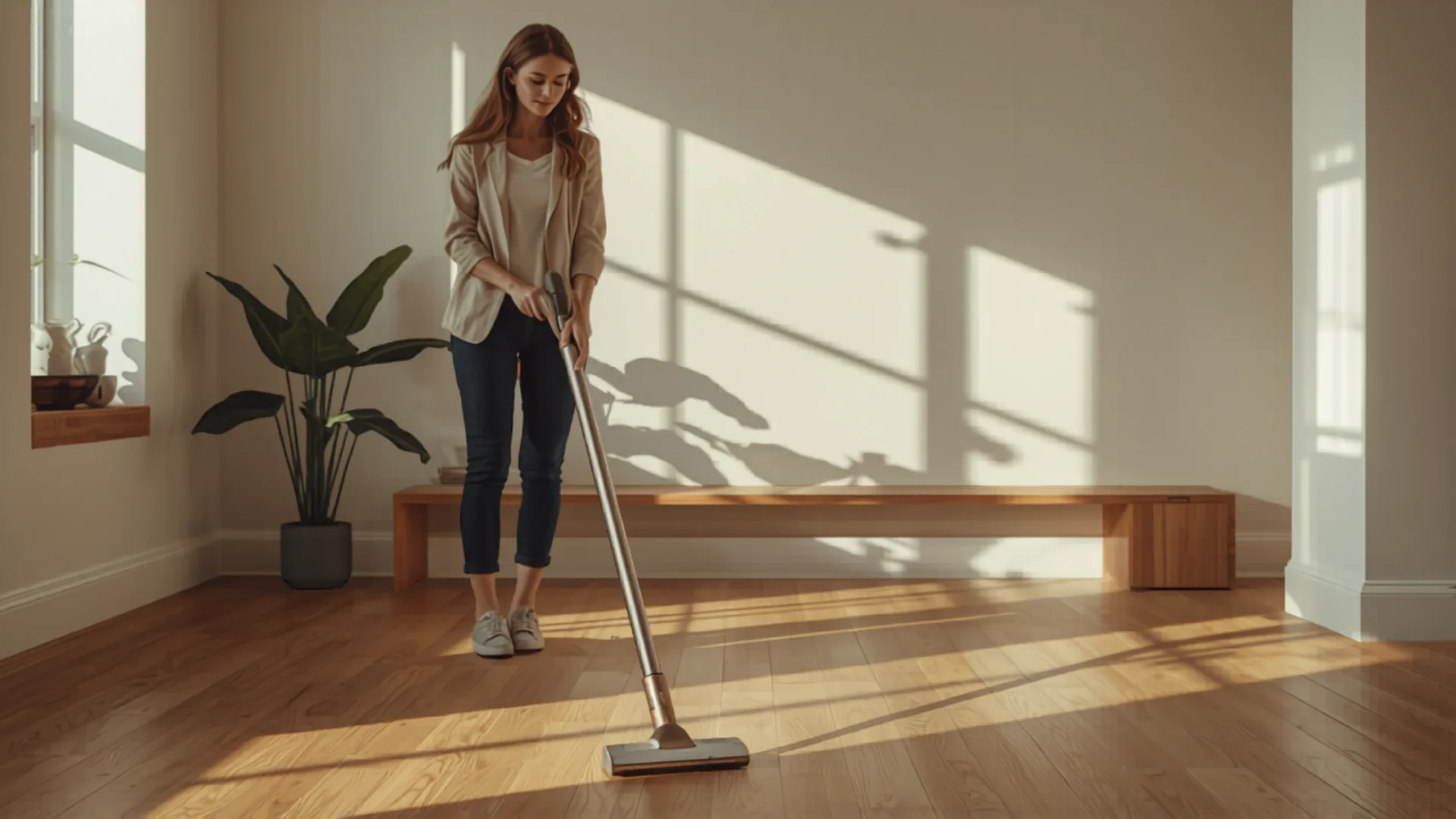
Best Budget Stick Vacuums ($200–$500)
The sub-$500 segment has improved dramatically. You are not sacrificing much compared to mid-range models for daily hard floor cleaning.
The Shark IZ102 is our budget pick. It is a cordless stick with a removable battery that charges in or out of the vacuum, a self cleaning brushroll that helps keep long and pet hair from wrapping, three cleaning modes, LED headlights and an Anti Allergen Complete Seal with a HEPA filter. Crevice and upholstery tools come in the box. The trade offs: the dust cup is a small 0.4L, runtime is up to 40 minutes in Standard mode (measured at the hand vacuum), it weighs 3.4kg, and its Amazon AU price swings between sales, so check the live price on its card.
Another budget option worth considering is the Tineco Pure ONE A30S, with 160AW suction.
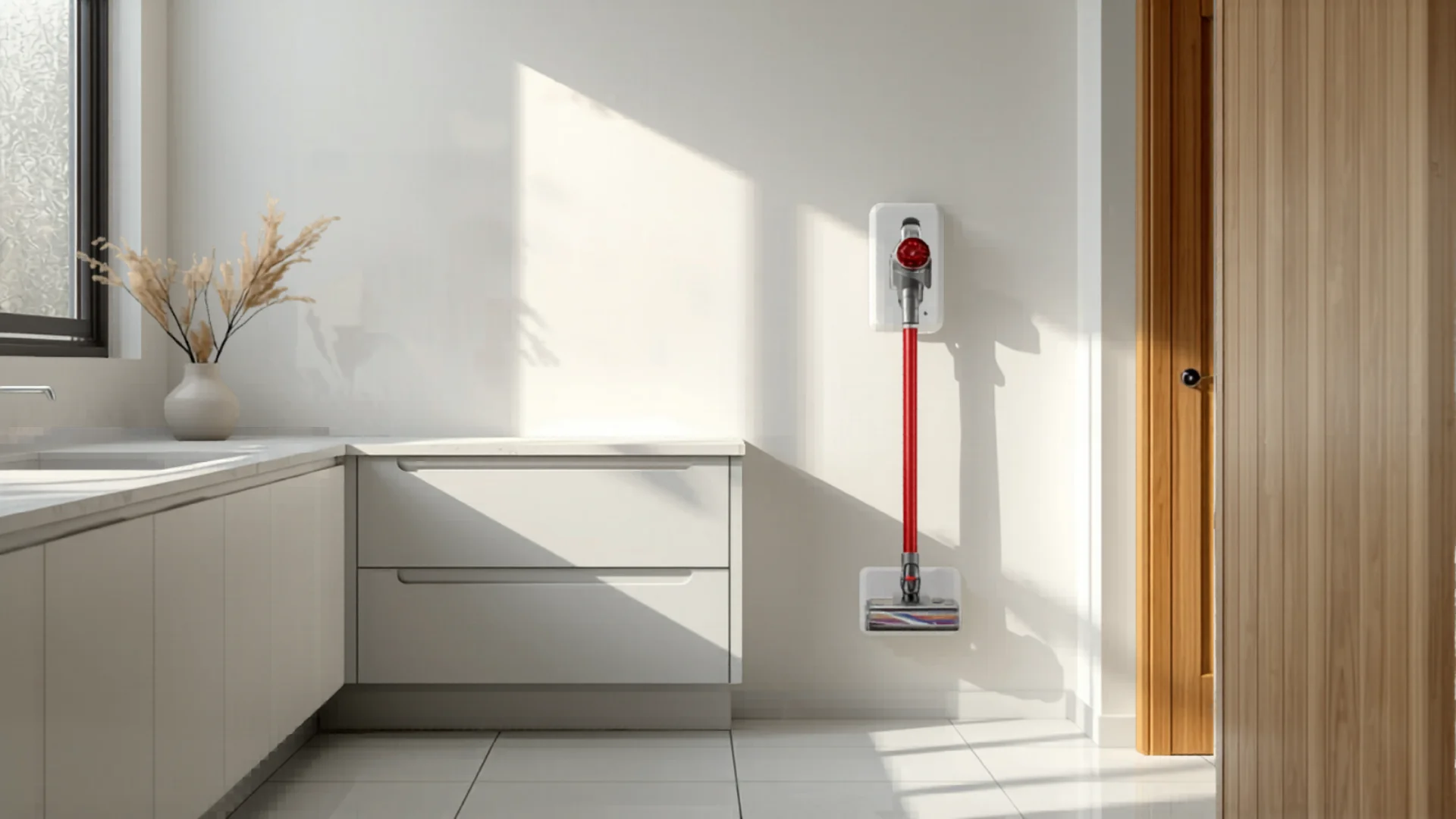
Best Mid-Range Stick Vacuums ($500–$800)
The $500–$800 bracket is where most Australians will get the best value. You get genuinely powerful suction, full accessory kits, and good battery life without paying the premium price for flagship features.
The Tineco Pure ONE Station 5 is the standout in this range. It delivers 175AW of suction, and the iLoop smart sensor adjusts power to the dirt it detects: more on heavy debris, less on light passes to save battery. The 2.5L auto empty base cleans the dustbin and the brush after every clean, so you don't think about emptying. Runtime reaches up to 70 minutes in Eco mode, and the ZeroTangle brush helps stop pet hair wrapping the roller, which matters in a household with shedding animals.
The Tineco's weak point is weight: it is heavier than the Shark IZ102 (Tineco lists 4kg against 3.4kg for the Shark), and the auto empty base needs floor space you have to commit to. But the auto empty and smart sensor combination at this price is what shifts it from "another mid range cordless" to "the mid range pick".
Also worth considering at this price point: the Shark Stratos, with Anti Hair Wrap and Clean Sense IQ for pet households.
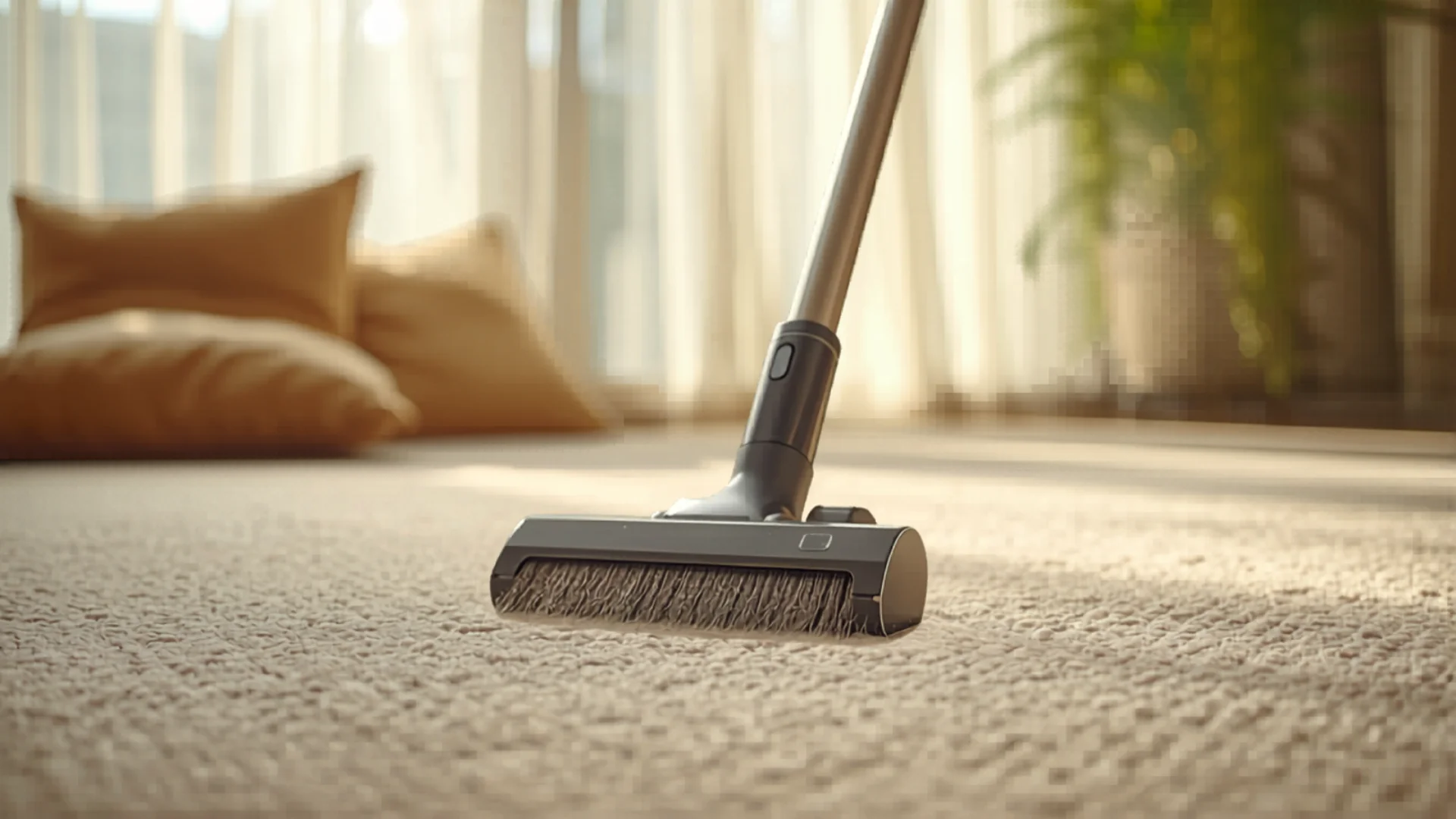
Best Premium Stick Vacuums ($800+)
At $800 and above, you are paying for genuinely advanced technology — and in the case of the Dyson V15 Detect, it is technology that actually makes cleaning better rather than just more expensive.
The Dyson V15 Detect Absolute is the most sophisticated stick vacuum available in Australia in 2026 — Dyson's laser flagship, with three features that set it apart. First, the Fluffy Optic head with the green laser that illuminates the microscopic dust layer on hard floors invisible to the naked eye, helping you see exactly where you are cleaning and where you have missed. Second, the sensor that analyses the particles being vacuumed, sizes them, counts them, and displays their distribution on the LCD screen in real time. It sounds like a marketing gimmick, but it is genuinely useful — you can see when a room is truly clean rather than guessing. Third, up to 60 minutes of fade-free runtime with automatic adjustment that uses the floor type information to boost power on carpet and conserve battery on hard floors — and two cleaner heads plus three tools in the box.
Is it worth the premium? If you have a mix of flooring, pets, or allergies, and you care about cleaning thoroughly rather than just quickly — yes. If you have mostly hard floors and do quick daily passes, the Tineco Pure ONE Station 5 costs noticeably less than the V15 Detect.
A quick note on buying the right one: the V15 Detect Absolute is the laser flagship. Make sure you're buying the Absolute variant (it ships with both the Fluffy Optic laser head and the Motorbar head for carpet). If you find a third-party listing at a steep discount, the V15 Detect is still a great vacuum — just verify the seller is authorised so warranty claims aren't refused.
Battery Life — The Honest Truth
Battery life is the most overstated specification in stick vacuum marketing. Here is what the numbers actually mean in practice:
When a manufacturer says "up to 60 minutes runtime," they mean 60 minutes on the lowest power mode, typically without a motorised brush head attached. Add the brush head (which draws significant power) and switch to standard mode, and you are looking at 25–40 minutes. Switch to boost mode for thick carpet, and you might get 8–12 minutes.
For the average Australian home — say, 150–200 square metres with daily 10–15 minute cleans — even a 25-minute runtime is more than enough. The problem arises if you are doing an intensive weekly deep clean of a larger home and expecting to do it all on one charge.
The practical solutions: choose a model with a removable battery so you can swap batteries partway through a clean (the Shark IZ102 battery is removable), buy a spare battery, or accept that you will need to pause and recharge partway through a session. Most vacuums reach 80% charge in around 90 minutes and a full charge in 3 to 4 hours.
One more honest note: lithium-ion batteries degrade over time. After 2–3 years of daily use, expect your runtime to drop by 20–30%. Premium models like Dyson sell replacement batteries for around $150–$200. Budget models may not have replacement batteries available, so check before you buy if longevity matters to you.
Stick Vacuum vs Robot Vacuum — Do You Need Both?
Many Australian homeowners end up with both a stick vacuum and a robot vacuum, and this is actually a sensible combination rather than overkill.
A robot vacuum handles daily maintenance cleaning autonomously. It runs while you are at work and picks up the fine dust, hair, and debris that accumulates every day. A stick vacuum handles the cleaning a robot cannot: stairs, upholstered furniture, car interiors, quick spot cleans after cooking, and areas blocked by furniture the robot cannot access. For the smallest of those jobs a handheld vacuum is cheaper and faster to grab than either.
If you can only choose one: a stick vacuum is more versatile. It handles everything a robot does (just not automatically) plus tasks a robot cannot. A robot vacuum is an upgrade, not a replacement.
If your budget allows for both, pair a mid-range robot vacuum with a budget stick vacuum. The robot keeps floors clean daily, the stick handles spot duty and areas the robot misses. This is the setup most cleaning-savvy households end up with.
Frequently Asked Questions
Can a stick vacuum replace a barrel vacuum entirely?
For most Australian homes with a mix of tile and low-to-medium pile carpet, yes. Modern stick vacuums in the mid-range ($500–$800) have suction equivalent to entry-level corded machines. If you have thick carpet throughout your home or large area rugs that need deep cleaning, you may still want a corded machine for weekly deep cleans. But for the daily and twice-weekly cleaning most homes need, a good stick vacuum handles it completely.
How long do stick vacuum batteries last before needing replacement?
Most lithium-ion batteries in stick vacuums last 2–4 years before noticeable degradation. With daily use, expect to start seeing reduced runtime after 2–3 years. Premium brands like Dyson and Tineco sell replacement batteries, typically for $100–$200. When comparing budget vs premium models, factor in whether replacement batteries are available — some cheaper brands stop supporting older models within 2 years.
Are stick vacuums good for pet hair?
Yes, but the brush head design matters more than suction power for pet hair. Look for anti-tangle brush rolls that prevent hair from wrapping around the bristles — this is the single biggest quality-of-life difference for pet owners. The Dyson V15 Detect has an excellent anti-tangle conical brush, the Tineco Pure ONE Station 5's ZeroTangle brush handles pet hair well, and the Shark IZ300 (or the Shark Stratos at the mid-range) is specifically designed around pet hair removal at a budget-to-mid price point.