Backpacking or car camping? And how waterproof do you need?
Before you compare a single spec, answer two questions: how far will you carry this tent, and how rough is the weather where you camp? They split the whole category. If you are hiking, you want a light 2-person tent like the MC TOMOUNT or the GoAlpine that packs small and rides on your back without wrecking your shoulders. If you are driving to a campsite with the family, weight stops mattering and you trade it for space and a fast pitch - an instant-up Coleman or a roomy CORE dome. Get that one decision right and everything else falls into place.
The number that matters most in Australia is the waterproof rating, measured as a head of water in millimetres. Our storms are real, so look for a high mm rating on the fly and floor plus sealed or taped seams, because a tent that leaks at 2am ruins the whole trip. The six picks below run from the MC TOMOUNT up to the CORE 9 Person, and they map cleanly onto that split: light 2 person tents for hiking, and roomy family tents for car camping, with waterproof ratings from PU3000mm right up to 5000mm.
One more rule of thumb worth knowing before you read on: size up by one. A mat takes floor space too, so check our camping mattress picks for singles and couples before you settle on a tent size. A tent rated for its stated number of people is a tight fit at that number, so a 2-person tent is comfortable for one person plus gear, a 6-person tent is roomy for four, and so on. Match the tent to how you will really use it and you will sleep far better.
MC TOMOUNT 2 Person Backpacking Tent
If you want to start hiking with your own tent without spending big, the MC TOMOUNT is the entry point. It is the cheapest pick here, and unlike many budget tents it uses 7001 aluminium poles rather than fiberglass, so it stays light at about 2.1kg packed while keeping its strength. The double-layer build with a mesh inner adds warmth and cuts the condensation that plagues cheap single-skin tents.
A PU3000mm waterproof coating on the rip-stop fly, paired with a tough 210D oxford ground sheet, means it handles genuine rain rather than just a light shower, and it pitches in roughly 10 to 15 minutes even for a first-timer. The trade-offs at this price are honest ones: it is a snug 2-person tent best suited to two people plus light gear rather than a roomy retreat, and stock can run low, so it is not always available the moment you want it.
Forceatt 2-3 Person Camping Tent
The Forceatt is the pick if you want a backpacking tent that shrugs off a real Australian downpour. Its waterproof index runs up to 5000mm - clearly higher than the budget tent - and a welded floor lifts the base off wet ground while a full-coverage rainfly sheds the rain, so you stay dry when the weather turns nasty overnight.
It pitches in about 3 minutes on 7001 aluminium poles, weighs around 2.5kg, and adds two D-shaped doors with two vestibules so boots and packs stay out of the rain. Large mesh windows and two ceiling vents keep condensation down. With more than 1,500 ratings it is the most-proven tent in this guide. The honest caveat is that the higher waterproof rating and twin vestibules add a little weight and bulk over the lightest 2-person tents, so ultralight hikers trade some grams for that extra protection.
Coleman Instant Up 6 Person Tent
The Coleman Instant Up is the pick when you want to arrive, pull the tent open and be done before the kids have finished unloading the car. The built-in hub frame means there are no loose poles to thread - it sets up in under 2 minutes - and Coleman is a brand Australian campers have trusted for generations.
The WeatherTec system uses welded floors and inverted seams to keep water out, the fly is fully seam-sealed, and a large front awning adds shade and a sheltered place to sit out a passing shower. Large windows with roll-up rear flaps and internal cord management round it out. The honest trade-offs are that an instant-up frame is heavier and bulkier folded than a pole tent, so this is firmly a car-camping tent, and a six-person tent is most comfortable for four people plus their gear.
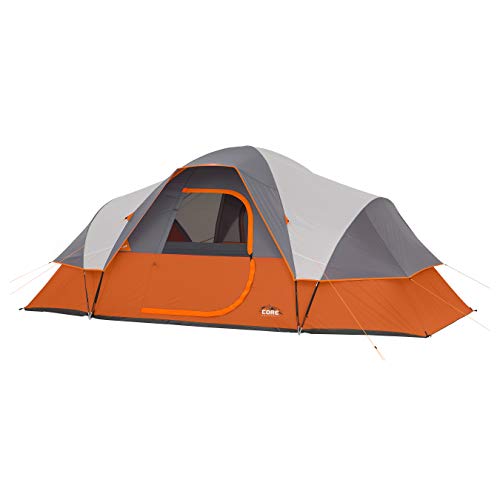
CORE 9 Person Extended Dome Tent
The CORE 9 Person is the one with genuine room when the whole family or a group of mates camps together. It sleeps 9 and fits three queen air mattresses across a 16ft by 9ft floor, with a 72-inch centre height so most adults can stand up to change and move around - a big comfort upgrade on a long trip.
CORE H20 Block water-resistant PU-coated fabric and taped seams handle the rain, an adjustable ground vent helps airflow, and a gear loft with a lantern hook plus pockets keeps clutter off the floor. With more than 4,000 ratings it is the most-reviewed family tent here. The honest trade-offs are that it uses traditional fiberglass poles rather than aluminium, so it is a heavy car-camping tent you would not carry far, and a tent this large needs a generous, level pad and a few extra minutes to pitch.
OneTigris JOVIAN 4 Person Camping Tent
The OneTigris JOVIAN is the pick if you want a family tent with a more considered, premium finish than the big-box domes. The 210T outer carries a 2000mm fly while the 210D oxford bottom and included footprint are rated to a hardy 5000mm, so the part of the tent that sits in puddles is genuinely well protected.
It sleeps up to 4 or takes 2 camp cots across a 2.1m by 2.4m floor with 1.5m of height, and it pitches quickly with a user-friendly dome design plus included stakes, guy-lines and a footprint mat. At 4.8 stars it is the best-rated tent in this guide. The honest caveats are that the review base is still building at a couple of hundred ratings, so there is less long-term feedback than the big sellers carry, and at about 5.6kg it is a car-camping tent rather than a backpacking one.
GoAlpine ESKAPADE II Ultralight Tent
The GoAlpine ESKAPADE II is the standout for anyone who actually carries their tent into the mountains rather than from the car boot. It is an ultralight 3-season tent with a small pack size built for hiking, mountain tours and bikepacking, and a 4000mm waterproof rating that has been storm-tested against snow, rain and gusty weather.
GoAlpine has clearly spent on the parts that fail first, using robust zips and pegs rather than the cheap items that bend or break, and an extra-long floor means even taller campers up to 2.2m get a comfortable night. At 4.8 stars it is among the best-rated tents here. The honest caveat is that its review base is still small at around 90 ratings, so there is less long-term feedback than the big sellers, and you pay a premium for the ultralight weight and storm-proofing rather than for outright interior space.
How to choose the right tent for your camping
The single biggest mistake is buying for the camping trip you picture rather than the one you actually take. If you genuinely hike or bikepack, weight and pack size rule everything, so a light 2-person tent in the MC TOMOUNT or GoAlpine mould is the smart buy - a big instant-up family tent would be misery to carry. If you drive to the campsite, weight stops mattering and you should spend that budget on space, a fast pitch and stand-up height instead, which is exactly what the Coleman, CORE and OneTigris deliver.
After the backpacking-versus-car-camping call, weigh up capacity and setup. Remember the size-up rule: pick a tent rated one or two people larger than your group for real comfort, since the stated number assumes shoulder-to-shoulder sleeping with no room for gear. On setup, an instant-up or hub-frame tent like the Coleman is unbeatable for speed at a campsite, an air-beam tent swaps poles for a pump, and a pole tent packs smaller and lighter for the trail. Be realistic about how far you walk and how many bodies and bags need to fit, because the best tent is the one that suits your actual trips.
What the key specs mean
A few numbers do most of the work when you compare tents. The waterproof rating, given as a head of water in millimetres, tells you how much pressure the fabric resists before water pushes through - anything around 3000mm copes with steady rain, while 4000 to 5000mm handles heavy storms and the pressure of someone kneeling on a wet floor. Just as important are sealed or taped seams, because water finds the stitch holes first; a high mm rating means little if the seams leak, which is why WeatherTec, H20 Block and taped-seam claims matter.
Pole material and weight go together. Aluminium poles, like the 7001 alloy on the MC TOMOUNT and Forceatt, are lighter and stronger than the fiberglass on big family tents, which is why hiking tents use them and car-camping tents can get away with cheaper, heavier fiberglass. Season rating rounds it out: a 3-season tent suits spring, summer and autumn, while a 4-season tent is built to take snow loading and harder winter weather. Read waterproof rating, seam sealing, pole material and season rating together and any tent listing starts to make sense.
Frequently Asked Questions
What size tent do I need for my group?
Size up by one or two people from your actual group. Tent capacities assume everyone sleeps shoulder to shoulder with no room for gear, so a 2-person tent is comfortable for one person plus a pack, a 4-person tent suits a couple with kit or a small family, and a 6-person tent is roomy for four. For a family of four who want space for bags, air beds and a bit of standing room, a 6 to 9 person tent like the Coleman or CORE is the realistic choice rather than a tent labelled for exactly four.
What does the waterproof rating in mm actually mean?
It is a head of water - how tall a column of water the fabric holds back before it leaks. A 3000mm rating means the fabric resists a 3000mm column of water pressure, and higher numbers resist more. As a rough guide, around 2000mm handles showers, 3000mm copes with steady rain, and 4000 to 5000mm shrugs off heavy storms and the pressure of someone kneeling on a wet floor. Australian storms can be fierce, so for the floor and fly a rating of 3000mm or higher is the sensible minimum, which is why these picks range from PU3000mm up to 5000mm.
Instant-up or pole tent - which is better?
It comes down to whether you prize speed or pack size. An instant-up tent like the Coleman has a built-in hub frame that pops open in under 2 minutes with no poles to thread, which is brilliant when you are setting up at a campsite with kids and gear to manage. A pole tent takes longer to pitch but packs down smaller and lighter, which is what you need on the trail. For car camping, instant-up wins on convenience; for backpacking, a pole tent wins because the hub frame is simply too heavy and bulky to carry.
What is the difference between a backpacking and a car-camping tent?
Weight and space, traded against each other. A backpacking tent like the MC TOMOUNT or GoAlpine is built to be light - around 2 to 2.5kg with aluminium poles and a small pack size - so it rides comfortably on your back over long distances, which means it is necessarily compact inside. A car-camping tent like the CORE or Coleman ignores weight entirely, using heavier fiberglass poles and far more fabric to give you stand-up height, multiple rooms and space for air beds, on the assumption you only carry it from the car to the pitch.
Do I need to seal the seams on a new tent?
It depends on the tent. Many quality tents, including the Coleman with its WeatherTec system and the CORE with its taped seams, come with the seams already sealed or taped at the factory, so you can use them straight out of the bag. Cheaper or older tents sometimes need you to run a seam sealer along the stitch lines yourself, because water finds the needle holes before it ever soaks through the fabric. Check the listing - if it mentions sealed, welded or taped seams you are covered, and if not, a tube of seam sealer before your first trip is cheap insurance against a leak.
What season rating should I look for in Australia?
For most Australian camping a 3-season tent is the right call. A 3-season tent is built for spring, summer and autumn - it handles rain, wind and warm nights with good ventilation - which covers the vast majority of trips around the country. A 4-season tent, like the MC TOMOUNT, is reinforced to take snow loading and harsher winter conditions, which is worth it if you camp in the alpine areas of Victoria, New South Wales or Tasmania in winter. For beach, bush and most national-park camping, a 3-season tent with a solid waterproof rating is plenty.
How many people really fit in a tent rated for that number?
Comfortably, about one or two fewer than the label says. The rated capacity packs people in side by side with no allowance for gear, changing or moving around, so a tent labelled for 6 sleeps 6 only in a squeeze. In practice a 6-person tent is comfortable for four people plus their bags, and a 9-person tent like the CORE suits a family of five or six who want room for air mattresses and kit. This is the size-up rule in action - choose a tent rated above your group size and everyone sleeps better.