Why picking an essential oil diffuser is harder than it should be
Search "essential oil diffuser" on Amazon Australia and you get thousands of near-identical black and wood-grain pods, most from brands you have never heard of, all promising cool mist, colour-changing lights and whisper-quiet running. The photos look the same. The bullet points look the same. And a fair few of them leak, spit water, or die after a year. If you are setting up a new home and just want something that smells nice by the bed without keeping you awake, that wall of choice is genuinely paralysing. The short answer is the ASAKUKI 500ml at $36.99, which runs up to 18 hours on a full tank at under 23 decibels; the cheapest pick here is $31.99 and the dearest is the waterless Airversa Scenta at $79.99.
We went through the aromatherapy diffusers actually stocked on Amazon Australia, checked which ones are in stock with real owner ratings, and narrowed it to six worth your money. This guide is about ultrasonic and waterless diffusers for the home, the kind you add a few drops of essential oil to for scent and atmosphere. It is not about reed diffusers, plug-in air fresheners, wax melt burners or humidifiers whose main job is adding moisture to the air. If you want raw humidity for a dry room, that is a different appliance and a different guide.
The quick answer if you just want a recommendation
For most first-home buyers, the ASAKUKI 500ml Essential Oil Diffuser at $36.99 is the one to buy. It has a big tank that runs for up to 18 hours, it stays under 23 decibels so it will not disturb your sleep, and it comes with a small remote so you can switch it off from bed. It is priced like a budget unit but behaves like a premium one.
If you care more about how it looks, the EQUSUPRO Glass 120ml ($45.99) is the most reviewed diffuser on our list and genuinely pretty on a bedside table. If you just want the cheapest thing that works, the EQUSUPRO Metal 150ml ($31.99) is our budget pick. Here is the short version:
- Best overall: ASAKUKI 500ml, $36.99, quiet, huge tank, from-bed remote.
- Best looking: EQUSUPRO Glass 120ml, $45.99, the most reviewed unit here.
- Cheapest worth buying: EQUSUPRO Metal 150ml, $31.99.
- Nicest bedtime glow: SALKING 2-in-1 Salt Lamp Diffuser, $56.99.
- Biggest open-plan rooms: JEPEErbz 500ml, $45.99.
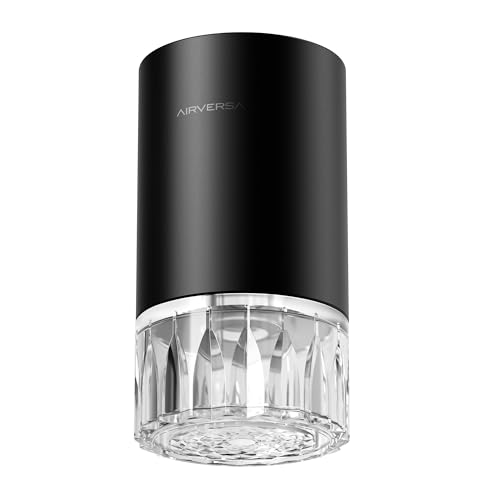
- No tank to refill: Airversa Scenta waterless, $79.99.
How our six essential oil diffusers compare at a glance
Tank size drives runtime, and runtime is what most people get wrong. A 120ml pod is lovely on a bedside table but empties in a few hours, while a 500ml tank can run overnight and then some. Prices below are the Amazon Australia listing prices at the time of writing and can move with sales, so treat them as a guide rather than a promise.
| Diffuser | Tank | Max runtime | Owner rating | Price |
|---|
| ASAKUKI 500ml | 500 ml | Up to 18 hrs | 4.5 (1,868) | $36.99 |
| EQUSUPRO Glass 120ml | 120 ml | Up to 5 hrs | 4.6 (7,046) | $45.99 |
| EQUSUPRO Metal 150ml | 150 ml | Up to 8 hrs | 4.6 (326) | $31.99 |
| SALKING Salt Lamp | 150 ml | Up to 10 hrs | 4.5 (3,415) | $56.99 |
| JEPEErbz 500ml | 500 ml | Up to 6 hrs | 4.3 (566) | $45.99 |
| Airversa Scenta (waterless) | 100 ml oil | Cordless, rechargeable | 4.7 (33) | $79.99 |
The EQUSUPRO glass has by far the most owner ratings of anything here, the EQUSUPRO metal is the cheapest, and the Airversa is both the priciest and the highest rated, though from a much smaller pool of reviews. The ASAKUKI and JEPEErbz tie for the biggest tank at 500ml.
How we chose these diffusers
NestPath does not run a lab, and we do not pretend to. What we do is study the market the way a careful buyer would if they had a week and a spreadsheet. Every diffuser on this list was checked directly against its live Amazon Australia listing in July 2026, so the ratings, review counts and prices you see are the real ones, not numbers copied from an old article.
To make the shortlist, a diffuser had to clear a few simple bars:
- Actually an aromatherapy diffuser. Ultrasonic or waterless units built to disperse essential oils. We excluded reed diffusers, wax burners, car-vent clips and humidifiers that only happen to have an oil tray.
- Buyable in Australia. No grey-import listings, and the picks are re-checked against Amazon AU stock regularly.
- A real track record. A genuine star rating with enough reviews to mean something, and a price that makes sense for the category. Anything priced at twice the going rate was treated as a reseller quirk and dropped.
- Verified specs. Tank size, runtime, noise and materials read off the listing itself, so the claims here match what you will actually receive.
We then weighed the things that matter in a home: how long it runs, how quiet it is, whether the light can be turned off for sleep, how easy it is to clean, and whether it looks like something you want on display. No brand paid to be here.
The best all-rounder for most bedrooms: ASAKUKI 500ml Diffuser
If you buy one diffuser and never think about it again, make it this one. The ASAKUKI 500ml is the unit we would hand to almost any first-home buyer, because it quietly does everything you actually want without asking you to pay premium prices. The 500ml tank is one of the two largest on our list, and on the lower mist setting it runs for up to 18 hours, so it will happily see out a full night and most of the next day before it needs a refill.
What sells it for the bedroom is the noise, or rather the lack of it. ASAKUKI rates the upgraded fan at under 23 decibels, quieter than most bedside fans, and Australian owners back that up, with one calling it so quiet "you'll be checking it's still on". The included remote is the other underrated touch: you can dim the light or switch the whole thing off from bed, which sounds trivial until you are warm under the doona and do not want to get up. There are seven LED colours, and crucially the light and mist run independently, so you can have scent in total darkness or use it purely as a soft night light.
It runs cool, uses no heat, and shuts itself off automatically when the water runs out. At $36.99 it undercuts several better-known brands while outperforming them on the fundamentals, which is exactly why it earns our top spot.
Flaws but not dealbreakers
The control buttons each do more than one thing, so there is a short learning curve before muscle memory kicks in. A handful of owners report that after heavy use the mist can weaken or splutter, usually a sign the ultrasonic disc needs a clean rather than a fault. And the styling is pleasant rather than beautiful, so if you want a showpiece, look at the glass model below.
The best-looking diffuser owners keep raving about: EQUSUPRO Glass 120ml
Most diffusers are moulded plastic pods. The EQUSUPRO Glass is a hand-finished glass shade with an ink-swirl finish that genuinely looks more expensive than its $45.99 price, and it is the most reviewed diffuser on our entire list with more than 7,000 ratings at 4.6 stars. When it is off it passes for a decorative object, and when it is on the colour-changing glow through the glass is lovely.
It is an ultrasonic unit, so it is whisper quiet and produces no heat. You get four timer options (half an hour, one, two or three hours) plus a continuous mode, and the light can be left on as a gentle night light or switched off entirely. Owners repeatedly describe it as calming to watch, and several mention it looking like a piece that cost two or three times what they paid. One long-term Australian owner even ran hers all day for around a year before the first unit needed replacing, and reported the seller sorted it quickly.
The trade-off is capacity. At 120ml the tank lasts about five hours, so this is a bedside or desk diffuser, not something to scent an open-plan lounge all evening. For a bedroom that is often exactly the right size, and the payoff is a diffuser you are proud to leave on show.
Flaws but not dealbreakers
The short runtime means a daytime refill if you want scent morning to night. A few owners note the base can get wet and cut out if you overfill past the max line or tilt it while running, so fill carefully and keep it level. The power cord is on the thin side. None of this stops it being the diffuser people most often say they get compliments on.
Not every room deserves a $50 diffuser. For a spare bedroom, a nursery, a home office or a second bedside, the EQUSUPRO Metal 150ml is the cheapest pick on our list at $31.99, and it still carries a strong 4.6 star average. It is built around a laser-cut metal sleeve with a tree-and-birds silhouette, so when the LED glows through it, it doubles neatly as a night light.
The 150ml tank stretches to around eight hours on the intermittent setting, which is a genuinely useful jump over the tiny glass pod above and enough to run through the night for many people. You get two mist modes and the usual seven-colour LED cycle, and you can hold on a single colour or let it rotate. It is ultrasonic, cool to the touch, and shuts off automatically when dry. Australian owners call it "surprisingly great for its price" and praise how far the scent travels for such a small, cheap unit.
This is the diffuser to buy when you want to add one to another room without overthinking it, or to test whether you will actually use a diffuser before spending more. At this price the maths is easy.
Flaws but not dealbreakers
The mist is a little thinner than the 500ml units, which is physics as much as anything at this tank size. A couple of owners mention a faint water-gurgling sound in a silent room, noticeable to a light sleeper but not to most. And the fixed metal scene is charming but not to everyone's taste. For $31.99, these are easy things to live with.
The best diffuser for bedtime ambience: SALKING 2-in-1 Salt Lamp Diffuser
The SALKING is the pick to reach for if the goal is winding down, not just scenting the room. It combines an ultrasonic diffuser with a genuine Himalayan salt rock chamber and a simulated flame effect, so you get warm amber light and a gentle flicker alongside your essential oils. With 3,415 ratings at 4.5 stars it is one of the most popular units here, and at $56.99 it feels like a considered bedside centrepiece rather than a gadget.
The salt chamber has three brightness levels and can run on its own as a warm lamp, separate from the diffuser, which is handy if you want the glow without the mist late at night. The diffuser side holds 150ml, runs up to around ten hours, and offers four timer settings with quiet ultrasonic operation. Owners consistently describe it as beautiful lit up, with one noting it does not spit water or oil from the top the way cheaper units sometimes do. The flame-and-salt combination genuinely reads as cosy rather than gimmicky in person.
If your bedside table is where you decompress, and you like the idea of scent, soft light and a flicker in one object, this is a lovely thing to own.
Flaws but not dealbreakers
The diffuser is a touch louder than our top pick when the mist is running, so absolute-silence sleepers may prefer the ASAKUKI. It is mains-powered only, so you cannot move it around the house on battery. And at $56.99 it is one of the pricier picks, which only makes sense if you value the ambience, not just the scent.
If it is the glow you are after more than the scent, a plain salt lamp does that half of the job for less and has nothing to refill.
The best diffuser for large or open-plan rooms: JEPEErbz 500ml
Small pods struggle in big spaces. The JEPEErbz 500ml matches our top pick for the largest tank on the list, so it can push scent through a larger bedroom or an open-plan living area without constant refilling. At $45.99 with a 4.3 star average across 566 ratings, it is the workhorse choice when coverage matters more than delicacy.
The look is a clean black body with wood-grain accents and an LED light ring, understated enough to suit most rooms. Owners specifically praise how long it runs, with one saying they bought it precisely because they were "sick of the diffusers that only run for six hours", and it delivered. The mist output is generous, which is the whole point at this size, and it comes with a remote for adjusting from across the room.
Think of this as the diffuser for the main living space or a larger master bedroom, where a 120ml pod would run dry before you have finished dinner. For the money, the tank size and mist volume are hard to argue with.
Flaws but not dealbreakers
It has the lowest star average of our picks at 4.3, and the recurring gripe is the controls: the buttons are fiddly, and the most common complaint is that the light cannot be fully switched off while the mist runs, which frustrates people who want darkness to sleep. If a lights-off sleep mode is non-negotiable, our ASAKUKI top pick is the safer bet. If you mostly run it in the evening in a big room, none of this will bother you.
The best waterless diffuser if you hate refilling tanks: Airversa Scenta
Every other pick here is ultrasonic, meaning it mixes a few drops of oil into a water tank and mists the blend. The Airversa Scenta does away with water entirely. It nebulises neat essential oil into a fine cold mist, which gives a stronger, purer scent and leaves no damp residue or white dust on nearby surfaces. It is the priciest pick at $79.99 and carries the highest star average on our list at 4.7, though from just 33 ratings so far.
Because there is no water, there is no tank to rinse and far less chance of the mould or slime that builds up in neglected ultrasonic units. It runs cordless on a rechargeable battery, so you can move it from bedroom to office to car cup holder, and it has an aluminium alloy body with a glass oil bottle that feels genuinely premium. Australian owners describe the scent throw as noticeably stronger and cleaner than a traditional diffuser, with one calling it "a step up from the usual ultrasonic ones".
The catch is running cost. Since you are diffusing neat oil rather than a few drops in water, you will get through essential oil faster, so this suits people who want a strong, no-fuss scent and do not mind topping up oil more often. If you have battled mouldy water tanks before, that trade may be well worth it.
Flaws but not dealbreakers
It uses more oil than a water-based unit, and it is the most expensive way in this guide to scent a room. The pump makes a soft hum rather than being silent, noticeable to very light sleepers. And with only 33 ratings it has the shortest track record here, so it is the pick for early adopters rather than the cautious. The build quality and scent strength, though, are the real deal.
How do you use an essential oil diffuser?
It takes about a minute, and almost every problem people have with a diffuser comes from one of these five steps.
- Sit it where it will live. A stable, flat surface, back from the edge, and not on bare timber or a book, because ultrasonic mist settles as a fine damp ring around the unit.
- Fill with cool tap water to the max line, no higher. Overfilling past the line is the most common cause of a unit spitting or cutting out. In a hard-water area, distilled water slows the mineral build-up on the disc.
- Add the oil, then close it. Use the ratio in the table below rather than a fixed number of drops, because a 120ml pod and a 500ml tank need very different amounts.
- Pick a mode. Intermittent mist, usually 30 seconds on and 30 off, roughly doubles the runtime and is plenty for a bedroom. Continuous is for a big room or a short burst before guests arrive.
- Set the timer and turn the light off. Every unit here has auto shut-off when the water runs out, and the ones with a lights-off mode are the ones worth running overnight.
Between refills, tip the old water out rather than topping it up. Stale water and yesterday oil are what make a diffuser smell faintly wrong.
How many drops depends on the tank, not on the bottle. About 3 to 5 drops for every 100ml of water is the working ratio:
| Tank size | Drops of oil | Which picks |
|---|
| 100 ml | 3 to 5 | Small bedside pods |
| 120 ml | 4 to 6 | EQUSUPRO Glass |
| 150 ml | 5 to 7 | EQUSUPRO Metal, SALKING Salt Lamp |
| 300 ml | 9 to 15 | Mid-size units |
| 500 ml | 15 to 25 | ASAKUKI 500ml, JEPEErbz 500ml |
Start at the low end and add one or two more if the scent is faint after ten minutes. Going over the top end wastes oil and coats the disc faster, which is what weakens the mist over time. A waterless unit like the Airversa Scenta ignores all of this: it draws neat oil from its own bottle, so you set an intensity rather than counting drops.
How do you use essential oils without a diffuser?
Three ways that need no power. A few drops on a cotton ball in a bowl scents a small room for a day. Two or three drops in the base of a hot shower, away from the water stream, turns the bathroom into a steam room for the length of the shower. And a reed diffuser does the job continuously with nothing to switch on or refill weekly, which is why it is the better buy for a hallway or a bathroom. What we would avoid is putting oil straight onto a heater, a light bulb or a candle flame: heat changes the oil and it is a fire risk in the wrong spot.
What to look for in an essential oil diffuser
If you would rather choose your own from the wider range, these are the things that actually separate a good diffuser from a frustrating one.
Tank size and runtime
This is the single biggest decision. A 100ml to 150ml tank suits a bedside table and runs for a few hours to most of a night. A 300ml to 500ml tank is what you want for a larger bedroom or living area, or if you like scent running from evening into the morning. Bigger tanks refill less often, but they also take up more room.
Noise
For a bedroom, quiet is everything. Look for a rating around or under 25 decibels. A slight water gurgle is normal on cheaper units and reads as light white noise to some people and as an irritation to others. If you are a light sleeper, prioritise this over almost everything else.
Light control
Colour-changing LEDs are standard, but the feature that matters is whether the light can be turned off completely while the mist keeps running. Some cheaper units force the light on whenever they are on, which is a dealbreaker for dark sleepers. Check this before you buy.
Timers and auto shut-off
A timer (commonly one, two or three hours) lets you fall asleep to scent without running the unit all night. Auto shut-off when the tank runs dry is close to universal now and is a basic safety feature, so make sure any unit you consider has it.
Materials and cleaning
Plastic is fine and cheap, glass and metal look nicer and often feel more solid. Whatever the material, you will need to wipe the ultrasonic disc regularly, so a wide opening that your hand or a cloth can reach makes maintenance far easier than a narrow neck.
How to clean and maintain your diffuser
A diffuser that spits, weakens or smells musty is almost always a dirty diffuser, not a broken one. Essential oils leave a residue, and mineral deposits from tap water build up on the ultrasonic disc. A quick clean every week or so keeps everything working and your scents true. Here is the routine most manufacturers, including the ones in this guide, recommend:
- Unplug the diffuser and tip out any leftover water. Never leave old water sitting in the tank between uses.
- Add clean water to the fill line with a few drops of white vinegar, and run it for five to ten minutes to loosen residue.
- Tip that out, then gently wipe the ultrasonic disc (the small metal plate in the base) with a cotton bud. This is the part that most affects mist output.
- Wipe the tank with a soft cloth, rinse, and let it air dry before the next use.
- Every so often, use filtered or distilled water instead of tap water if your area is hard, which slows mineral build-up considerably.
Avoid harsh detergents, which can damage the disc, and never submerge the base or electronics in water. Five minutes a week is all it takes.
What else you will want with your diffuser
The diffuser is only half the setup. These are the extras worth adding, all available on Amazon Australia:
The diffusers that did not make our list
Plenty of well-known names sit just outside our six. Australian retail favourites like the In Essence, Natio and dusk diffusers are lovely and widely stocked, but they tend to cost more through department stores and were not the strongest value on Amazon Australia at the time of writing. Boutique brands such as Lively Living and the pricey Aromawave wireless units are genuinely nice, but at well over $100 they sit in a different price bracket to the everyday picks here.
We also set aside the huge field of ultra-cheap sub-$25 pods. Some are fine, but the failure rate climbs fast at that price, and the few dollars you save rarely feel worth a unit that leaks or dies within months. Our $31.99 EQUSUPRO metal is about as low as we would comfortably go. Finally, we excluded a wave of "diffusers" that are really humidifiers, oil burners or reed sets. They can smell nice, but they are a different product with different trade-offs, and lumping them in only muddies the decision.
If you would rather buy from an Australian shop than a marketplace, the names to know are worth listing properly. dusk has the widest spread of ultrasonic units and stores in most centres. In Essence is the Australian aromatherapy brand whose native-botanical diffuser Google keeps naming for this search, sold through department stores and THE ICONIC. Lively Living sells direct and is the boutique name that dominates the search results. endota comes out of the spa side, Natio sits in pharmacies and department stores, and Ellia is stocked by JB Hi-Fi. MUJI and The Good Guys carry diffusers too. Expect to pay more than the Amazon picks above for the same tank size; what the extra buys is a shopfront, a warranty you can walk into, and in most cases a nicer object.
Essential oil diffuser questions, answered
Are essential oil diffusers safe to run overnight in a bedroom?
Generally yes. Ultrasonic diffusers use no heat and every unit in this guide has auto shut-off, so it stops safely when the water runs out. For overnight use, pick a larger tank like the 500ml ASAKUKI, which runs up to 18 hours, or set a timer so it turns itself off after an hour or two. Keep it on a stable surface away from the edge, and use only a few drops of oil.
How much water and oil do you put in a diffuser?
Fill the tank with water up to the marked max line, no higher, then add about 3 to 5 drops of essential oil for every 100ml of water. That is roughly 5 to 7 drops in a 150ml tank and 15 to 25 in a 500ml one. More oil does not always mean more scent, and overfilling the water past the line is the most common cause of a unit spitting or cutting out. If the scent feels weak in a larger room, add a couple more drops rather than more water.
What is the difference between an ultrasonic and a waterless diffuser?
An ultrasonic diffuser, which is most models here, mixes a few drops of oil into a water tank and vibrates it into a cool mist. A waterless diffuser like the Airversa Scenta nebulises neat oil with no water at all, giving a stronger, purer scent and no damp residue, but using more oil. Ultrasonic units are cheaper to run and add a little humidity; waterless units are lower-maintenance with no tank to clean.
How often should you clean an essential oil diffuser?
About once a week with regular use, or after every seven or so sessions. Tip out old water, run it briefly with water and a little white vinegar, then wipe the ultrasonic disc with a cotton bud. This clears the oil residue and mineral build-up that weakens the mist over time and is the single best thing you can do to keep a diffuser working.
Is an essential oil diffuser the same as a humidifier?
No. A diffuser is built to disperse scent and adds only a small amount of moisture from its little tank. A humidifier holds far more water and is designed to raise the humidity of a whole room. Some units try to do both, but if your main goal is genuinely drier air, buy a dedicated humidifier; if it is scent and atmosphere, buy a diffuser.
How big a room can a diffuser cover?
Roughly, tank size tells you coverage. A 120ml to 150ml unit like the EQUSUPRO models suits a bedroom, study or bedside. A 500ml tank like the ASAKUKI or JEPEErbz can scent a larger bedroom or an open-plan living area. For very large or open spaces, a waterless nebulising diffuser pushes scent furthest, which is part of why the Airversa is rated for bigger rooms.
Are oil diffusers safe for your lungs?
For most people an ultrasonic diffuser used sensibly is fine: it uses no heat and puts a small amount of diluted oil into the air. The sense to apply is ventilation and dose. Run it in a room with some air movement rather than a sealed one, keep to the drops in the table above rather than doubling them, and give it a break instead of running it all day. If anyone in the house has asthma or a respiratory condition, or if a scent brings on coughing or a headache, stop and check with a GP or pharmacist. This is a buying guide, not medical advice.
Are essential oil diffusers safe around pets?
Treat them with more care than you would for people. Cats in particular process some oils poorly, and tea tree, eucalyptus, citrus, pine and peppermint come up most often in vet warnings. Birds are more sensitive again. The practical rule is to diffuse in a room the animal can leave, never in a closed space with a caged pet, keep the oil bottles where they cannot be knocked over and licked, and stop if a pet drools, sneezes or avoids the room. Ask your vet before diffusing anything around a cat or a bird.
Can you make your own diffuser blend?
Yes, and it is the cheapest way to get more out of a set of oils. A blend that works usually has three parts: a base that lingers such as cedarwood, sandalwood or vanilla, a middle that carries the character such as lavender, geranium or chamomile, and a top note you notice first such as lemon, bergamot or eucalyptus. Roughly three parts base, two middle, one top is a sound starting ratio. Mix the drops straight into the water rather than pre-mixing a bottle, and note down what you used, because a blend you like is impossible to recreate from memory.
Set up the rest of your bedroom
A diffuser is one piece of a calm, comfortable bedroom. If you are kitting out a new home, these NestPath guides pair naturally with it:
About the author
Anish Puri founded NestPath in 2026 after going through the Australian first-home-buyer process himself. NestPath focuses on Australian first-home buyers because the existing review sites are American, generic, or both. Anish handles editorial selection across the homeowner hub. Reach out: hello@nestpath.com.au