Corded or cordless? That is the real question
Before you weigh up motors and pendulum settings, answer this: do you want a cable or a battery? It is the decision that shapes everything else. A corded jigsaw is cheaper, never runs flat and gives steady power for as long as you cut, which makes it ideal for a home workbench near a power point. A cordless jigsaw frees you from the cable so you can cut anywhere, but most of the cordless picks here are sold as skins, meaning the tool only - you supply the battery, and which 18V platform you already own usually decides the brand for you. The same skin only rule applies to a cordless reciprocating saw buying guide.
The six picks below run from a corded Bosch up to a DeWalt XR brushless skin, and they split neatly along that line. Two are corded Bosch tools for plug-in reliability and value; four are 18V cordless options spanning the Ryobi, Stanley, Makita and DeWalt battery families. Get the corded-versus-cordless call right first, and the rest of the choice falls into place around the platform you have or want to start.
Bosch PST 650 Corded Jigsaw
If you just want a reliable jigsaw without spending much, the Bosch PST 650 is the entry point. It is the cheapest credible pick here, a corded Bosch Home and Garden tool with a 500 watt motor that never runs flat because there is no battery to manage. The tool-free blade change with the Bosch SDS system swaps blades without a key, and it cuts up to 65mm in wood and 4mm in steel while bevelling to 45 degrees for angled work.
A soft grip, dust blower to keep your cut line clear and a low-vibration design make it comfortable for longer sessions, and it ships in a carry case. With more than 11,700 ratings at 4.7 stars it is by an enormous margin the most-reviewed tool in this guide. The trade-off at this price is the cable, which ties you to a power point and makes it less convenient away from a socket than the cordless skins.
Ryobi ONE+ 18V Cordless Jigsaw
The Ryobi ONE+ jigsaw is the easy cordless pick if you already own ONE+ tools, because it shares the same 18V battery as everything else in that vast range. It is sold as a skin, so the price is for the tool only and you bring the battery you already have. Four orbital settings let you match the cutting power to the job, turning the action up for fast rough cuts or down for clean, controlled lines.
A variable speed trigger gives you fine control over the blade, a non-marring shoe protects the work surface from scratches, and the base adjusts from 0 to 45 degrees right or left for bevel cuts. The honest caveats are two: this is a tool-only skin, so you need a ONE+ battery to use it at all, and stock on this model can run low at times, so it pays to buy when you actually see it available.
Stanley FatMax V20 18V Jigsaw
The Stanley FatMax V20 is the cordless option to consider if you want an 18V jigsaw at a sharp price, or if you are building out the Stanley V20 platform. The variable speed trigger runs up to 2,500 strokes per minute, and a three-stage adjustable pendulum lets you tune how aggressively the blade bites for different materials, from clean cuts in thin ply to faster work in thicker timber.
It bevels to 45 degrees for compound mitre cuts, and a genuinely handy detail is that it accepts both U-shank and T-shank blades, so you are not tied to a single blade type when you restock. Tool-free blade change keeps swaps quick and keyless. The honest caveats are that this is a skin needing a V20 battery, and the review base of 120 ratings is much smaller than the big-brand picks, so there is less accumulated feedback to draw on.
Bosch PST 800 PEL Corded Jigsaw
The Bosch PST 800 PEL is the corded step up from the budget Bosch, and the extra money buys meaningful capability rather than just badge. A 530 watt motor gives it more grunt, but the real upgrade is pendulum action: the blade swings slightly forward on each stroke so it chews through thicker stock far faster than a straight up-and-down cut, which saves real time on bigger jobs.
It cuts straight and curved lines up to 80mm in many materials, and the CutControl guide line plus chip-tear protection help you follow a line cleanly with less splintering on the surface. With more than 1,600 ratings at 4.6 stars it is a well-proven workhorse. The honest caveat is the familiar corded one: you stay tied to a power point, so for cutting away from a socket a cordless skin remains the more flexible choice.
Makita DJV184Z 18V Brushless Jigsaw
The Makita DJV184Z is the jigsaw to choose if you already run the Makita 18V LXT platform and want a tool that suits frequent use. Its headline is the brushless motor, which runs cooler and more efficiently than a brushed motor and so delivers smoother cutting and noticeably longer runtime from the same battery - the kind of thing that matters when you are cutting all day rather than once a month.
Constant speed control holds the cutting pace steady even as the blade loads up in dense timber, three orbital settings plus a straight-cut mode let you balance speed against finish, and a tool-less blade change keeps swaps fast on site. The honest caveat is that this is a tool only skin, so you need a Makita 18V LXT battery and charger to run it, and the price reflects the tool alone.
DeWalt DCS334N XR Brushless Jigsaw
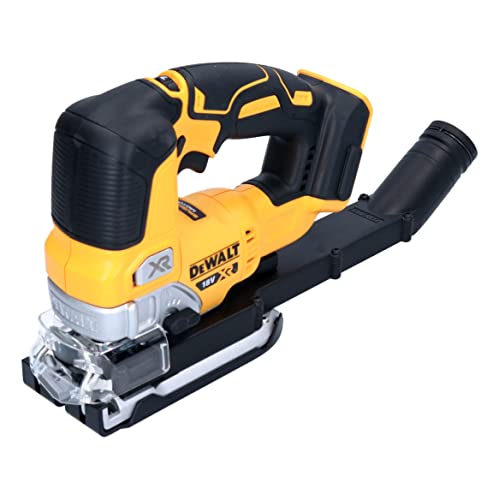
The DeWalt DCS334N is the premium pick and the highest-rated jigsaw in this guide at 4.8 stars, a genuine favourite among tradies on the DeWalt XR platform. The brushless motor delivers strong runtime and a long service life, and a four-position pendulum action lets you dial the cut from smooth and clean for finishing work up to fast and aggressive for ripping through thick material.
An intelligent variable speed trigger with a lock-off switch gives controlled starts and a measure of added safety, the tool-free shoe bevels to 45 degrees in both directions, and the keyless system accepts T-shank blades for quick changes. The honest caveat is the one shared by every premium skin here: it is sold as the tool only, so you need a DeWalt 18V XR battery and charger to use it, which adds to the real cost if you are not already in the system.
How to choose the right jigsaw for you
Start with the platform question, because for cordless it usually settles the brand for you. If you already own Ryobi ONE+, Makita LXT, Stanley V20 or DeWalt XR batteries, buy the matching skin and you save the cost of a new battery and charger - jumping platforms just for a jigsaw rarely makes sense. If you own no cordless tools at all and only need a jigsaw occasionally, a corded Bosch sidesteps the whole battery question and costs less up front, which is why the corded PST 650 is the sensible default for many home users.
After that, match the features to your work. A brushless motor, as in the Makita and DeWalt, pays off if you cut often by running longer and lasting longer, but it is overkill for the odd weekend job. Orbital or pendulum action is the feature that genuinely speeds up cutting in thick stock, so look for it if you cut a lot of timber. Tool-free blade change and a bevel adjustment to 45 degrees are near-universal here and worth having. Be honest about how often you will really use it before paying for the brushless cordless tools.
What the key specs actually mean
A few terms do most of the work when you compare jigsaws. Corded power is quoted in watts - the Bosch picks here are 500 and 530 watt - and more watts broadly means more ability to push through dense material without bogging down. For cordless tools the equivalent question is the motor type and the battery: a brushless motor is more efficient and durable than a brushed one, and the platform decides which batteries fit. Strokes per minute, like the Stanley's 2,500 SPM, indicates how fast the blade moves.
Orbital or pendulum action is the spec worth understanding most. Instead of moving the blade straight up and down, it swings the blade forward into the cut on the upstroke, removing material faster - great for rough, fast cuts in wood, though you switch it off for clean curves or metal. Bevel capacity, usually 45 degrees here, lets you tilt the shoe for angled cuts, and shank type - U-shank or the more common T-shank - tells you which blades fit. Read those together and any jigsaw spec sheet makes sense. For more cordless-platform guidance, see our guide to the best cordless drills in Australia.
Frequently Asked Questions
Corded or cordless jigsaw - which should I buy?
It depends on how and where you cut. A corded jigsaw like the Bosch PST 650 is cheaper, never runs flat and gives steady power for as long as you work, which suits a home bench near a power point. A cordless jigsaw frees you from the cable so you can cut anywhere, but most cordless models are sold as skins, so you supply the battery. If you already own 18V batteries from Ryobi, Makita, Stanley or DeWalt, buy the matching cordless skin; if not, a corded Bosch is the simpler, cheaper start.
What does it mean that a jigsaw is sold as a skin?
A skin, or tool-only listing, means you get just the jigsaw with no battery or charger in the box. The Ryobi, Stanley, Makita and DeWalt picks here are all skins, which is why their prices look low for the brand. They are designed for people who already own batteries on that platform and want to add a tool without paying for another battery. If you own no batteries on that system, factor in the extra cost of a compatible battery and charger before comparing a skin against a corded tool.
What is orbital or pendulum action on a jigsaw?
Orbital action, also called pendulum action, swings the blade slightly forward into the cut on each upstroke instead of moving it straight up and down. That removes material faster, so it speeds up rough cuts in thicker timber - the Bosch PST 800 PEL and the orbital settings on the Ryobi, Makita and DeWalt all use it. You turn the action up for fast cutting and down, or off, for clean curves, fine finishing or cutting metal, where a straight stroke gives a neater edge.
Do I need a brushless motor in a jigsaw?
Only if you cut often. A brushless motor, as in the Makita DJV184Z and DeWalt DCS334N, runs cooler and more efficiently than a brushed motor, which means longer runtime from each battery charge and a longer service life, so it earns its higher price for frequent or all-day use. For occasional weekend cutting a brushed corded tool like the Bosch picks does the job perfectly well and costs far less, so do not pay for brushless unless your usage justifies it.
Can a jigsaw make bevel and angled cuts?
Yes. Every jigsaw in this guide bevels to 45 degrees, which means you can tilt the shoe, or base plate, to make angled and compound mitre cuts rather than only cutting square. Several, including the Ryobi and the DeWalt, bevel both left and right. A tool-free shoe adjustment, as on the DeWalt, makes changing the angle quicker. For accurate bevels, set the angle carefully, clamp your workpiece and cut slowly, because the angled blade has a stronger tendency to wander off the line.
What is tool-free blade change and does it matter?
Tool-free blade change lets you release and swap the blade with a lever or quick-release rather than needing an Allen key, and every pick here offers it. It matters because you change blades often - moving between wood, metal and curve-cutting blades - and a keyless system makes that a few-second job instead of a fiddle. Most modern jigsaws use T-shank blades, though the Stanley FatMax V20 also accepts U-shank blades, giving you a wider choice when you restock.
Which jigsaw platform should I choose if I am starting fresh?
If you own no cordless tools yet and only need a jigsaw, a corded Bosch like the PST 650 avoids committing to any battery system and costs the least. If you expect to buy more cordless tools over time, pick the platform with the range and batteries you want long term - Ryobi ONE+ is huge and affordable for home users, while Makita LXT and DeWalt XR are trade-grade systems with brushless options. Choose the ecosystem first, then the matching skin, so your battery investment carries across many tools.