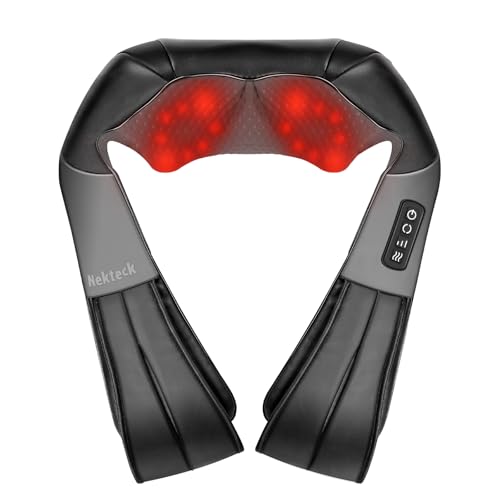
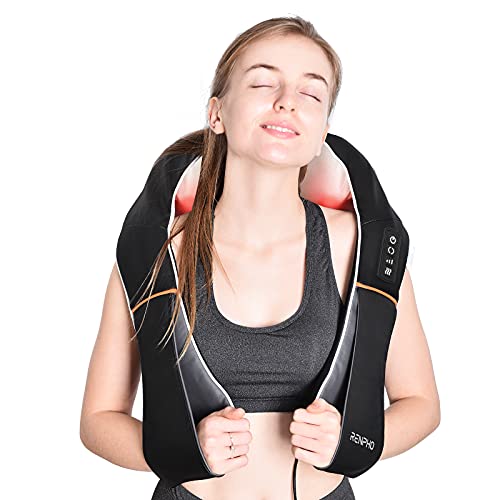
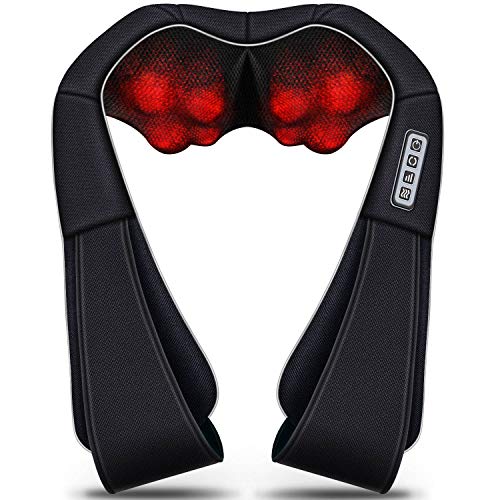
A neck and shoulder massager works the knots a long day at a desk leaves behind, and the right one depends on how you want to use it. The big divide is corded versus cordless - a corded shiatsu unit gives you unlimited runtime and a stronger motor for serious kneading, while a cordless model trades some power for the freedom to use it anywhere. We weighed kneading strength, heat, node count, runtime and how each one actually sits on your neck and shoulders. These six run from a 38.99 dollar VIKTOR JURGEN shiatsu up to a 112 dollar SKG H5 Mini wearable.
How to choose a neck and shoulder massager in Australia
A neck and shoulder massager does one job well - it works the knots and tension a long day at a desk, a drive or a workout leaves behind - but the right one depends on how and where you want to use it. The best neck and shoulder massager in Australia for most people is the RENPHO Shiatsu at 63.99 dollars, with eight deep-kneading nodes, switchable heat and three speeds, and the VIKTOR JURGEN at 38.99 dollars is the cheapest here that kneads properly. The biggest decision is power. Corded shiatsu units like the VIKTOR JURGEN, the Nekteck and the RENPHO plug into the wall or a car and give you unlimited runtime and a stronger, more consistent motor for serious kneading. Cordless units like the cotsoco, the Mebak N1 and the SKG H5 Mini run on a battery, so you can use them anywhere with no socket, but they trade some kneading power and session length for that freedom. After settling corded versus cordless, it comes down to kneading strength, heat, how many nodes or heads the unit has, and the shape - a U-shaped neck unit, a strap-on shoulder kneader or a wearable design. This guide covers six massagers from 38.99 to 112 dollars, each suited to a different need. A massager works the muscle. If the problem is a pain signal rather than a knot, a TENS machine is the other drug-free tool people compare it with.
Corded versus cordless - the core trade-off
This is the choice that shapes everything else. A corded massager draws mains power, so it keeps a strong, steady kneading action the entire session and never fades the way a battery does - the RENPHO at 63.99 dollars and the budget VIKTOR JURGEN at 38.99 dollars both run as firm at minute fifteen as at minute one, and many corded units like the Nekteck at 56.99 dollars include a 12V car adapter for the commute too. The catch is you stay tethered near a socket or in the car. A cordless massager like the cotsoco at 59.99 dollars frees you to use it on the couch, in bed or at a desk with no cord, but the battery sets a ceiling on both how hard it can knead and how long each session lasts before recharging. If raw power and unlimited runtime matter most, go corded; if convenience and moving around matter more, go cordless and accept a slightly gentler massage.
Kneading strength and how it feels
The point of these units is to actually relieve tension, and the firmness of the kneading is what separates a satisfying massage from a token vibration. Corded shiatsu units tend to hit hardest because the motor has constant power - the RENPHO at 63.99 dollars runs a copper motor for a strong, quiet action, and the Nekteck at 56.99 dollars is known for a firm, deep knead. Cordless units are generally a touch gentler, though the premium Mebak N1 at 99.99 dollars pushes back with six 3D heads for a layered, hands-like feel. Most units offer two or three intensity or speed settings so you can ease in. If you bruise easily or have a very sore neck, start on the lowest setting with a layer of clothing between you and the nodes, then work up - a strong massager you use gently is better than a weak one you cannot dial up.
Heat - warming the muscle before the knead
Most good neck and shoulder massagers add gentle heat, and it is more than a comfort feature - warmth helps loosen tight muscle before the nodes work it, so the massage goes deeper with less soreness. The settings vary. The budget VIKTOR JURGEN at 38.99 dollars warms to around 42C, the Nekteck at 56.99 dollars goes up to 45C, the warmest here, and the Mebak N1 at 99.99 dollars offers two levels at 104F and 122F so you can pick a light or a deeper heat. The cotsoco at 59.99 dollars uses soothing infrared heat. Look for heat you can switch on or off - the RENPHO at 63.99 dollars lets you do exactly that - because on a warm day or for a quick session you may want the kneading without the warmth. If you mainly use a massager to wind down after work, prioritise a model with strong, adjustable heat.
Nodes and heads - coverage across the neck and shoulders
How many massage nodes or heads a unit has, and how they move, decides how much of your neck and shoulders it works at once. More nodes generally means broader coverage - the Nekteck at 56.99 dollars and the cotsoco at 59.99 dollars both pack sixteen nodes, while the RENPHO at 63.99 dollars uses eight larger deep-kneading nodes that still cover the neck, shoulders, back and legs. 3D and bi-directional nodes, like the cotsoco's, alternate both directions to mimic real hands rather than spinning one way. The premium picks go further on geometry - the Mebak N1 at 99.99 dollars layers four 3D and two 3D heads, and the SKG H5 Mini at 112 dollars uses a six-direction head array over an area around 200 percent larger than a basic unit. More and smarter nodes cost more, so match the coverage to whether you target one sore spot or want a broad all-over working.
Runtime, charging and auto-off
How long a massager runs, and how it powers up, matters day to day. Corded units have no runtime limit at all beyond their safety timer - the VIKTOR JURGEN and RENPHO both use a 15-minute auto-off, which is plenty for a session and stops the unit overworking a muscle. Cordless units are capped by their battery: the cotsoco at 59.99 dollars manages around 70 to 80 minutes per charge over USB-C, the Mebak N1 at 99.99 dollars runs a 2000mAh battery with a 10-minute auto-off, and the SKG H5 Mini at 112 dollars gives about 70 minutes per charge. That is several sessions between charges for most people, but it is a real limit a corded unit does not have. Check the charging method too - USB-C is the most convenient, and note that some cordless units like the cotsoco ship with only a cable and no wall plug, so you charge from a phone or laptop adapter.
Shape and wearability - held, strapped or worn
The form factor decides how you actually use the massager and whether your hands stay free. A classic strap-on shoulder unit like the RENPHO at 63.99 dollars or the Nekteck at 56.99 dollars drapes over the shoulders with handles or straps you pull to press the nodes in - simple and effective, but you usually hold it in place. The Mebak N1 at 99.99 dollars adds adjustable straps to hold itself over the shoulders. The standout for hands-free use is the SKG H5 Mini at 112 dollars, a wearable backpack-style design at about 2.4 pounds that straps on and stays put so you can sit, read or work while it runs. Think about where you will use it - at a desk a wearable that frees your hands is worth a lot, while on the couch a simple strap-on unit you hold for fifteen minutes is fine and cheaper.
Shiatsu, percussion or heat: which one do you need?
Shiatsu is what every pick here does: rotating nodes that knead in circles, which suits the broad, ropey tension that sits across the top of the shoulders. Percussion is a different thing, a massage gun hammering one point at a time, which is better for a single knot or for legs after training but awkward to aim at your own neck. Heat on its own releases nothing, it just makes the muscle easier to work, so a heating pad is the cheaper answer if warmth is all you want. And if the tension always comes back after a day at the desk, the massager is treating the symptom: a posture corrector or a better chair setup is the other half of the fix.
How do the six neck and shoulder massagers compare?
Corded units keep the same kneading strength for the whole session. Cordless units trade some of that for being able to use them anywhere.
| Pick | Power | Nodes or heads | Heat | Price | Rating |
|---|
| VIKTOR JURGEN Neck and Shoulder Massager | Corded | Shiatsu nodes | About 42C | $38.99 | 4.4 |
| Nekteck Neck and Shoulder Massager | Corded | 16 nodes | Up to 45C | $56.99 | 4.2 |
| cotsoco Cordless Neck and Shoulder Massager | Cordless | 16 3D nodes | Infrared | $59.99 | 4.2 |
| RENPHO Shiatsu Neck and Shoulder Massager | Corded | 8 deep-kneading nodes | Switchable | $63.99 | 4.4 |
| Mebak N1 Cordless Neck and Shoulder Massager | Cordless | 6 3D heads | Two levels | $99.99 | 4.4 |
| SKG H5 Mini Wearable Neck and Shoulder Massager | Cordless | 6D heads | Not listed | $112.00 | 4.0 |
Our verdict
For most people the RENPHO Shiatsu Neck and Shoulder Massager at 63.99 dollars is the smart buy - it is the trusted corded all-rounder here, with eight deep-kneading nodes, a copper motor, switchable heat, three speeds and direction control, which is why it is our pick. If you only want to spend a little, the VIKTOR JURGEN at 38.99 dollars is a corded shiatsu with deep kneading and gentle heat that runs off the wall or a car. Want the option with the most reviews behind it? The Nekteck at 56.99 dollars has 61,610 reviews, sixteen nodes and heat up to 45C. For cordless freedom the cotsoco at 59.99 dollars runs 16 3D nodes off a USB-C charge, the Mebak N1 at 99.99 dollars is the premium cordless kneader with six 3D heads, and the SKG H5 Mini at 112 dollars is the wearable backpack-style pick with a much larger coverage area.
Frequently Asked Questions
Is a corded or cordless neck and shoulder massager better?
It depends on what you value. A corded massager like the RENPHO (63.99 dollars) or the budget VIKTOR JURGEN (38.99 dollars) draws mains power, so it keeps a strong, steady knead the whole session with unlimited runtime, and many include a 12V car adapter too - the trade-off is you stay near a socket. A cordless unit like the cotsoco (59.99 dollars) lets you use it anywhere with no cord, but the battery limits both how hard it kneads and how long each session lasts. Go corded for raw power and runtime, cordless for convenience and moving around.
Which neck and shoulder massager has the strongest kneading?
Corded shiatsu units tend to knead hardest because the motor has constant mains power. The RENPHO (63.99 dollars) runs a copper motor for a strong, quiet action, and the Nekteck (56.99 dollars) is known for a firm, deep sixteen-node knead. Among cordless models the Mebak N1 (99.99 dollars) is one of the more powerful, with six 3D heads. If you bruise easily, start on the lowest intensity with a layer of clothing between you and the nodes, then work up - a strong massager used gently beats a weak one you cannot dial up.
Do neck and shoulder massagers have heat, and does it help?
Most do, and it genuinely helps - warmth loosens tight muscle before the nodes work it, so the massage goes deeper with less soreness. The VIKTOR JURGEN (38.99 dollars) warms to around 42C, the Nekteck (56.99 dollars) goes up to 45C, the warmest here, and the Mebak N1 (99.99 dollars) offers two levels at 104F and 122F. The cotsoco (59.99 dollars) uses soothing infrared heat. Look for heat you can switch on or off, like the RENPHO (63.99 dollars), because on a warm day or a quick session you may want the kneading without the warmth.
How long can you use a neck and shoulder massager for?
Keep each session short - around ten to fifteen minutes on one area is plenty, which is why most units have an auto-off. The VIKTOR JURGEN and RENPHO use a 15-minute auto-off and the Mebak N1 (99.99 dollars) a 10-minute one. Corded units have no runtime limit beyond that timer, while cordless units are capped by their battery - the cotsoco (59.99 dollars) runs around 70 to 80 minutes per charge and the SKG H5 Mini (112 dollars) about 70 minutes. Overworking one spot can leave it sore, so let the timer do its job and move to another area if you want more.
How many massage nodes do I actually need?
It depends on coverage. More nodes means a broader working - the Nekteck (56.99 dollars) and the cotsoco (59.99 dollars) both have sixteen, while the RENPHO (63.99 dollars) uses eight larger deep-kneading nodes that still reach the neck, shoulders, back and legs. 3D and bi-directional nodes alternate both directions to mimic real hands. The premium picks go further - the Mebak N1 (99.99 dollars) layers six 3D heads and the SKG H5 Mini (112 dollars) covers an area around 200 percent larger than a basic unit. Match the node count to whether you target one sore spot or want an all-over working.
Are wearable neck and shoulder massagers worth it?
They are if you want your hands free while it works. The SKG H5 Mini (112 dollars) is a wearable backpack-style design at about 2.4 pounds that straps on and stays put, so you can sit, read or work at a desk while it runs rather than holding it against your shoulders. It also covers an area around 200 percent larger than a basic unit. The trade-off is price - at 112 dollars it is the dearest pick here, and a corded strap-on unit you hold for fifteen minutes gives more kneading power for the money. Choose a wearable for the form factor and coverage, not for raw strength.
Can I use a neck and shoulder massager in the car?
Yes, if it has a 12V car adapter or runs on a battery. Corded units like the VIKTOR JURGEN (38.99 dollars) and the Nekteck (56.99 dollars) include a 12V adapter so you can plug into the car as well as the wall, which suits a long commute. Cordless units like the cotsoco (59.99 dollars) work in the car too since they need no socket at all. For safety, only use a massager in the car when parked or as a passenger, never while driving, and keep the session short with the built-in auto-off so it does not run too long.
What is the best massager for neck and shoulder pain?
Match the tool to where the tension sits. For broad tightness across the top of the shoulders from desk work, a corded shiatsu unit with strong nodes is the answer, and the RENPHO at 63.99 dollars is the pick here. For a single stubborn knot, percussion works better than kneading. For pain that wakes you at night or radiates down an arm, stop and see a physiotherapist or your GP, because that is not what a massager is for.
Is it safe to use a massager on your neck?
On the muscle at the base and sides of the neck and across the shoulders, yes, in short sessions. Keep the nodes off the front of the throat, off the spine itself, and off anything bruised, swollen or numb. Most units shut off after about 15 minutes for that reason. If you have had neck surgery, a disc injury or osteoporosis, or you are on blood thinners, ask your GP or physiotherapist before you start.
Can you use a neck massager while pregnant?
Ask your GP or midwife before you start. The massager is not usually the issue, but the advice depends on how far along you are and on your own history, and some guidance is cautious about heat and about pressure on certain points. If you are cleared to use one, keep the sessions short, use the lowest heat setting or none at all, and stop if anything feels uncomfortable.
Where can you buy a neck massager in Australia?
Every pick here is an Amazon Australia listing. JB Hi-Fi, The Good Guys, Harvey Norman and Myer stock the mainstream brands in store, and HoMedics, Beurer and Australian brands such as Masseuse Massage and iRelax sell through their own sites. Prices swing hard between channels for the same unit, so compare the node count and whether the heat can be switched off rather than the brand name.