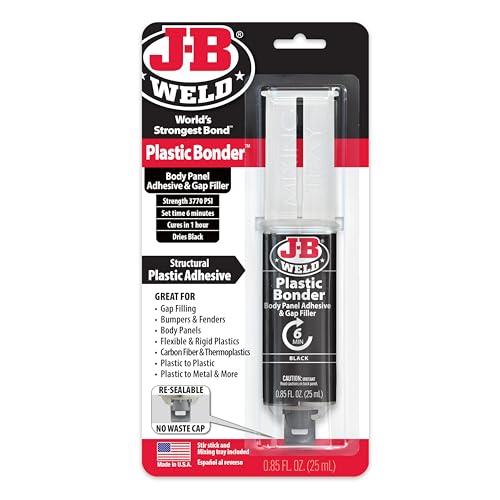
The best glue for plastic for most people is the JB Weld PlasticBonder, because the listing describes a quick set, two part urethane adhesive that works on thermoplastics, thermosets, carbon fibre composites and PVC and makes a great gap filler. We compared six glues for plastic, from repair adhesives to model glues, on what each listing states and on star ratings.
The PlasticBonder is a repair adhesive and gap filler, while Citadel Plastic Glue is a model glue made for assembling plastic Citadel miniatures. This page covers liquid glues, cements and putties for plastic; glue sticks melted in a gun are in our hot glue gun guide.
| Pick | Type | Size | Plastics the listing names | Set time (listing) |
|---|
| JB Weld PlasticBonder | Two part urethane adhesive, 1:1 mix | 25 ml syringe | Thermoplastics, thermosets, carbon fibre composites, PVC | Sets in 15 minutes, sand after 30 |
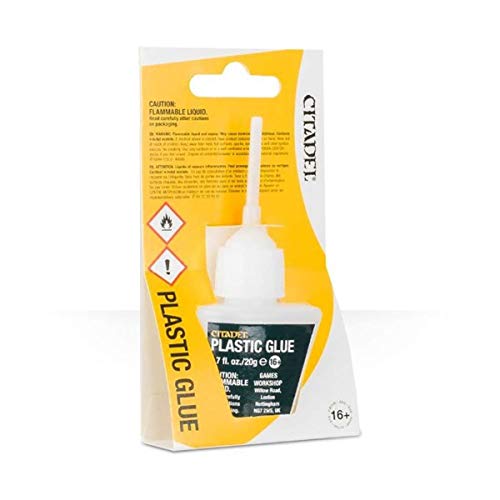
| Citadel Plastic Glue | Model glue, nozzle bottle | 20 g (spec table); one bullet says about 198 g | Plastic Citadel miniatures | not stated |
| Loctite Super Glue All Plastics | Cyanoacrylate glue with activator pen | 2 g tube, 4 ml pen | All plastics, including polyethylene and polypropylene; not polystyrene | 60 second activator wait, then seconds |
| JB Weld PlasticWeld Epoxy Putty | Hand mixable epoxy putty | About 59 ml | Most hard plastics, ABS, fibreglass, PVC, vinyl; not polyethylene or polypropylene | Sets in 5 minutes (bullets); 20 to 25 minute work life (description) |
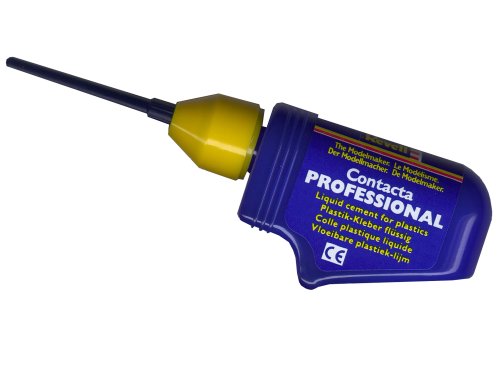
| Revell Contacta Professional | Liquid glue, fine hollow needle | 25 g tube | Plastic, wood, metal, glass (spec table) | Self supporting after about 15 to 20 minutes |
| Tamiya Extra Thin Cement Quick Setting | Extra thin liquid cement, brush in cap | 40 ml bottle | Plastic (spec table); not elastomer | About 4 times faster than the original |
Best glue for plastic overall: JB Weld PlasticBonder
Best glue for plastic overall: the JB Weld PlasticBonder, because the listing describes a two part urethane adhesive for thermoplastics, thermosets and PVC that sets in 15 minutes, fills gaps and has the most ratings of any pick here.
The listing calls PlasticBonder a quick set, 2 part urethane adhesive system for strong, lasting repairs on thermoset, carbon fibre composites, thermoplastics, coated metals and concrete. It mixes 1:1, sets in 15 minutes, can be sanded after 30 minutes and cures to a hard, permanent bond with a listed tensile strength of about 26 MPa. The spec table lists a 25 ml syringe and a stir stick and marks it water resistant. The JB Weld PlasticBonder holds 4.6 stars from 17,836 ratings.
It suits plastic, composite and PVC repairs indoors or outdoors where a gap needs filling, and body panel work, as the title names. The honest catch: it dries black, so the join shows on light or clear plastic, and the two parts are mixed for each job.
Best plastic glue for miniatures and models: Citadel Plastic Glue
Best plastic glue for miniatures and models: Citadel Plastic Glue, because the listing says it is designed specifically for assembling plastic Citadel miniatures and comes in a bottle with a handy applicator nozzle.
Games Workshop produces Citadel Plastic Glue, and the description says the nozzle bottle makes it as easy as possible to put your models together. The spec table describes a transparent liquid of low to medium viscosity for plastic and marks it not water resistant. The spec table gives a unit count of 20 g, while one bullet says the pack includes about 198 g of model glue. Citadel Plastic Glue holds 4.6 stars from 4,124 ratings.
It suits anyone putting together plastic Citadel miniatures, the use the listing names. The honest catch: the listing names no other plastic, gives no drying time and does not describe repairs or gap filling.
Best super glue for hard to bond plastics: Loctite Super Glue All Plastics
Best super glue for hard to bond plastics: the Loctite Super Glue All Plastics, because the listing says its activator pen lets the clear glue bond all types of plastic, including polyethylene and polypropylene, though it excludes polystyrene.
The listing describes a solvent free cyanoacrylate glue in a 2 g tube with a 4 ml dry activator pen. The description says to apply the activator to both surfaces, wait 60 seconds, add a drop of glue to one surface and press the parts together for a few seconds. It names toys, car accessories and computers as uses, says it also bonds rubber, metal, wood and leather, and excludes polystyrene, glass and synthetic fibres. The Loctite Super Glue All Plastics holds 4.6 stars from 22 ratings.
It suits transparent repairs on close fitting plastic parts, which the description says it adheres to perfectly. The honest catch: it does not work on polystyrene, and 22 ratings is a small count.
Best epoxy putty for plastic repairs: JB Weld PlasticWeld Epoxy Putty
Best epoxy putty for plastic repairs: the JB Weld PlasticWeld Epoxy Putty, because the listing describes a hand mixable epoxy putty to build up and repair plastic that can be sawed, drilled, carved and sanded once cured.
The bullets name most hard plastics, ABS, fibreglass, PVC, glass, vinyl and most composites; the description says it does not adhere to polyethylene, polypropylene or some other plastics, and to test for adhesion first. It cures off white and can be painted. The listing figures disagree: the bullets give a 5 minute set, a 1 hour harden and about 22 MPa tensile strength, the description a 20 to 25 minute work life, functional cure in 2 to 3 hours and about 4.8 MPa, and the spec table a 3 hour full cure and about 22 MPa. The PlasticWeld putty holds 4.6 stars from 56 ratings.
It suits building up and repairing plastic parts; our rotary tool guide covers tools for cutting and sanding. The honest catch: it is a putty you mix by hand, and it has only 56 ratings.
Best fine needle glue for model details: Revell Contacta Professional
Best fine needle glue for model details: the Revell Contacta Professional, because its very fine hollow needle is made for gluing fine details and edges of parts.
Revell says Contacta Professional is designed for precise gluing of points and joints. The description says to apply a thin layer to one side of the joint, wait about 5 to 10 seconds, then join the parts; joints are self supporting after about 15 to 20 minutes and reach full strength after about 60 minutes. The spec table gives a 25 g tube, marks it water resistant and lists plastic among its compatible materials. It holds 4.3 stars from 7,740 ratings.
It suits model builders gluing small points, joints and edges. The honest catch: it has the lowest star rating here, and its spec table gives a 3 day full cure time against the description's 60 minutes.
Best extra thin cement for tight spaces: the Tamiya Extra Thin Cement Quick Setting, because the listing describes a highly liquid cement that flows into even small cracks and dries around 4 times faster than the original.
The 40 ml bottle has a brush on the underside of the cap. The listing says the quick setting version has less tendency to seep out of part joints, suits attaching parts in very tight spaces and can attach parts that have been fitted by hand first. The Tamiya Extra Thin Cement Quick Setting holds 4.6 stars from 413 ratings.
It suits modellers joining plastic parts that already fit together. The honest catch: the listing says it is not for elastomer parts such as tracks, as it can cause brittleness, and it points to the original Extra Thin Cement for filling larger gaps and seams.
How to choose a glue for plastic
Glue type by job
Repairs and models need different glues. The JB Weld PlasticBonder and PlasticWeld putty are listed for repairs, filling and building up; the Loctite Super Glue All Plastics for close fitting parts; Citadel for assembling plastic Citadel miniatures; and Revell and Tamiya for plastic model parts, though neither of those listings names miniatures.
Which plastics each listing names
The plastic type decides which glue will hold. Polyethylene and polypropylene are where these listings split: the Loctite description names both, with its activator, while the PlasticWeld description says it does not adhere to them. PlasticWeld is the pick that names ABS, and PVC appears on both JB Weld listings. No listing here names PLA, acrylic or 3D printed parts among what it bonds, so none is listed for 3D prints. To join plastic to metal or wood, the Loctite description also names metal, wood, rubber and leather, and the PlasticBonder names coated metals. For timber, our wood glue guide covers glues made for wood.
Clear, black or off white
The finish colour decides whether a join shows. Loctite Super Glue All Plastics dries transparent, and the Citadel and Tamiya spec tables list their glue as transparent and clear. The JB Weld PlasticBonder dries black, and the PlasticWeld putty cures off white and can be painted.
Mixing and applicators
The applicator decides how neat the join is. The PlasticBonder syringe is mixed 1:1 with the listed stir stick, and the PlasticWeld putty by hand. Loctite pairs a tube with an activator pen, Citadel has an applicator nozzle, Revell a fine hollow needle and Tamiya a brush on the underside of the cap.
Frequently asked questions
What is the best glue for plastic in Australia?
The JB Weld PlasticBonder is the best glue for plastic for most repairs: a two part urethane adhesive that the listing says works on thermoplastics, thermosets, carbon fibre composites and PVC, sets in 15 minutes and fills gaps. For plastic miniatures choose Citadel Plastic Glue, and for a clear finish the Loctite Super Glue All Plastics.
What is the strongest plastic glue?
Of the picks that state a figure, the JB Weld PlasticBonder lists the highest tensile strength: about 26 MPa, curing to what the listing calls a hard, permanent bond. The JB Weld PlasticWeld putty lists about 22 MPa in its bullets and spec table but about 4.8 MPa in its description. The other four listings state no strength figure.
What is the best plastic glue for Warhammer miniatures?
Citadel Plastic Glue: the listing says it is designed specifically for assembling plastic Citadel miniatures and comes in a bottle with a handy applicator nozzle. For other plastic model parts, Tamiya Extra Thin Cement Quick Setting flows into small cracks between fitted parts and Revell Contacta Professional has a fine hollow needle, though neither listing names miniatures.
What is the best plastic glue for car parts?
The JB Weld PlasticBonder is the pick here, because the listing title calls it a body panel adhesive and gap filler, for indoor or outdoor use with a black finish. The Loctite Super Glue All Plastics description names car accessories among its uses, for clear repairs on close fitting parts. Neither listing names bumpers.
Is plastic glue the same as super glue or plastic cement?
Not always. Loctite Super Glue All Plastics is a cyanoacrylate super glue that uses an activator pen to bond plastics, while Tamiya Extra Thin Cement Quick Setting is a liquid cement that flows into small cracks between parts already fitted by hand. Citadel Plastic Glue is a model glue, and the JB Weld PlasticBonder a two part urethane adhesive.
Should I use plastic glue or epoxy?
For plastic that needs building up, the JB Weld PlasticWeld Epoxy Putty is the pick: the listing describes a hand mixable epoxy putty that can be moulded to build up and repair plastic, then sawed, drilled, sanded and painted. The JB Weld PlasticBonder is a urethane adhesive that the listing says makes a great gap filler.
How long does plastic glue take to dry?
The JB Weld PlasticBonder sets in 15 minutes and can be sanded after 30. Revell's description gives full strength after about 60 minutes, though its spec table gives a 3 day full cure. Loctite Super Glue All Plastics bonds in seconds after a 60 second activator wait. Citadel gives no time.
Is plastic glue waterproof?
Two picks are listed as water resistant: the spec tables mark the JB Weld PlasticBonder and Revell Contacta Professional that way, and the PlasticBonder bullets add indoor or outdoor use. Citadel Plastic Glue, Loctite Super Glue All Plastics and the JB Weld PlasticWeld putty are marked not water resistant; Tamiya's spec table says indoor.