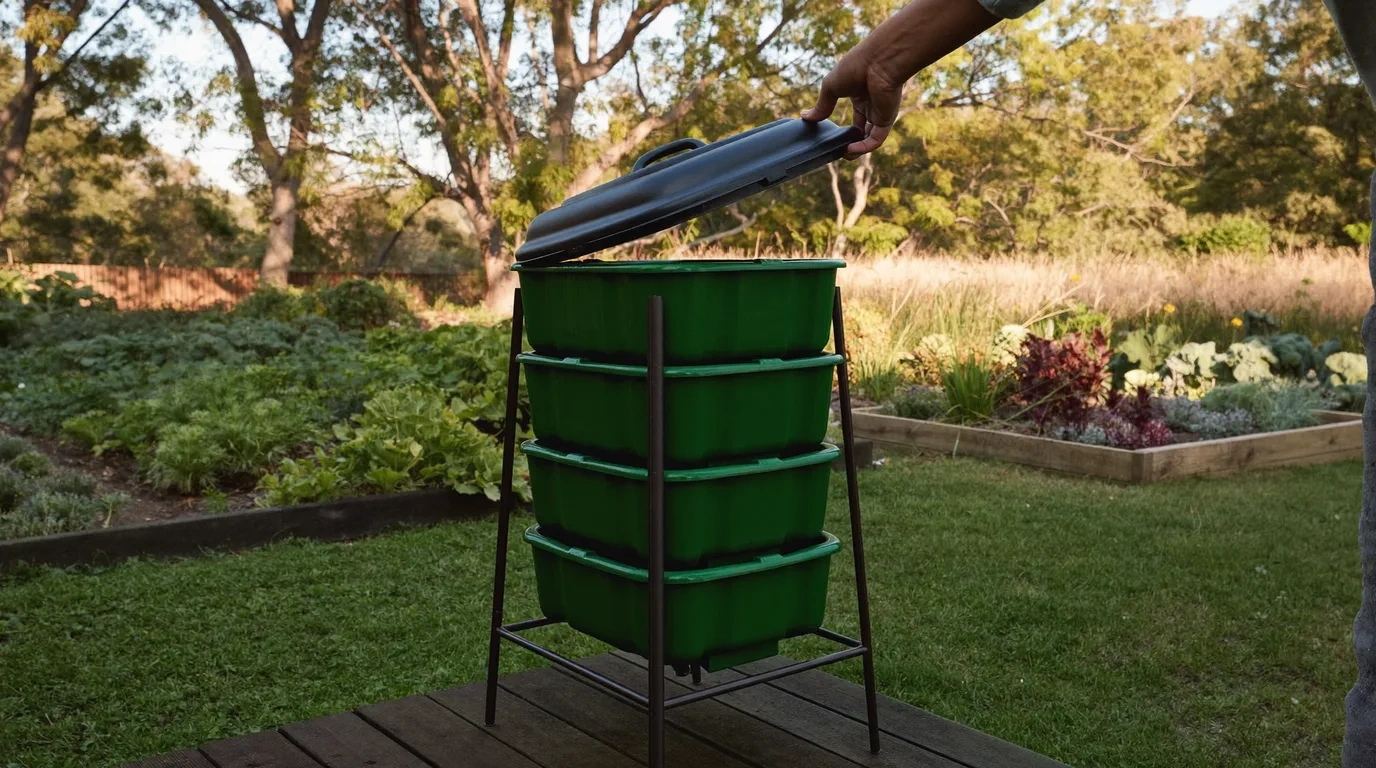
Worm farms turn kitchen scraps into free garden fertiliser
A worm farm is the quietest, lowest-effort way to keep food scraps out of the bin and turn them into worm castings and worm tea, two of the richest free fertilisers you can put on a garden. For first-home buyers with a new backyard, a balcony, or a couple of raised beds, it is a small buy that pays back every week. One thing to know before you shop: almost none of these come with worms. The farm is the housing, and you add composting worms separately, which is normal and easy. We looked at the tiered-tray and continuous-flow worm farms actually in stock on Amazon Australia and picked six worth your money.
Which worm farm should you buy?
For most people the best worm farm in Australia right now is the VermiHut Plus 5-Tray: it is affordable, easy to run, and by far the most reviewed farm here. If you are tight on space, the two-tray FCMP Outdoor Essential Living Composter tucks into a courtyard and expands as your worms multiply. On a smaller budget, the Australian-made Maze Worm Farm is one of the most affordable picks here and sits happily on a balcony. Every one of them is a housing only, so plan on buying worms too.
- Best overall: VermiHut Plus 5-Tray, five stacking trays and a worm-tea tap for around the price of a couple of bags of compost a year.
- Best for small spaces: FCMP Outdoor Essential Living Composter, a neat two-tray system in sun-tough recycled plastic.
- Best budget pick: Maze Worm Farm, a low, compact, Australian-made farm that rotates two trays so you rarely buy extras.
Compare the best worm farms at a glance
The table lines up all six on the things that matter first: who they suit, how they are built, and the price you pay before you add worms. Tap any name to see the current listing on Amazon Australia.
How we evaluated these worm farms
- We only shortlisted real worm farms, tiered-tray and continuous-flow systems, and left out compost bins, kids observation boxes and mealworm kits.
- We checked live Amazon Australia listings for stock, star ratings and review counts, and dropped listings with too few reviews or reseller-inflated prices.
- We compared tray count, capacity, ventilation, worm-tea collection and how well each copes with a hot, sunny spot.
- NestPath researches and studies products rather than lab-testing them, and we say plainly when worms and bedding are extra.
VermiHut Plus 5-Tray: the best worm farm overall
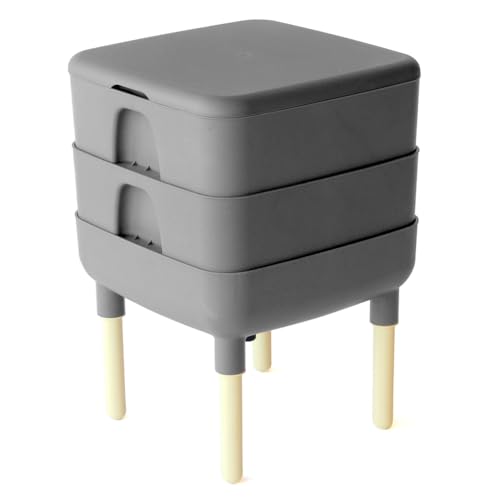
The VermiHut Plus is the farm we would put in most backyards. It is the most reviewed worm farm in this guide by a wide margin, it costs less than the fancier continuous-flow options, and it does the one job a stacking farm needs to do very well: let worms migrate upward on their own so you barely have to touch them. You feed the top tray, and as the worms finish a layer they climb toward the fresh food above, leaving clean castings behind in the tray below.
It ships as a five-tray tower on a reservoir base, and you can add more trays later. A built-in tap drains worm tea straight into a watering can, and the worm-saver tray stops worms falling through into the liquid. The vented lid holds a coconut-fibre mat that keeps moisture even and knocks back smell, so it is comfortable to run indoors or in a sheltered outdoor corner. At around a 43 centimetre square footprint it does not dominate a small courtyard, and the recycled HDPE is sturdy without being heavy. Those worm castings are exactly what a raised garden bed wants worked through the top few centimetres each season.
Flaws but not dealbreakers
The trays get heavy once they are full, so lifting the tower to check the base takes a bit of effort. The listing copy leans hard on comparing itself to cheaper clones, which is more marketing than useful. And like every farm here, no worms or bedding are included, so factor those into your first order.
FCMP Outdoor Essential Living Composter: best for small spaces
If your outdoor area is a courtyard, a townhouse strip, or a shady side passage, the FCMP Outdoor Essential is the tidy answer. It starts as a compact two-tray stack rather than a full tower, so it takes up little room, and you add trays only as your worm population grows into them. It is a genuine continuous-migration design, just in a smaller and sun-tough package.
The trick is 52 angled tunnels moulded into the base of each tray, which funnel worms up into the fresh tray above and speed up how fast a lower tray finishes. Support points around the rim lift each tray for airflow, and a moisture channel around the edge stops the bedding drying out along the sides, which is a common headache in Australian heat. The base collects worm tea with a tap, and the whole thing is made from BPA-free, UV-stabilised recycled polypropylene, so a part-sun position will not make it brittle the way a thin bin can. The build quality and small starting footprint earn it a place.
Flaws but not dealbreakers
Two trays is a modest start, so a big scrap producer will want extra trays sooner rather than later. A couple of reviewers note the trays can leave small gaps if you do not seat them squarely, which lets the odd worm wander. Seat each tray firmly and that goes away.
Maze Worm Farm: the best budget and balcony pick
The Maze is one of the most affordable picks here and the only one designed and made in Australia, which is a nice bonus when you want spare parts and support close to home. It is a low, square farm that sits neatly on a balcony, a deck, or by the back step, and it is light enough to shift into the shade on a hot day.
Instead of a tall tower it uses two working trays that you rotate: when the first is full you start the second, and by the time that fills the first is ready to harvest, so you rarely need to buy more trays. It comes with a coconut coir block to get the bedding started, a slide-out worm-saver tray, and a two-litre tray under the base that catches worm tea while the open drain keeps air flowing up from below. It is made largely from recycled plastic diverted from landfill, and it genuinely looks fine left out on a deck rather than something you hide. For a first worm farm on a tight budget, it is hard to argue with.
Flaws but not dealbreakers
The two-litre liquid tray is small, so in a wet spell you will empty it more often. Capacity is modest, which is the trade-off for the compact size, so a large household will outgrow it. And the two-tray rotation asks a little more attention to timing than a full five-tray tower.
Urban Worm Bag: the best continuous-flow farm for big households
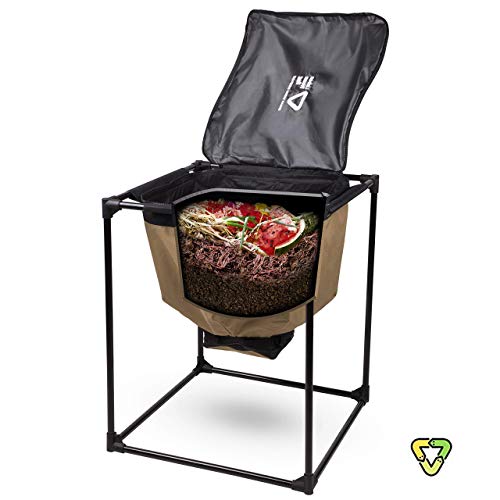
When kitchen scraps pile up faster than a stacking farm can keep up, a continuous-flow bag is the upgrade, and the Urban Worm Bag is the one to get. It is the priciest pick in this guide, but it holds far more than a tray tower and does away with lifting trays entirely: you feed from the top and harvest finished castings through a zip at the bottom.
The bag is 900D breathable fabric on a lightweight iron frame that clips together without tools in a few minutes. Because the fabric breathes on all sides, the bed stays aerobic and sweet-smelling, and you control moisture by opening or closing the bottom zip. At more than 150 litres of volume with around four square feet of working surface, it can process a serious amount of waste once it is established, which suits a big family, a keen veggie grower, or a share house. An Australian reviewer summed up the main surprise nicely, noting how much bigger it is in use than it looks on the shelf.
Flaws but not dealbreakers
It is a commitment in both price and floor space, so it is overkill for a couple with a few scraps. The fabric bag is less rigid than a plastic tower, so pick its spot and leave it. And the first harvest takes four to six months from scratch, quicker if you start with some existing compost.
Blutezeit 5-Tray: the best all-in-one starter kit
The Blutezeit 5-Tray is the highest-rated pick of our six, and it earns that partly by handing you almost everything a beginner forgets to buy. It is a conventional five-tray migrating tower in durable polypropylene, around 50 litres of capacity, but the box also includes a turning fork, a scoop, anti-slip feet, a coco-coir bedding brick, non-woven fabric and, most usefully, a soil meter.
That soil meter reads moisture, pH and light, which quietly removes most of the anxiety of your first few months: instead of guessing whether the bed is too wet or too dry, you check the dial and adjust. Each tray is vented for airflow, a spigot in the base draws off worm tea, and the modular design means you can start with fewer trays and build up. It is priced with the premium farms rather than the budget ones, and worms are still separate, but as a genuine one-box starting point it is the most complete kit here.
Flaws but not dealbreakers
The trays can leave small gaps if not seated squarely, so mosquitoes or fungus gnats can sneak in until you get the fit right. It has fewer reviews than the VermiHut, though the score is strong. And the bundled soil meter is a handy guide rather than a lab instrument, so treat its readings as a nudge.
Plastia Urbalive Economy: the best design-led box for indoors
Some worm farms are made to hide, and some are made to sit out. The Plastia Urbalive Economy is the second kind: a low, square, design-led worm box made in the EU from recycled plastic that looks at home next to a kitchen bin or under a bench rather than shoved down the side of the house.
Rather than a tall tower it uses two stacking beds of about 15 litres each, so the whole thing stays compact at 38 centimetres a side and unobtrusive indoors. Worms migrate up between the beds the same way a tray tower works, and the base collects worm tea for your pot plants. It arrives with two worm beds and a worm-tea starter, though as always the live worms are a separate buy. It is expensive for its 30-litre size, and you are paying partly for looks and recycled European build, but if the farm has to live inside a small apartment where appearance matters, it is a smart small-space choice.
Flaws but not dealbreakers
It is dear for the capacity, and two 15-litre beds fill quickly for anything more than one or two people. A reviewer noted the feet do not lock firmly, and worms can slip through the base filter if you overfill and let it get too wet. Keep the bedding damp but not soggy and it behaves.
What should you look for in a worm farm?
The big fork in the road is tiered-tray versus continuous-flow. A tiered-tray tower is cheaper, easy to understand and lets you harvest one tray at a time, which is why five of our six picks work that way. A continuous-flow bag like the Urban Worm Bag holds more and skips tray-lifting, but costs more and needs more floor space. Whichever you choose, a worm farm is a different tool from a plain compost bin: worms process soft food scraps into concentrated castings, while a compost bin or tumbler handles bulkier garden waste through heat.
- Tray count and capacity: more trays and litres mean more scraps processed, but only as fast as the worms can eat, so match it to your household rather than buying the biggest.
- Worm-tea collection: a tap and a reservoir base let you drain the liquid worm tea cleanly and dilute it for the garden, instead of it pooling and turning sour.
- Ventilation and worm-saver tray: good airflow keeps the bed aerobic and low-smell, and a worm-saver layer stops worms drowning in the liquid tray.
- Hot-climate resilience: UV-stabilised or recycled thick plastic survives a part-sun spot, and a shaded position plus a worm blanket protects worms through an Australian summer.
- Bedding and worms: budget for composting worms and a coco-coir or shredded-paper bedding, because the farm itself is only the housing.
How do you keep a worm farm healthy?
Worm farms are forgiving once the basics are right, and the basics are shade, moisture and a balanced diet. Keep the farm out of direct afternoon sun, feed in moderation, and it will hum along with almost no smell.
- Feed little and often: add chopped fruit and vegetable scraps, coffee grounds, tea leaves and crushed eggshell, and wait until the last feed is being eaten before adding more.
- Skip the problem foods: no meat, dairy, oily food, onion, garlic or citrus in quantity, as these smell, attract pests or irritate the worms.
- Manage moisture: the bed should feel like a wrung-out sponge, so add dry bedding if it is soggy and mist it if it dries out.
- Beat the heat: in a heatwave move the farm into deep shade, drape a damp hessian worm blanket over the top, and even a frozen water bottle on the bedding helps.
- Harvest the tea and castings: drain worm tea every week or two and dilute it about one part to ten with water, and lift finished castings once a tray is dark and crumbly.
The farm is only half the setup. These are the extras that actually get a worm farm running and keep it happy, and none of them cost much next to the bin itself.
The competition we looked at
A few farms just missed the cut. The classic VermiHut 5-Tray is excellent and slightly higher rated than the Plus, but it is essentially the same brand and design without the upgraded lid, so we featured the Plus instead. The Blutezeit 3-Tray is a good smaller sibling to our five-tray pick if you want the same kit in less space. The budget Telsida tray farms are cheap and in stock, but they carry no ratings yet, so we left them off. The Maze Large Bag with 1000 worms is one of the very few farms that does include worms, which is genuinely handy, but it had too few reviews to rank. We also set aside in-ground worm tubes and the Tumbleweed Worm Cafe, which is a strong farm but is easier to buy through garden retailers than Amazon right now.
Worm farm questions, answered
Do worm farms come with worms?
No. Almost every worm farm sold in Australia is shipped as an empty housing, so you buy composting worms separately. Budget for about 500 to 1000 red wrigglers or Indian blues to start, which you can order online or pick up from a nursery or a neighbour thinning out their bin.
Is a tiered-tray or continuous-flow worm farm better?
For most first-home buyers a tiered-tray system is the easier starting point. You feed the top tray, worms crawl up through the trays as they finish each layer, and you harvest the bottom tray of castings. Continuous-flow farms like a worm bag hold more and skip the tray-lifting, but they cost more and take up more room.
Where should I put a worm farm in a hot Australian summer?
Shade is the single most important thing. Composting worms are comfortable roughly between 15 and 25 degrees and struggle once it climbs into the mid 30s, so keep the farm out of direct afternoon sun. A spot on the south side of the house, under a deck, or beneath a leafy tree works well, and a damp hessian worm blanket over the top buffers heat spikes.
How big a worm farm do I need for my household?
A single five-tray system handles the food scraps of a couple or a small family once the worm population builds up. Larger households, keen veggie gardeners, or anyone composting a lot of garden waste will get further with a continuous-flow bag or a second farm, because a worm farm can only process what its worms can physically eat each day.
Can I keep a worm farm on an apartment balcony?
Yes, and it is one of the best reasons to own one. A compact tiered farm has almost no smell when the balance is right, takes up about the footprint of a milk crate, and drains into a tray rather than the floor below. Keep it out of the harsh sun, avoid meat and dairy, and your neighbours will never know it is there.
What are the downsides of having a worm farm?
A worm farm needs regular attention, including feeding, moisture checks and occasional harvesting, and it can attract pests or produce odour if it is overfed or neglected. It also needs a sheltered spot away from extreme heat or cold to keep the worms healthy.
What are the most common worm farm mistakes?
Common mistakes include overfeeding before the colony is established, letting the bedding dry out or become waterlogged, adding large amounts of citrus or onion which worms tend to avoid, and skipping bedding. A persistent smell usually points to a problem such as overfeeding or a bin that is too wet, rather than a healthy, well managed farm.
How do you get started with a worm farm?
Getting started generally means setting up a bin with damp bedding such as shredded newspaper or coconut coir, introducing composting worms, and adding small amounts of food scraps gradually as the colony settles in. Building up feeding slowly over the first few weeks helps avoid overwhelming a new colony.
Build out your garden and home setup
A worm farm is one piece of a low-waste backyard. If you are kitting out a new place, these NestPath guides pair naturally with it.
About the author
Anish Puri founded NestPath in 2026 after going through the Australian first-home-buyer process himself. NestPath focuses on Australian first-home buyers because the existing review sites are American, generic, or both. Anish handles editorial selection across the homeowner hub. Reach out: hello@nestpath.com.au