Why is buying a greenhouse in Australia harder than it should be?
Because almost nothing written about greenhouses was written for an Australian backyard. The advice that dominates search comes from the northern hemisphere, where the point is holding heat through a long grey winter. In Adelaide in February your problem is the opposite: a sealed plastic box in full sun can cook everything inside. Ventilation is the feature.
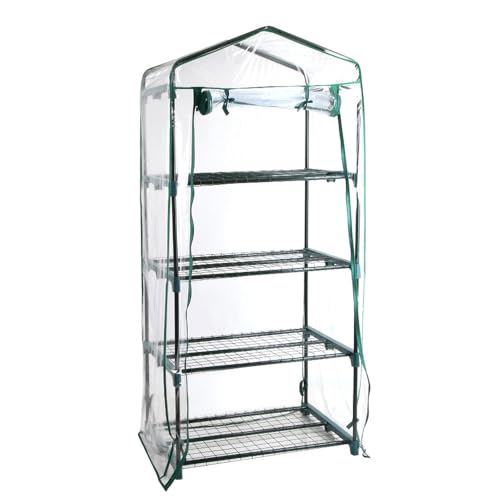
The word greenhouse covers three different purchases. A walk in greenhouse is a structure you stand inside: the Aoxun listing calls itself a walk in greenhouse, and the ALFORDSON listing gives a walk in door measuring 85cm x 160cm. A mini greenhouse is a small tent or shelf unit, and the Costway listing describes a mini greenhouse fitting on balconies, patios or in gardens. A cold frame is a low cover, and the Gardzen listing says its cold frame can also be used with a garden raised bed. A walk in needs a level pad and anchoring, a mini needs a sheltered spot, and a cold frame needs a bed or a row of pots to sit over. A greenhouse is also sold as a hot house.
Then there is freight. Greenhouses are bulky and awkward, and the delivery details on each listing are worth reading before you plan a build day. The heaviest weight on any card is the Aoxun cedar house at 242 pounds, so a walk in kit is a different job to the Costway tent at 1.5 kg. Walk in and mini models are kept clearly apart below.
What is the best greenhouse in Australia right now?
The Costway Mini Green House with Waterproof Bottom Mat is the best overall choice: a clear tent greenhouse with a metal frame, rated 5.0 from 4 ratings, so the evidence is thin. It suits seedlings on a balcony, patio or garden. If you want to stand inside your greenhouse, the walk in cards below fit better.
For a walk in structure, the ALFORDSON 3.5 x 2 x 2 m steel frame tunnel gives seven square metres of floor from its 3.5m x 2m footprint, with a 140gsm PE cover and 6 mesh windows, and is rated 4.1 from 33 ratings. The Giantex Portable Greenhouse is rated 4.4 from 123 ratings, far more ratings than the Costway has, and is tall enough to reach into. The two rigid panel walk ins, the Green Fingers at 3.8 from 6 ratings and the Aoxun cedar house at 4.0 from 26, have the smallest rating bases among the larger structures.
If you only need to raise seedlings or keep a few small plants, skip the structures. The Green Fingers 4 Tier Mini has a 70 x 50 cm footprint, 4 tier shelves and roll up zipper doors, and is rated 4.1 from 139 ratings. The Gardzen cold frame suits a raised bed or a row of pots, and has the most ratings of any card, 624 at 4.2.
How do these seven greenhouses compare?
Every figure in this table comes from the live Amazon Australia listing for that exact ASIN. Ratings are the listing ratings on the date in the Last checked line in the method section below. Where a listing gives two values for one measure, we name both or leave the figure out.
| Greenhouse | Type | Footprint | Rating |
|---|
| Costway Mini Green House | Tent greenhouse, metal frame | 95 x 50 cm | 5.0 (4) |
| Green Fingers Walk in Aluminium PC | Walk in, rigid panel | 242 x 190 cm | 3.8 (6) |
| ALFORDSON 3.5 x 2 x 2 m | Walk in, PE tunnel | 350 x 200 cm | 4.1 (33) |
| Green Fingers 4 Tier Mini | Shelf greenhouse | 70 x 50 cm | 4.1 (139) |
| Aoxun 1.8 x 3.6 m Cedar | Walk in, rigid panel | 366 x 180 cm | 4.0 (26) |
| Giantex Portable Greenhouse | Shelf, tall enough to reach into | 142.2 x 71.1 cm | 4.4 (123) |
| Gardzen Mini Greenhouse | Cold frame, Amazon US import | 91.9 x 47.8 cm | 4.2 (624) |
The three biggest structures are rated 3.8 (Green Fingers Walk in), 4.0 (Aoxun) and 4.1 (ALFORDSON), all below the Giantex at 4.4. The Costway's 5.0 rests on four ratings, so read it as an early sign. Among the cards with more than a hundred ratings, the Giantex has the highest rating at 4.4 from 123, ahead of the Gardzen at 4.2 from 624 and the Green Fingers 4 Tier at 4.1 from 139.
How we checked these greenhouses
We read the live Amazon Australia listing for every card: the maker's bullet points, the product information table and the description where the listing has one. Ratings and review counts are the listing figures on the date below.
Last checked: 22 October 2026.
Specs come from the maker's bullet points and the product information on each listing. Where a listing gives two values for one measure, such as the Giantex shelf count or the Green Fingers door, we say where each appears instead of picking one.
Where a listing states a wind, snow or size figure we quote it as the maker's claim, not an independent rating, and where it states nothing we say nothing. The one general rule we add is ours: anchor any greenhouse and check its frame against the wind where you live.
Best overall: Costway Mini Green House with Waterproof Bottom Mat
The Costway Mini Green House with Waterproof Bottom Mat is a small clear tent greenhouse on a metal frame. The listing gives 95 x 50 x 85 cm and 1.5 kg, so it sits on a balcony, patio or garden and you reach in rather than walk in. It has the highest listing rating of the seven cards, 5.0, but from only 4 ratings, so read that as an early sign, not proof.
The description lists a steel frame with green powder coating, 16mm tube at 0.3mm thickness and a 135g PE mesh reinforced cover, and the bullets add a zippered roll up door and screened ventilation. All parts are detachable and no tools are required, and the item weight is 8.17 kg. On shelves the listing disagrees with itself: the title says 8 shelves, one bullet says 12 wired shelves, 6 on each side, and the description says 4 tier, so we do not give a shelf count.
The listing names screened ventilation, not a roof vent, and its bullets, description and product information table name no anchoring hardware, so stand it against a wall and weight the lower shelves. A PE mesh reinforced cover has no thermal mass, so treat it as a season extender.
Flaws but not dealbreakers
The description gives a tube thickness of 0.3mm, which is thin, so this is not a structure you lean on. The listing names no vent beyond the door and screened ventilation. The shelf count differs between the title, a bullet and the description, so confirm what you need from the listing before you order. With no anchors listed, tethering is on you.
Gardzen Mini Greenhouse
The Gardzen Mini Greenhouse is a different tool to the cards above it. Its listing calls it a cold frame and the product information table gives 91.9 x 47.8 x 84.6 cm and 2.63 kg, so it is a low cover for patios, balconies and gardens that can also be used with a garden raised bed, not something you enter. It has the most ratings of any card, 624, at 4.2.
On 22 October 2026 this listing was an Amazon US import (Amazon Global Store notice: US imports may differ from local products. Additional terms apply), so read the terms on the listing before you order. The construction is a steel framework with a PVC cover, a zipper entrance with straps to hold the rollable door open, and zippered windows for controlling temperature and humidity. It needs no tools to assemble. The listing says the clear cover should be tied to the frame so it does not blow away, and that the cover side is longer for putting dirt on for a snug fit.
One reviewer on the listing writes that it keeps new infant plants alive during freezing winter nights, with heat pads on the bottom. That fits a cold frame used with a raised bed, bed first and cover second. The listing opens with a note that some customers may experience minor issues with the product, and offers a replacement or refund if you contact the seller.
Flaws but not dealbreakers
At 84.6 cm tall in the product information table it rules out tomatoes past the seedling stage, in our view. The cover needs tying to the frame and weighting at its longer side with soil as a matter of course. The listing also gives the size twice: the title says 36.2 by 18.8 by 33.3 inches and a bullet says 18.9 inches for the width, so use the table figures.
What should you look for in an Australian greenhouse?
Start with ventilation, not size. In most of Australia the limit is summer heat, not winter cold, and a greenhouse with a door and nothing else will bake. Look for opening roof vents on rigid panel houses and mesh windows on fabric tunnels. The Aoxun cedar house lists a roof vent that adjusts with temperature.
Then work out your footprint honestly. Measure the flat, level, cleared ground you actually have, not the ground you imagine clearing, and remember a 3.5 m tunnel needs a 3.5 m run plus room to walk around it. Run the long axis roughly east to west so the long side faces north, which maximises winter light and lets you shade that face in summer.
Cover and panel material is next. The Green Fingers walk in lists double walled PC panels and the Aoxun lists inserted multi layer polycarbonate panels, which let light through while the frame carries the load. Fabric covers are lighter: the ALFORDSON lists a 140gsm PE cover and the Giantex a 135g PE mesh reinforced cover. The small tents and cold frames use PVC, or a polypropylene and PVC mix on the Costway, as the product information tables show. None of the cards here is glass. Frame material follows: aluminium on the Green Fingers walk in, cedar on the Aoxun, steel or metal on the rest, and on shelf units compare the tube thickness, because the Giantex description gives 0.3mm and the ALFORDSON bullets give 0.5mm.
Finally, plan the anchoring before you buy. The Costway lists ground stakes and wind ropes, the ALFORDSON lists 4 pegs and guy ropes, the Aoxun lists anchoring stakes and expansion bolts, and the Giantex listing names no anchoring hardware. Budget for proper ground anchors, dynabolts into a slab, or a timber base frame, and add cross bracing on rigid panel kits. Good anchoring is the difference between a greenhouse that lasts and one that ends up in the street.
Then match the card to the job. For seedlings and pots, the Costway tent, the Green Fingers 4 Tier shelf unit and the Gardzen cold frame are the small cards. To stand inside, the Green Fingers walk in, the ALFORDSON tunnel and the Aoxun cedar house are the walk in cards. The Giantex sits between the two: tall enough to reach into, but not a place to stand.
How do you look after a greenhouse in the Australian climate?
Ventilate aggressively from October through March. Open vents and doors in the morning before the heat builds, not once it already has, and close them late afternoon to hold warmth overnight. If you are out all day without an automatic vent, prop the door and accept the lower night temperature. A cooked crop is worse than a cool one.
Add shade cloth for a greenhouse over the north and west faces through summer. A greenhouse that bakes in January is the usual reason a first season goes wrong, and shade cloth on the outside is the simplest fix to plan for.
Wash the panels or cover twice a year, before spring and after summer. Dust and algae on a clear cover or panel cut the light reaching your plants. Warm water and a soft brush is a gentle place to start.
Check every fastener at the change of season. Wind can work nuts loose, and zips and plastic connectors are the first parts to look at on a fabric house. A spanner over every joint twice a year is a sensible habit. Manage humidity too: a closed greenhouse in a humid Australian summer is ideal for fungal disease, so keep the floor clear, do not let water pool, and water in the morning through winter so foliage dries before nightfall.
What else will you need with your greenhouse?
The structure is only half the setup. These add ons help any Australian greenhouse work, and none of them is a card in this guide. Ground anchors for the soil or a slab, shade cloth for summer, a spare cover and fine insect mesh for vent windows are the four worth planning before the kit arrives.
Anchors come first, and the listings show why they are not included everywhere. The Costway lists ground stakes and wind ropes, the ALFORDSON lists 4 pegs and guy ropes, and the Aoxun lists anchoring stakes and expansion bolts, while the Giantex listing names none. A spare cover is worth having for the tents and shelf units, whose covers are PE or PVC, and fine insect mesh suits the mesh windows on the ALFORDSON and the screened ventilation on the Giantex.
What about the greenhouses we did not pick?
Specialist Australian suppliers such as Sproutwell and Backyard Discovery sell permanent greenhouses from their own sites. We have not checked their ranges against this guide's method, so we do not rank them. If you want a permanent glasshouse rather than a kit, look for the maker's warranty terms before ordering, and check the frame against local wind.
Within the Amazon Australia range, the cards cover three kinds of greenhouse: tents and shelf units, a cold frame, and walk in structures. None of them is a glass house. The Giantex Galvanized Steel Raised Garden Bed with Mini Greenhouse is not a card, because its listing describes a galvanized raised planter box kit of 2 parts, a raised garden bed for raising your plants and a mini greenhouse for protecting plants from bad weather, which is a planter rather than a greenhouse.
If a walk in is what you want, look at the rating bases before you choose. The Green Fingers walk in has 6 ratings, the Aoxun 26 and the ALFORDSON 33, so none of the three walk in cards has the rating base of the Giantex with 123 or the Gardzen with 624.
Glazing, crops, mistakes, cost and anchoring explained
Is it better to have glass or polycarbonate in a greenhouse?
For most Australian backyards, twin wall polycarbonate is the better choice. It diffuses light rather than focusing it, which reduces leaf scorch under harsh sun, it insulates better than single glazing, and it does not shatter in hail. Glass lasts longer but is heavier to ship and a hazard when it breaks. Polycarbonate scratches more easily.
On the cards here, the Green Fingers walk in lists unbreakable double walled PC panels, and the Aoxun lists inserted multi layer polycarbonate panels that it says filter harmful UV rays.
What can I grow in a greenhouse all year round in Australia?
Leafy greens, herbs and salad crops can run most of the year in a greenhouse across much of Australia. Tomatoes, capsicum, chilli, cucumber and eggplant get an earlier start under cover, and in cooler zones you can overwinter potted citrus. Through a hot inland summer, heat inside becomes the limit, so shade cloth and ventilation decide what survives.
The Costway listing says its flexible placement in compact areas supports year round cultivation and protects delicate seedlings from unpredictable weather. That is the maker's claim for a small tent.
What are the most common greenhouse mistakes?
A common mistake is under anchoring, and one reviewer on the Green Fingers walk in listing writes that panels fall out in wind. Next comes poor ventilation: a door and no roof vent, then a crop lost to heat. Others are buying too small and siting it in shade or in the wind funnel between two buildings.
So budget for proper ground anchors or a timber base, and measure the space and the plants before you choose a size.
How much does a greenhouse cost in Australia?
Greenhouse costs vary widely by type, size and cover material, and the current price is on each Amazon Australia listing. The small tents, shelf units and cold frames weigh between 1.5 and 8.17 kg on their listings, while the Aoxun cedar house lists 242 pounds. Add ground anchors, shade cloth and a base to the kit price.
Delivery varies by postcode, so read the delivery details on the listing before you order a bulky kit.
Do greenhouses need to be anchored in Australia?
Yes, anchor it. Several listings in this guide point the same way: Costway lists ground stakes and wind ropes, ALFORDSON lists 4 pegs and guy ropes, Aoxun lists anchoring stakes and expansion bolts, and Gardzen says to tie the cover to the frame. On soil use long ground anchors, on a slab use bolts.
For shelf greenhouses, tether the frame to a wall and weight the lowest shelf. The Green Fingers 4 Tier listing asks you to place it as sheltered from the wind as possible, and the Giantex listing names no anchoring hardware.
Frequently asked questions about greenhouses in Australia
Where to put a greenhouse in Australia?
Put it on a flat, cleared pad that gets the most sun and the least wind, away from the gap between two buildings. Run the long side east to west so the long face points north. Shade the north and west faces with shade cloth through summer, and leave room to walk around it.
How to water plants in a greenhouse?
Water in the morning so foliage dries before nightfall, and do not let water pool on the floor. Pots in a closed greenhouse dry out faster than a garden bed, so check them more often. Keep vents or mesh windows open for air movement, because a closed greenhouse in a humid summer encourages fungal disease.
What is the best kind of greenhouse for year round weather?
For year round weather in most of Australia, good ventilation matters more than size. Twin wall polycarbonate on an aluminium frame diffuses light and copes with hail. A fabric tunnel such as the ALFORDSON gives seven square metres of floor but needs strong anchoring. Add roof vents and shade cloth, and choose a frame that suits local wind.
What are the downsides of greenhouses?
The main downsides are heat, wind and upkeep. A closed greenhouse can bake in summer without vents or shade cloth, wind lifts covers and panels that are not anchored, and covers wear out, so check zips and connectors. Larger walk in kits also need a flat, cleared pad.
What is a good quality small greenhouse?
A good quality small greenhouse has a rigid metal frame, a cover that lets light through, a zip door you can open for ventilation, and a way to anchor it. The best overall choice here, the Costway Mini Green House, lists a metal frame, ground stakes and wind ropes, and is rated 5.0 from 4 ratings.
Where can I find small greenhouses in Australia?
On Amazon Australia the small greenhouses in this guide are the Costway Mini Green House, rated 5.0 from 4 ratings, the Green Fingers 4 Tier Mini, the Giantex Portable Greenhouse and the Gardzen Mini Greenhouse. Each card says what its listing gives for size and weight, and the Gardzen listing is an Amazon US import, as its card explains.
What is the easiest thing to grow in a greenhouse?
Leafy greens, herbs and salad crops are the easiest things to start in a greenhouse in most of Australia. Seedlings of tomato, capsicum and chilli can also get an early start under cover. In summer, heat inside becomes the limit, so ventilation and shade cloth matter more than the crop you choose.
What else should you set up in the garden?
A greenhouse is one piece of a working backyard. These guides cover the rest, from raised beds and sheds to compost, soil moisture and watering, each researched the same way from the Amazon Australia listings, with the same checks on size, anchoring and fit where they apply.
About the author
Anish Puri founded NestPath in 2026 after going through the Australian first-home-buyer process himself. NestPath focuses on Australian first-home buyers because the existing review sites are American, generic, or both. Anish handles editorial selection across the homeowner hub. Reach out: hello@nestpath.com.au