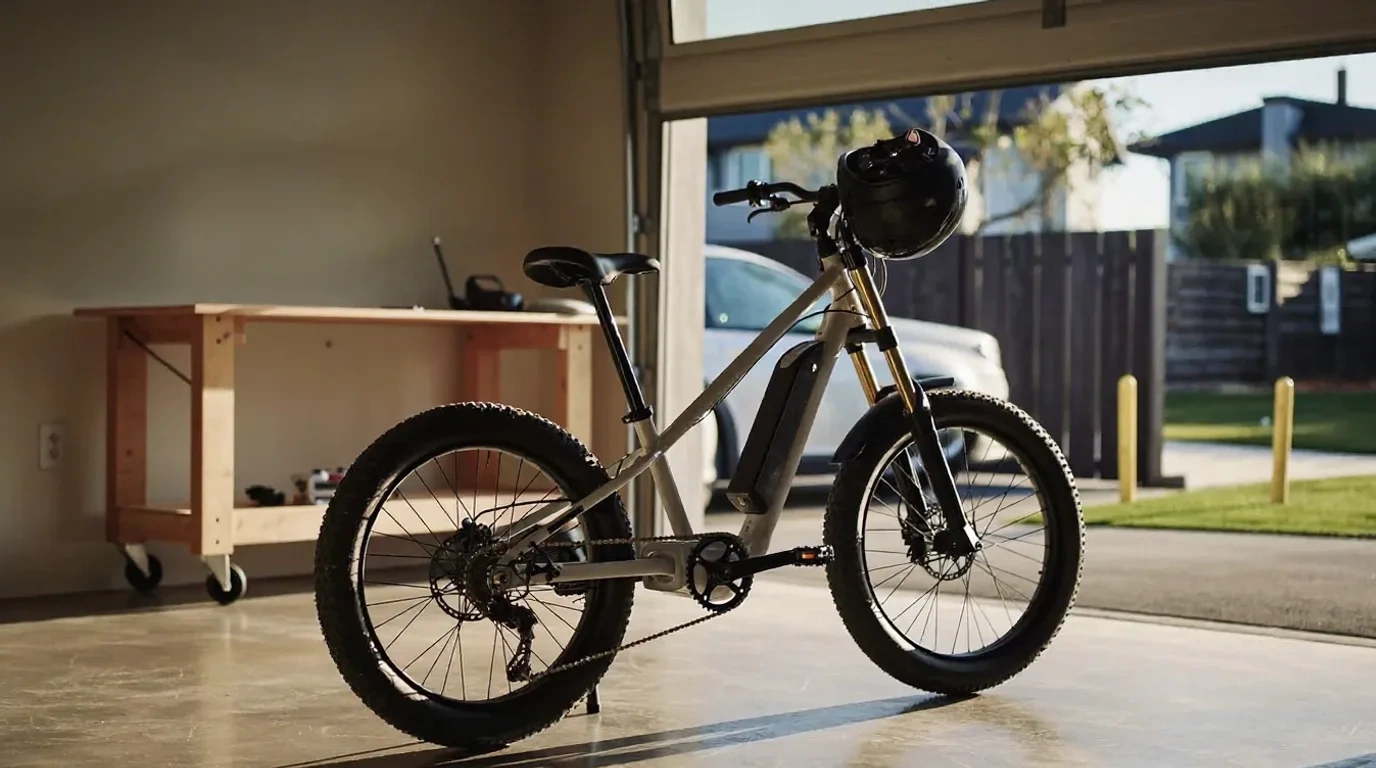
Why is buying an electric bike in Australia so confusing?
Because almost every "best e-bike" list you land on was written in America. The bikes at the top of those pages are Aventon, Lectric and Ride1Up models sized, priced and legislated for a country where a 750 watt throttle bike is a normal commuter. In Australia the pedal-assist baseline is a 250 watt continuous motor with assistance cutting out at 25 km/h, and what you may ride, where, and at what age is set by your state or territory. The American ranking is not just unhelpful. It quietly points you at machines that may not suit the path outside your house.
The second problem is where you buy. Australia's strongest electric bike brands sell direct: Leitner, NCM's own Australian store, Vel, Vamos and the shop-floor brands your local bike store stocks. Those are the best first stop if you can get to one, because somebody sets the brakes, sizes the frame to you and services it a month later. Amazon Australia is a thinner market run by a handful of importers, and the review counts on adult e-bikes are tiny next to almost any other category we cover.
So, plainly, at the top: this is a shallow pool. We looked at every adult electric bike listed on Amazon Australia in August 2026 and found only a handful carrying enough customer ratings to say anything honest about. Six are below. If none suit you, a bike shop is not a consolation prize, it is the better answer.
What is the best electric bike in Australia right now?
On Amazon Australia, the Shengmilo S600 Dual Motor is the pick with a real body of feedback behind it: 48 ratings at 4.3 stars, more customer reviews than every other adult e-bike we could verify in the category put together. It is a heavy, 840 watt-hour trail machine with dual suspension and a 7-speed drivetrain, and the listing puts it at 45 kg, so treat it as a fire-trail bike rather than a commuter you carry up stairs.
If you want the shape of bike most Australians actually ride to work, the NCM Aspen Fat is the more sensible buy. NCM is the only brand among our picks with a real Australian presence outside Amazon, and the Aspen lists a 250 watt motor and a 624 watt-hour battery, the pedal-assist shape the national road-rule baseline is written around. It is 35 kg with a 120 kg rider limit.
Spending less, the SAMEBIKE XD26-II is the cheapest of our six picks and the lightest of the four that publish a weight, at 25.5 kg. It runs a 672 watt-hour battery, dual suspension, dual hydraulic disc brakes and a Shimano 7-speed. Prices here move weekly, so let the cards carry the current figure.
How do our six electric bike picks compare?
Battery capacity is the number that matters most day to day, so it sits in the table. Weight and rider limits are in the sections underneath.
How did we choose these electric bikes?
- We research, we do not ride-test. Every spec here was read off the live Amazon Australia listing, and every star rating and review count was pulled fresh in August 2026.
- Every pick carries verified customer ratings. We dropped a long list of e-bikes with zero reviews, including several well-known brands, because a listing with no feedback tells you nothing.
- We only quote range and speed figures the manufacturer states, and we treat them as best-case laboratory numbers, not a promise.
- We do not tell you any bike is legal to ride in your state. Motor wattage and assisted speed are listed as the seller published them so you can check them against your own road rules.
Best electric bike overall: Shengmilo S600 Dual Motor
The S600 earns the top slot on evidence, not spec-sheet theatre. It carries 48 customer ratings at 4.3 stars, the largest review base of any adult electric bike we could verify on Amazon Australia. Where most listings sit on zero or two reviews, dozens of buyers who came back to rate it is worth far more than a longer feature list.
What you get is a big, deliberately over-built trail bike: a 48V 17.5Ah battery, 840 watt-hours, dual suspension front and rear, a 7-speed trigger-shift drivetrain, oil-filled disc brakes and an aluminium frame on 26 inch wheels with 3 inch rubber. It ships with a cargo rack and mudguards, and the listing says no assembly is required, unusual here and a real convenience if you have never built a bike.
The number to sit with is 45 kg, the heaviest of the picks that publish a weight. Wheeling that up a driveway is fine; carrying it up apartment stairs or lifting it onto a boot rack alone is not realistic for most riders. If the bike lives in a ground-level garage or shed, that weight buys stability. If it has to come inside every night, look further down this page.
Be clear about what the S600 is. Amazon lists it under electric mountain bikes, the seller describes a dual-motor drive and the wattage field reads 864 watts. That is a very different machine from the 250 watt pedal-assist baseline Australian road rules are written around. We will not tell you whether it belongs on your local shared path, because that depends on your state or territory and on how the bike is configured. Read your state's road rules before you order, and if the answer is a 250 watt pedelec, buy one of the NCM bikes below.
Flaws but not dealbreakers
It is the heaviest listed weight here at 45 kg, and the listing rates skill level as medium or advanced: a fair warning that this is not a gentle first bike. The 4.3 star average is the lowest of our six, though it is the only one built on a meaningful sample. Amazon shows this listing on a longer dispatch lead time rather than immediate stock, so check the delivery estimate before you commit.
Best electric bike for everyday riding: NCM Aspen Fat
For most people reading this, the Aspen Fat is the more useful bike. NCM is the only brand among our picks that also sells through its own Australian channel, which matters for spare parts and for having somebody to talk to in two years when a controller plays up. The listing carries 7 ratings at 4.4 stars.
The specification is refreshingly ordinary in the best way: a 250 watt motor, a 48V 13Ah battery rated at 624 watt-hours, a 7-speed trigger drivetrain, front suspension, disc brakes and 26 inch fat rubber. That 250 watt figure is the national pedal-assist baseline, so of the bikes here this is the shape most likely to match what your state's rules describe. We still will not call it road legal anywhere, that is a question for your transport department, but you start from the right number rather than arguing down from 1,600 watts.
At 35 kg it sets a 120 kg maximum rider weight. Assembly is required, and NCM's own notes recommend a bike-shop build and a service after the first month. That is the right advice for any boxed e-bike, so budget for it: the two things that go wrong out of the box are brake bedding and wheel torque, and both matter at 25 km/h.
NCM also spells out its warranty: one year on electronic parts including battery, motor, controller, display and lights, and two years on the frame, with wear items such as tyres, brake pads and chains excluded. That is clearer than most sellers here bother with, and it is why the Aspen is our runner-up rather than a footnote.
Flaws but not dealbreakers
Seven ratings is a thin sample, so treat the 4.4 stars as encouraging rather than conclusive. Front suspension only means rough fire trails are harsher than on the dual-suspension picks here, and Amazon shows limited stock, so price and delivery can move quickly.
Best cheap electric bike: SAMEBIKE XD26-II
The XD26-II is the cheapest of our six picks and, surprisingly, not the most compromised. It holds a 5.0 star average across 3 ratings, and at 25.5 kg it is the lightest of the four picks here that publish a weight.
Together those make it the pick for a townhouse or an apartment. Twenty-five kilos is still a lot of bike, but one reasonably fit adult can walk it up a short flight of stairs or lift it onto a rack, which is not true of the 35 kg and 45 kg machines above. The listing sets a 150 kg maximum rider weight and a minimum rider height of about 157 cm, which it gives as 62 inches.
The kit list beats the price: a 48V 14Ah battery, 672 watt-hours by the volts times amp-hours rule, dual suspension, dual hydraulic disc brakes rather than cable-pull, a Shimano 7-speed and 26 inch wheels. Hydraulic brakes at this end are the standout, because they age best and you notice them most on a wet descent with 25 kg under you. The manufacturer states a maximum range of 120 km in pedal-assist mode; read that as a best-case figure for a light rider on flat ground in the lowest assist level.
SAMEBIKE is an import brand, so your support path is the Amazon seller. That is the trade for the price. If you want somebody local to hand you a phone number, the answer in this guide is NCM, and outside it is a bike store.
Flaws but not dealbreakers
Three ratings is a very small sample for a 5.0 star average. The listing publishes no motor wattage, only battery capacity, which is unhelpful if you are matching the bike to your state's rules, so ask the seller first. Amazon shows this one on a dispatch lead time rather than immediate stock.
Best electric bike for long days out: QIKAITU K800
The K800 carries the largest stated battery of any pick here, a 48V 23Ah pack, and holds a 5.0 star average across 3 ratings. If you keep running flat before you get home, this is the listing that addresses it head on.
It is a 26 inch fat-tyre bike on 4 inch rubber with an aluminium frame, front suspension, hydraulic disc brakes and a 21-speed drivetrain, the widest gear range of our picks. The wattage field reads 250 watts, the assist type is pedal assist, and the seller describes a maximum speed adjustable between 25 and 50 km/h through the LCD display. The manufacturer states up to 120 km of range in pedal-assist mode.
Now the important part. The Amazon title includes the words "road legal". We are not repeating that as a finding. Whether any electric bike may be ridden on a road or path in your state depends on your state's rules and on how the bike is configured, and no seller's title settles that. What we can report is what the listing publishes: 250 watts in the wattage field, pedal assist, and a rider-adjustable speed limiter. Where you leave that limiter is your responsibility, and the number to check it against sits in your own state's road rules.
Practical details: a 168 cm minimum rider height, so shorter riders should take the folding pick below, and a maximum load of just under 200 kg, higher than any rider limit published here. It ships with a charger, horn, lock, pump and tool kit.
Flaws but not dealbreakers
Three ratings is a thin sample, and the 168 cm minimum height rules out a lot of riders. The seller's copy also quotes speeds and distances in imperial units that do not match the metric figures elsewhere on the page, the kind of sloppiness that should make you read the spec sheet twice.
Best folding electric bike: SAMEBIKE RS-A02 Plus
If the bike has to live in a car boot or a hallway cupboard, wheel size is the decision and 20 inches is the answer. The RS-A02 Plus folds, runs 20 inch by 4.0 inch fat rubber and holds a 5.0 star average across 3 ratings.
The build is dual suspension on an aluminium frame with disc brakes, a 7-speed drivetrain and a removable 48V 15Ah battery. That removable pack is the underrated feature on a folder: leave the frame in the boot and bring only the expensive, temperature-sensitive part inside to charge. It is the difference between charging every night and not bothering.
The manufacturer states a range of 45 to 100 km, and we like that they published a band rather than a single hero number, because a band is closer to how range behaves. Plan around the low end if you ride in high assist and live somewhere with hills.
Small wheels change the ride. A 20 inch fat tyre is more stable than a 20 inch skinny one, but it still feels busier over broken bitumen than the 26 inch bikes here. That is the trade for a bike that fits in a hatchback. If you never need to fold it, take the wheel size instead.
Flaws but not dealbreakers
The listing publishes no folded size, weight or motor wattage, three things we would want before ordering, so ask the seller. Three ratings is a small sample, assembly is required, and Amazon shows this one on a dispatch lead time.
Best electric bike for hills: NCM Aspen Plus
The Aspen Plus is the dearest of our six picks and the one for a ride home that ends with a climb. It holds a 5.0 star average across 3 ratings and takes the Aspen platform up to a 48V 16Ah battery rated at 768 watt-hours.
The meaningful upgrades over the standard Aspen are that battery and an 8-speed drivetrain with front and rear derailleurs instead of a rear-only setup. Gears at the low end are what help on a climb, because on a 250 watt pedelec the motor assists your legs rather than replacing them, and a gear you can spin at 6 km/h is worth more than another 100 watt-hours.
The listing gives the assist type as pedelec, the wattage as 250 watts and the weight as 38 kg with a 120 kg rider limit. Front suspension, disc brakes, aluminium frame, 26 inch wheels, a lock in the box. The warranty matches the standard Aspen: one year on electronics, two on the frame, wear items excluded.
As with every bike here, the wattage and assisted-speed figures are what the seller published, and whether that configuration suits the road, path or trail you plan to ride is a question for your state or territory's rules. NCM at least publishes numbers that make the question easy to ask.
Flaws but not dealbreakers
Three ratings is a thin sample. At 38 kg it is heavy for a bike with front suspension only, so it is a garage bike rather than a stairs bike. The battery field is also quoted in kilowatt hours rather than watt hours, a small inconsistency that makes cross-shopping harder than it should be.
Which electric bike should you buy?
Match the bike to the constraint that annoys you daily, usually storage or hills rather than top speed.
What should you look for in an electric bike?
Six things, in the order they will matter to you.
Motor wattage and assisted speed, first. The Australian pedal-assist baseline is a 250 watt continuous motor with assistance cutting out at 25 km/h. That is the shape the rules are written around, but what you may ride and where is set by your state or territory, and it differs. Read your own state's road rules before you buy, not after. Anything sold with a throttle-only mode or a much higher wattage is a different class of machine, and you should not assume it belongs on a public road or shared path.
Battery capacity in watt-hours, not marketing range. Multiply volts by amp-hours: a 48V 14Ah pack is 672 watt-hours. Watt-hours compare across brands; the range on the box does not, because every seller measures it differently. Every range number in this guide is what the manufacturer states.
Weight, honestly assessed. The bikes here that publish a weight run from 25.5 kg to 45 kg. Walk the route the bike will take from the street to where it sleeps. If that route includes stairs or a boot lift, weight outranks every other spec on this page. A removable battery helps.
Brakes. Hydraulic disc brakes are worth paying for on an e-bike in a way they are not on a normal bike, because you are stopping an extra 20 kg from a higher average speed, more often, in traffic. Cable discs work but need adjusting more.
Frame fit and step-through. Several listings publish a minimum rider height, and one of ours is 168 cm. If you are shorter than the stated minimum, a smaller wheel or a step-through frame is the fix, not a lower seatpost.
Who assembles it. Every boxed e-bike arrives partly built, and NCM's own listing recommends a shop assembly plus a service after the first month. While you are there, add a helmet from our bike helmet guide and a lock rated for the value of the bike, because e-bikes are stolen at a much higher rate than pushbikes.
Two boundary notes. If you want something you stand on rather than pedal, that is a different vehicle with different rules and our electric scooter guide covers it. If the goal is indoor fitness rather than transport, start with our exercise bike guide, and for a rider under about twelve, our kids bike guide is the right place.
How do you look after an electric bike?
Charge it somewhere sensible. E-bike lithium batteries are large, and Australian fire services have been vocal about charging them in the garage or outside rather than in a hallway, on a landing or anywhere that blocks your only way out. Use the charger that came with the bike, do not leave it charging unattended overnight, and stop using a pack that has been dropped hard, swelled or been through water. If the bike will sit for a month, leave the battery around half charged somewhere cool and dry rather than full or flat, because both extremes age a pack faster than riding does.
Check the torque after the first ride. Boxed bikes settle: stem bolts, seatpost, brake calipers and especially the axle nuts want a check after your first ride and again after a month, which is why NCM suggests a one-month service. If you are not confident with a torque wrench, it is a twenty-minute job at a bike shop. A low-range torque wrench reading from 2 to 14 Nm is the one to buy if you would rather do it yourself.
Keep the drivetrain clean and the tyres up. Fat tyres run low pressures, and low means low for that tyre, not flat: check the sidewall figure with a gauge, not a thumb. A clean, lubricated chain saves the motor work, which on an e-bike is range.
Wash it carefully. No pressure washer, ever, near the motor hub, controller, display or battery contacts. A bucket, a soft brush and a hose on low is the right amount of water.
Store it dry. A bike that lives outside under a tarp corrodes its own connectors within a season. If space is the blocker, our garage storage ideas cover getting a heavy bike off the floor.
Always follow the manufacturer's manual and the requirements of your state or territory regulator.
You will also want
An electric bike is a bigger, faster, more stealable bike, and the kit follows from that.
What about the bikes we left out?
Plenty, and the reasons tell you something about this marketplace.
Aventon has a real Australian listing presence on Amazon, including the Sinch.2 folder, the Pace 500.3, the Level.2 and the Abound cargo bike, and it is the brand those American lists lead with. We left all of them out for one reason: not one of those listings carried a single customer rating when we checked. That is not a criticism of bikes with a strong reputation overseas, only a statement about how new they are here. If Aventon appeals, buy from a dealer who can service it.
NCM's own T7S step-through, M7 and Moscow Plus are all listed and in stock, and a step-through is the frame shape we would recommend to a lot of riders. But the T7S and M7 carry no ratings at all, and the Moscow Plus had only two, below our floor. If you already know NCM and want a step-through, look at it directly; we cannot rank it on evidence we do not have.
The cheap end is where we were most cautious. There are adult e-bikes here advertised under $700, including a 20 inch fat-tyre model from E-RUSH, and none had ratings. On a machine carrying a rider at 25 km/h with a large lithium battery, an unreviewed listing well below the category price is not a bargain worth chasing.
SAMEBIKE has by far the most listings here, many near-identical variants of one frame under different names; we took the two with verified ratings. And the brands you may have read about elsewhere, ENGWE, Eleglide and DYU among them, do not list adult bikes on Amazon Australia at all.
Electric bike questions, answered
Which e-bike brand is most reliable in Australia?
On the evidence available to us, NCM is the safest name in this guide, because it is the only brand among our picks that also sells and supports its bikes through its own Australian channel and publishes clear warranty terms. Outside Amazon, the strongest service reputations belong to direct sellers and shop-floor labels such as Leitner, Vel and Vamos, none of which we can rank here because they are not sold through Amazon Australia.
What wattage electric bike is legal in Australia?
The national pedal-assist baseline is a 250 watt continuous motor with the assistance cutting out at 25 km/h, but the rules that actually apply to you are set by your state or territory and they differ on things like throttle use, age limits and where you may ride. Check your own state's road rules before you order, and treat any wattage figure in a product title as a starting point for that check rather than an answer to it.
How far can an electric bike really go on one charge?
Less than the box says, and the honest way to compare is watt-hours rather than kilometres. Multiply volts by amp-hours to get there: a 48V 14Ah battery is 672 watt-hours. Our picks range from 624 watt-hours up to a stated 48V 23Ah pack, and every range figure in this guide is what the manufacturer states, so plan around a good deal less than the headline.
How heavy is an electric bike?
The picks that publish a weight run from 25.5 kg to 45 kg, and that spread will matter to you more than any other number on this page. Before you order, walk the route the bike will take from the street to wherever it sleeps. If that route includes stairs or lifting it onto a car rack, choose the lightest bike you can live with, and prefer one with a removable battery so you can carry the heaviest single part separately.
Should I buy an electric bike from Amazon or a bike shop?
A bike shop, if you can. Every boxed e-bike needs assembling, and the two things that go wrong out of the box are brake bedding and wheel torque. A shop sizes the frame to you, sets it up properly and is still there when a controller fails in year two. Amazon makes sense when you are confident about fit, willing to pay a shop to check the build, and buying a listing with real ratings behind it.
What else should you sort out for the garage?
An electric bike changes what your garage has to do. These guides cover the rest.
About the author
Anish Puri founded NestPath in 2026 after going through the Australian first-home-buyer process himself. NestPath focuses on Australian first-home buyers because the existing review sites are American, generic, or both. Anish handles editorial selection across the homeowner hub. Reach out: hello@nestpath.com.au