Which pottery wheel should a first-timer actually buy?
If you have caught the ceramics bug and want a wheel at home, the honest answer is that most people starting out should buy a mains powered electric wheel between about $150 and $400, with a splash basin and adjustable speed, rather than a hand crank banding wheel or a tiny toy. The famous Australian studio names like Venco and Shimpo are superb, but they start north of $1,900 and are sold through ceramics suppliers, not Amazon. So this guide sticks to the electric wheels a first-home buyer can actually order and set up in a garage or laundry this week, and it sorts them by the things that matter once wet clay is spinning: torque, wheel head size, how you control the speed, and how much mess you can contain.
We looked at every electric pottery wheel with a real rating on Amazon Australia, cut the accessories, banding wheels and children's mini toys, and kept six wheels that a beginner or improver could genuinely learn on. Prices, ratings and stock were captured fresh while writing.
The quick answer
Short on time? For most first studios the Alldeer 11-inch Electric Pottery Wheel is the one to beat, because it pairs a 350W motor and the largest wheel head of our picks with a foot pedal, and it carries one of the largest review counts here. If you are tight on space or buying for a family, the BUKI 5441 Studio Master is a compact, quiet wheel that shares the top rating of our picks. On the tightest budget, the Skirfy Beginner Studio Kit is the cheapest wheel here and still ships with a foot pedal, clay and a full tool set.
Compare the pottery wheels at a glance
Every wheel below is a mains powered electric model that is in stock at the price shown. Tap a name to see the current listing.
How we evaluated these pottery wheels
NestPath does not run a ceramics studio, so we research rather than throw pots for a scorecard. Here is what shaped the shortlist.
- Motor and speed: enough torque to hold a set speed under your hands, with adjustable or pedal control rather than a single fixed speed.
- Wheel head and basin: a head large enough for real forms, and a splash basin or removable tray so wet clay does not go everywhere.
- Verified ratings: a live star rating and review count for every pick, with the headline wheel carrying a solid volume of reviews.
- Fair Australian price: in stock on Amazon Australia at a sane price, with obvious reseller mark-ups dropped.
Best overall pottery wheel: Alldeer 11-inch Electric Wheel
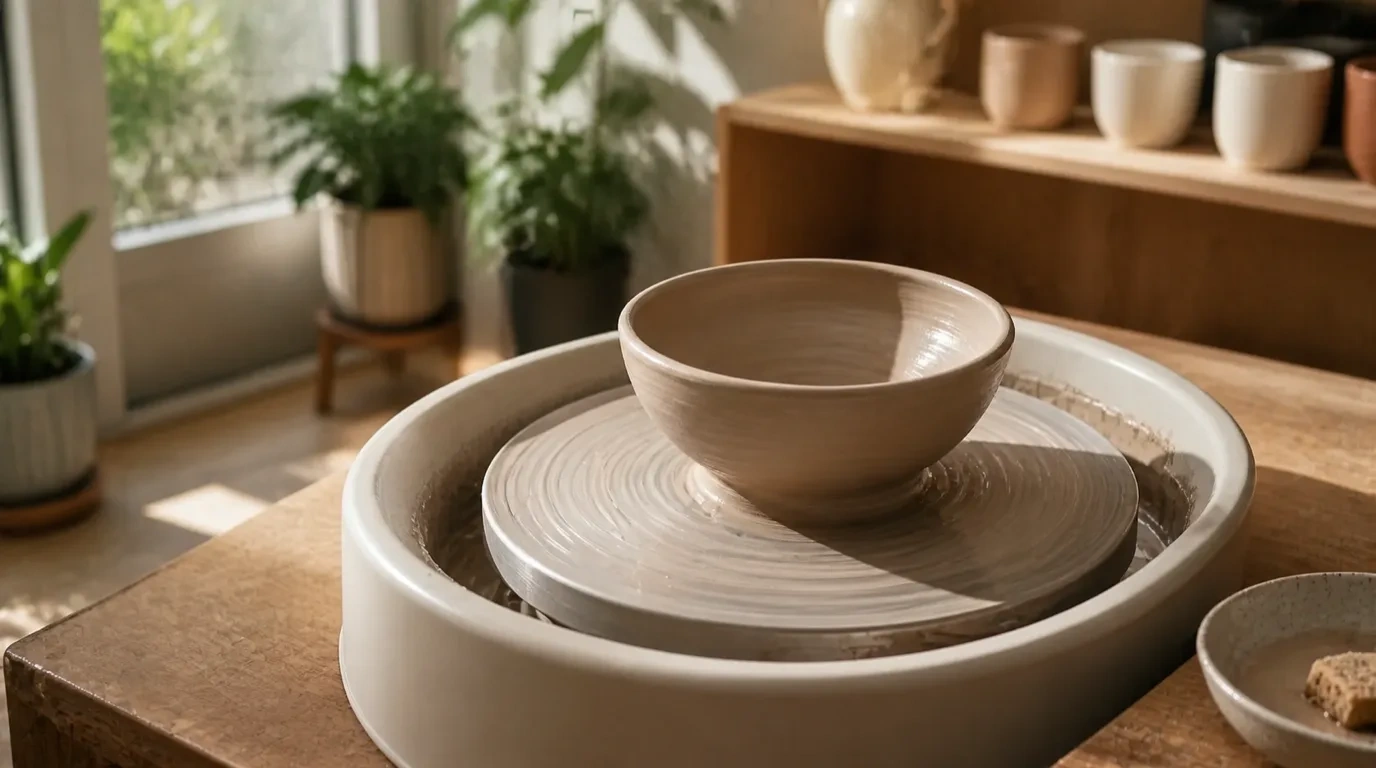
The Alldeer is the wheel we would point most first-home potters toward. It runs a 350W motor and spins an 11-inch (28 cm) head, the largest wheel head of our picks, which means you can throw plates and bowls with real diameter rather than only cups and trinket dishes. Speed runs from 0 to 300 RPM through a foot pedal, so both hands stay on the clay while you change pace, and a detachable basin catches the slip and water. It also carries one of the largest review counts of our picks, and it is tied for the highest rating of our picks at 4.3 out of 5, which is reassuring for a machine you want to keep for years.
The 19-piece tool kit that ships in the box covers ribs, trimming loops and a wire cutter, so you can sit down and start centring without a second order. For a first serious wheel that will still make sense when your skills grow, this is the safe pick, and it sits in the mid to upper band of our prices rather than at the very top.
Flaws but not dealbreakers
It is a heavy unit, so plan a permanent bench for it rather than something you lift on and off a table each session. The pedal cord is on the short side, and the printed instructions are brief, so budget an evening watching a couple of beginner throwing videos before your first sit down.
Best compact studio wheel: BUKI 5441 Studio Master
If your throwing corner is a kitchen bench or a small laundry, the BUKI 5441 is the wheel that fits. It is a mains powered electric table with a 20 cm metal disc turning at a steady 220 RPM, and it stays quiet enough that you can work without the whole house hearing it. It shares the top rating of our picks at 4.3 out of 5, and because it is built for teens and families as much as solo hobbyists it is genuinely forgiving to learn on.
You give up the foot pedal and the big head of the studio wheels, and the fixed speed means you cannot ease into a slow start the way a pedal lets you. But for small forms, decorating and getting a feel for centring on a tidy footprint, it punches well above its compact size, and it lands in the lower half of our price range.
Flaws but not dealbreakers
The single speed is the main compromise: you cannot slow it right down for delicate work or speed it up for fast trimming. The metal disc is smaller than the studio wheels here, so oversize plates are out, and heavy clay loads are better left to a 350W wheel.
Best budget pottery wheel: Skirfy Beginner Studio Kit
The Skirfy is the cheapest wheel in this guide and, unusually for the price, it still gives you a real foot pedal. The 60W motor runs from 0 to 160 RPM, which is plenty for small bowls, cups and air-dry clay projects, and the kit arrives with 2.2 lb of air-dry clay and a 21-piece tool set so a complete beginner can start the same afternoon the box lands.
It has the fewest reviews of our picks, so it is newer to the market than the Alldeer or Catcrafter, but the 4.0 out of 5 rating and the pedal make it a smart low-risk way to find out whether the wheel habit sticks before spending studio money. Think of it as a proper starter wheel rather than a toy, aimed at ages 8 and up through to adults.
Flaws but not dealbreakers
The 60W motor will bog down if you lean hard into a big lump of stoneware, so keep your clay balls modest. The turntable is smaller than the studio wheels, and the included air-dry clay is for practice, not for firing in a kiln.
Best large studio wheel: BriSunshine 350W Electric Wheel
The BriSunshine is the dearest wheel of our picks, and it earns the price with a proper studio setup: a 350W motor, a 25 cm turntable and a foot pedal that lets you dial the speed with your foot while your hands shape. It is the wheel to choose if you already know you want to throw larger, taller forms and you want a machine that will not feel outgrown after a season.
At 4.0 out of 5 across a solid run of reviews, it is a known quantity rather than a gamble, and the big turntable plus pedal combination is the closest thing here to a traditional studio wheel experience. If budget is not the deciding factor and space is not tight, this is a strong pick for potters ready to move up to larger, taller forms.
Flaws but not dealbreakers
It is the biggest spend here, so it only makes sense if you are fairly sure the hobby will stick. It is also large and heavy, needs a dedicated spot near a tap, and like every wet wheel it wants a settling bucket rather than a sink for the clay water.
Best all-in-one beginner kit: Insnug Pottery Wheel for Adults
The Insnug is built around the idea that a first wheel should arrive ready to go. It is a 15 cm (6 in) turntable with a two-way rotation switch, so left-handers and right-handers can both work comfortably, plus adjustable speed and a complete tool kit and 2.2 lb of air-dry clay in the box. The storage design tucks the tools into the base, which is handy if the wheel lives on a shelf between sessions.
It carries a healthy pile of reviews, among the highest counts of our picks, which tells you plenty of beginners have started here. The 3.7 out of 5 rating is the lowest of our six, so it is not the wheel we would push first, but as a self-contained kit for testing the waters on a small budget it does the job.
Flaws but not dealbreakers
The lower rating reflects the odd unit arriving with a wobble or a fiddly speed dial, so check yours over on day one. The compact head suits small forms, and the two-way rotation is handy but not a substitute for the torque of a 350W studio wheel.
Best value tabletop wheel: Catcrafter 6-inch Pottery Wheel
The Catcrafter is the most reviewed wheel in this guide, which is exactly what you want when you are buying something mechanical without seeing it first. It is a 15 cm (6 in) turntable with two-way rotation and adjustable speed, and it ships as a complete set with 2.2 lb of clay and a full sculpting tool kit, so it works for a beginner adult or a keen kid stepping up from craft clay.
At 4.0 out of 5 across the largest review count of our picks, it is the safest tabletop buy on the list, and it sits in the lower half of our prices. It will not throw a dinner plate, but for mugs, small bowls, dishes and learning to centre, it is a lot of wheel for the money.
Flaws but not dealbreakers
The 6-inch head caps the size of what you can make, and the tabletop build is not meant for heavy stoneware loads. As with the other kits, the included clay is air-dry practice clay, so you will want proper kiln clay once you are ready to fire.
Which pottery wheel should you buy?
Match your situation to the wheel that fits it best.
What to look for in a pottery wheel
A few specs separate a wheel you will keep from one you will replace. Here is what matters when you are starting out.
Motor power and torque
Wattage is the rough guide to how much clay a wheel can handle without slowing down. A 350W motor, like the two studio wheels here, holds its speed when you push into the clay to centre it. A 60W tabletop motor spins happily for small forms and air-dry clay but bogs down under heavy hands, so match the wattage to the size of the pieces you actually want to make.
Wheel head size
The head, or bat, sets the biggest diameter you can throw. A 25 cm to 28 cm head lets you make plates and larger bowls, while a 15 cm to 20 cm head is happiest with cups, mugs and small dishes. Bigger is not automatically better if your space and projects are modest, but you cannot throw a form wider than your head.
Speed control
A foot pedal keeps both hands on the clay and lets you start slow, which genuinely helps beginners. A hand dial is simpler and fine for hand-building, trimming and decorating, and a fixed-speed wheel like the BUKI is the simplest of all but gives you no room to slow down for delicate work.
Mess management
Throwing is wet and messy. A removable splash basin or tray, a two-way rotation switch for lefties and righties, and a stable base you can bolt to a bench all make home pottery far less painful to clean up. If you need somewhere to stash the tools and half-finished pieces between sessions, a set of storage boxes keeps a small studio from taking over the room.
Care and maintenance
Pottery wheels are simple machines, and a few habits keep them running for years.
- Never rinse clay water down a normal drain. The sediment sets hard and blocks pipes, so tip it into a settling bucket, let the clay sink, and pour off the clear water.
- Wipe the wheel head and basin down while the clay is still damp. Dried slip is far harder to remove and can throw the balance off over time.
- Keep the motor housing and pedal dry. Splashes on the clay are fine, but water pooling around the electrics is not, so site the wheel where you can mop the floor easily.
- Store your ribs, wires and trimming tools somewhere dry so they do not rust, and check the foot pedal cord and plug now and then for wear.
You'll also want
A wheel is the start. These extras make the first few months a lot smoother, and each link opens the current Amazon Australia listing.
The competition
A few wheels came up in our research but did not make the list. The Australian studio classics, Venco and Shimpo, are genuinely excellent and Australian potters rave about their quiet, powerful motors, but they start around $1,900 and are sold through ceramics suppliers rather than Amazon, which puts them well outside a first wheel budget. VEVOR sells cheaper studio wheels direct, but they were thin on verified Amazon Australia ratings when we looked, so we could not stand behind a specific model. We also skipped the small children's mini wheels, like the various 4.7-inch clay disc toys, because they are aimed at play rather than learning to throw, which is the opposite of what this guide is for.
Common questions about pottery wheels
How much should I spend on a pottery wheel in Australia?
Home electric wheels on Amazon Australia run from about $110 for a beginner tabletop kit up to about $500 for a 350W studio wheel with a foot pedal. For your first wheel we think the sweet spot sits between $150 and $400, where you get a real splash basin, adjustable speed and enough torque to centre a decent lump of clay. Under $130 you are usually looking at small tabletop wheels that suit test pieces and kids more than full projects.
What motor wattage do I need for a pottery wheel?
For throwing real stoneware or terracotta, look for a 350W motor like the Alldeer and BriSunshine wheels here, which hold their speed when you press into the clay. Lower wattage wheels around 60W, such as the Skirfy kit, spin fine for small forms and air-dry clay but can bog down under heavy hands. If you only plan to make cups, trinket dishes and practice pieces, a lower wattage wheel is plenty.
Can a complete beginner use a full-size electric pottery wheel?
Yes. A foot pedal wheel like the Alldeer or Skirfy actually makes learning easier because you can start the wheel slowly and speed up as your hands settle. Adjustable speed and a two-way rotation switch let left-handers and right-handers work comfortably. Start with the wheel on its slowest setting, keep your elbows braced on your knees, and build up speed only once the clay is centred.
Do I need a foot pedal, or is hand speed control fine?
A foot pedal is worth having if you plan to throw properly, because it keeps both hands on the clay while you change speed. Three of our picks (the Alldeer, BriSunshine and Skirfy) use a pedal. Hand dial wheels are simpler and cheaper, and they are fine for hand-building, trimming and decorating, but you have to stop shaping to change the speed.
Where should I set up a pottery wheel at home?
Pick a spot you can splash: a garage, laundry, covered patio or a corner with hard floors and a nearby tap. Clay water should never go down a normal sink drain because the sediment sets like concrete, so keep a settling bucket. A sturdy bench at hip height, a bucket of water and a plastic drop sheet under the wheel will keep the mess contained and cleanup quick.
More guides for your home
Setting up a craft corner or fitting out a new place? These guides pair well with a home pottery studio.
About the author
Anish Puri founded NestPath in 2026 after going through the Australian first-home-buyer process himself. NestPath focuses on Australian first-home buyers because the existing review sites are American, generic, or both. Anish handles editorial selection across the homeowner hub. Reach out: hello@nestpath.com.au