The plunger is the one tool in an Australian house you buy calmly and use in a panic. Nobody browses for one. You go looking at 11pm on a Sunday with the bowl filling, and whatever is in the laundry cupboard either seals or it does not.
The reason so many cheap plungers fail here is geometry. Most pans sold in Australia are dual-flush with a rounded outlet sunk into the bottom of the bowl, and the flat rubber cup you remember from a sink will not seal against that shape. It slaps, it sprays, and the pressure escapes around the rim instead of going down the trap. A tapered or flanged head drops into the outlet and holds, so your push reaches the blockage.
Water volume works against you too. A half flush on a 4.5 litre dual-flush pan does not carry much, so when a blockage is already sitting in the trap the flush meant to clear it often just raises the level. Seal beats brute force, which is why head shape is the spec worth paying for. We went through the toilet plungers listed on Amazon Australia, checked stock and pricing on the day, pulled ratings and review counts, and read the listed specs. Seven made the cut, including one small drain plunger for basins and shower wastes.
What is the best toilet plunger in Australia right now?
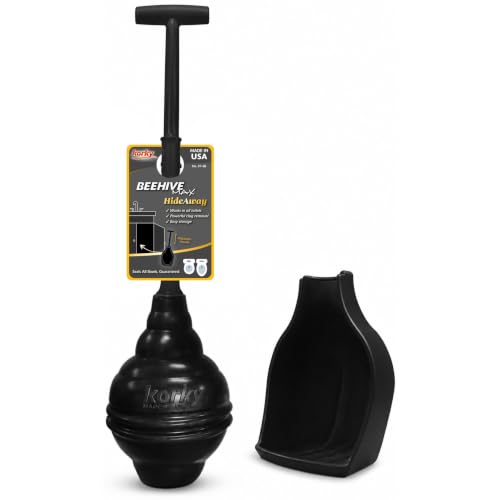
For most Australian bathrooms the best toilet plunger is the Korky 96-4AM BeehiveMAX. Its stepped, tapered rubber head seals in round, elongated and square-front pans without you having to fold a flange out, the T-handle telescopes down for storage, and at 290 g it is light enough to work one-handed while you hold a torch with the other.
If you want that same beehive head with somewhere sensible to park it, the Korky BeehiveMAX Hideaway adds a sealed drip-free holder and a collapsing handle, which is the version to buy if your plunger currently lives in a plastic bag behind the door.
On a tight budget, the MR.SIGA Toilet Plunger and Bowl Brush Combo is the cheapest pick in this guide and gives you a bowl brush, a plunger and a caddy in one box. It is also far and away the most reviewed product here, with more than 74,000 ratings behind it.
How our seven picks compare at a glance
Prices below are Amazon Australia buy-box figures captured while we were writing, so treat them as a band rather than a quote.
How we chose these toilet plungers
- We started from the head, not the brand: a cup that can seat inside a rounded Australian pan outlet, because a flat cup simply cannot.
- We took the buy-box price, brand and category straight from Amazon Australia rather than a listing claim, and dropped anything we could not buy here.
- Star ratings and review counts came from live Amazon Australia data, with a floor of 25 ratings before anything could be a headline pick.
- We read the listed dimensions, weight, handle material and included parts, and we kept storage in the decision because most first-home bathrooms have nowhere to hide a wet plunger.
Korky 96-4AM BeehiveMAX: the best toilet plunger for most Australian bathrooms
The Korky 96-4AM BeehiveMAX is our top pick because its head is shaped for the job rather than adapted to it. Instead of a flat bell with a rubber flange folded out of the bottom, the whole cup is a stepped cone that narrows as it goes down, so it wedges into the outlet of a round, elongated or square-front pan and finds a seal without you fiddling.
The listing puts it at 15.24 x 15.24 x 44.45 cm and 290 g, genuinely light for a plunger this size, and the T-shaped handle telescopes so the whole thing shortens for storage. That matters more than it sounds: a light head on a long handle lets you pump quickly from a standing position rather than crouching over the bowl, and quick short strokes are what shift a soft blockage.
Because the rubber is a single moulded piece with no flange to invert, there is no fold for waste to hide in, and the listing notes a low-odour compound. At 4.5 stars across 5,768 ratings it has the deepest review history of any beehive-style plunger we found on Amazon Australia. Pair it with a decent brush if you do not already have one, and our toilet brush guide covers the ones worth owning.
Flaws but not dealbreakers
It comes with no holder and no drip tray, so you need a plan for where it lives between jobs. The telescoping handle helps, but a wet cone standing in a corner will still mark a tiled floor. It is one of the dearer picks here, and the beehive shape is deliberately fat, so it does not double as a sink plunger at all.
Korky BeehiveMAX Hideaway: the same head with somewhere to put it
This is the Korky we would buy for a bathroom with no cupboard. The BeehiveMAX Hideaway pairs the same tapered beehive rubber with a sealed carry holder, so the wet head goes into a container instead of onto your floor, and the unit stands next to the pan without looking like a work site.
Listed dimensions are 44.45 x 15.24 x 15.24 cm and 680 g, and the extra weight over the bare 96-4AM is almost entirely the holder. The handle collapses so the assembly stows under a vanity or in a linen cupboard, and the manufacturer describes the head as non-marking rubber with a T-handle for grip.
The practical argument here is hygiene rather than power. A holder that catches the drips and hides the cup means the tool actually gets stored properly, which in turn means the rubber lasts. The trade-off is data: with 206 ratings at 4.4 stars, it has the shortest review history of our seven picks by a wide margin, simply because it is a newer listing. The head is the same proven beehive design, so we are comfortable putting it at number two, but we would say that plainly.
Flaws but not dealbreakers
The holder adds bulk, so this is a worse choice than the bare 96-4AM if you already have a cupboard spot. Any enclosed holder needs airing out or it goes stale, especially in a humid Queensland bathroom. Review volume is thin compared with the rest of this guide, and the collapsible handle has more moving parts than a solid stick.
MR.SIGA Toilet Plunger and Bowl Brush Combo: the cheapest way to cover a rental bathroom
If you are fitting out a first rental or a second bathroom and want the job done for as little as possible, this MR.SIGA set is the answer. It is the cheapest pick in this guide, and for that you get a flanged plunger, a bowl brush and a caddy that holds both.
The set measures 21 x 16 x 46 cm assembled and weighs 677 g, with a polypropylene handle and a rubber cup. The flange folds out of the base to seat in a toilet outlet and folds back in if you ever need a flat face for a floor waste, which is the classic design and still perfectly serviceable on a standard Australian pan.
What sets it apart is the volume of feedback behind it. At 4.4 stars across 74,564 ratings it is by a very long way the most reviewed product in this guide, and that consistency across tens of thousands of buyers counts for something on a budget item where quality control is the usual risk. Buy it for a second bathroom, a granny flat or the place you rent while you are saving.
Flaws but not dealbreakers
A folded flange never seals as confidently as a moulded beehive, so on a deep or unusually shaped pan you will work harder for the same result. The caddy is open at the base rather than sealed, so it drips onto the floor. The plastic handle flexes under a hard push, and the brush head is the part you will replace first.
The Neiko 60166A is the one to buy if the flex of a plastic handle annoys you. It is the only handle in this guide that Amazon lists as aluminium, and the difference shows up on the third or fourth hard push, when a plastic stick starts to bow and this one simply does not.
Its patented all-angle head is designed to seal whether you come at the outlet straight down or on a lean, which is the situation you are in when a vanity or a wall is in the way. Amazon lists the head at 5 inches deep, roughly 13 cm, and the unit at 0.85 pounds, about 386 g, so it stays manoeuvrable despite the metal.
It carries 4.6 stars from 9,697 ratings, which ties it with the OXO for the highest star rating of our seven picks, and it does that on a far deeper review base. If you want one plunger that will still be in the cupboard when you sell the house, this is a strong argument.
Flaws but not dealbreakers
Aluminium and constant moisture are not natural friends, so dry the handle rather than standing it in a puddle. There is no holder or cover in the box, and the all-angle head is wide, which makes it awkward in a very small pan opening.
OXO Good Grips Toilet Plunger with Cover: best when the plunger has to be on show
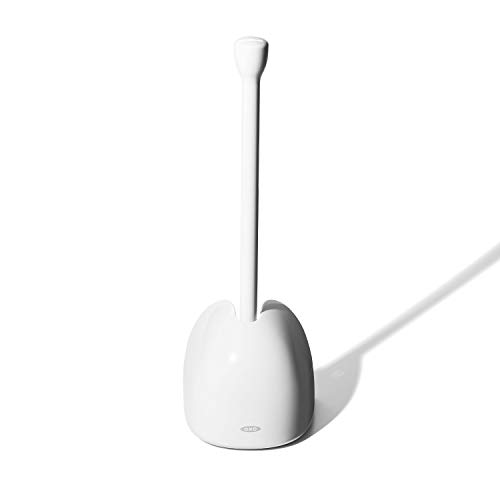
Some bathrooms have no cupboard, no laundry next door and nowhere to hide anything. The OXO Good Grips plunger is built for exactly that, with a canister that swallows the head completely and a lid that reads as a bin rather than a plumbing tool.
The listing puts the assembled unit at 16.8 x 15.2 x 49.7 cm and 1.52 pounds, about 690 g, with a rubber-covered handle. The canister is the point: the plunger drops in, the drips stay inside, and the whole thing sits beside the pan without announcing itself. OXO's grip material is also genuinely better than bare plastic when your hands are wet.
On ratings it is tied with the Neiko at 4.6 stars, the joint highest of our seven picks, from 3,752 ratings. It is also the dearest pick here, and you are paying for the housing and the finish rather than more plunging power. Choose it if the plunger will live in the open in a bathroom you care about the look of.
Flaws but not dealbreakers
You are paying a premium for the canister. The head is a conventional flanged cup rather than a beehive, so it is not the strongest seal here on an awkward pan. White housing shows splashes, and at nearly 50 cm assembled it is more presence than a small ensuite may want.
Plumb Craft Stow-Away Plunger: best for an ensuite, a caravan or a tiny cupboard
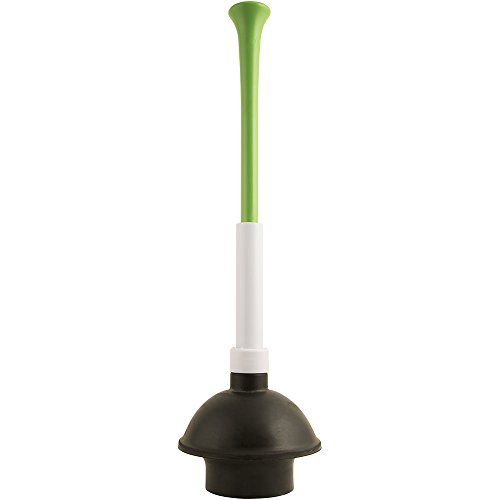
The Plumb Craft Stow-Away solves a storage problem rather than a plumbing one. Its handle adjusts for length, so the plunger shortens to fit under a vanity, into a caravan locker or into the narrow linen cupboard first-home bathrooms specialise in.
Amazon lists it at 36.2 x 14.6 x 14.6 cm and 1 pound, about 454 g, with a plastic handle and a round flanged cup. Collapsed, it is shorter than any other full-size plunger Amazon lists dimensions for here. It sits at 4.1 stars across 480 ratings, a modest but real record for a product on sale for years.
We would put this in a caravan, a boat, a granny flat, or a townhouse ensuite where the only storage is a 40 cm deep cabinet. For those spots it beats a better plunger you cannot actually put anywhere. Buy it as a second or third plunger for the awkward corner, not as the main one.
Flaws but not dealbreakers
An adjustable plastic handle is a compromise: it will always have a little play compared with a fixed stick, and it is the part most likely to give up first. The cup is a standard flange design, so it does not seal as well as a beehive on a modern low-flow pan. There is no holder, and the white plastic stains over time.
Coralpearl Mini Drain Plunger: best for basins, laundry tubs and shower wastes
This is the pick that stops you using your toilet plunger on the bathroom basin. A full-size cup cannot seal a basin or shower waste: the opening is a fraction of the size, so the rubber sits flat on the surround and leaks air the moment you push.
The Coralpearl solves that with a small cup: 10 cm inner diameter, 12.5 cm outer, on a 22.5 cm plastic handle, standing 28 cm assembled. At 118 g it is the lightest pick of our seven by a wide margin, and it is the only cup here small enough to cover a standard basin waste properly.
Having a second, obviously different plunger also solves a hygiene problem nobody likes discussing. The same rubber should never move between a toilet and a kitchen or laundry sink, and colour-coding the tools is the simplest way to be sure it never accidentally does. It carries 4.0 stars across 610 ratings, the lowest star rating of our seven picks, and the complaints tend to be about the plastic handle rather than the cup.
Flaws but not dealbreakers
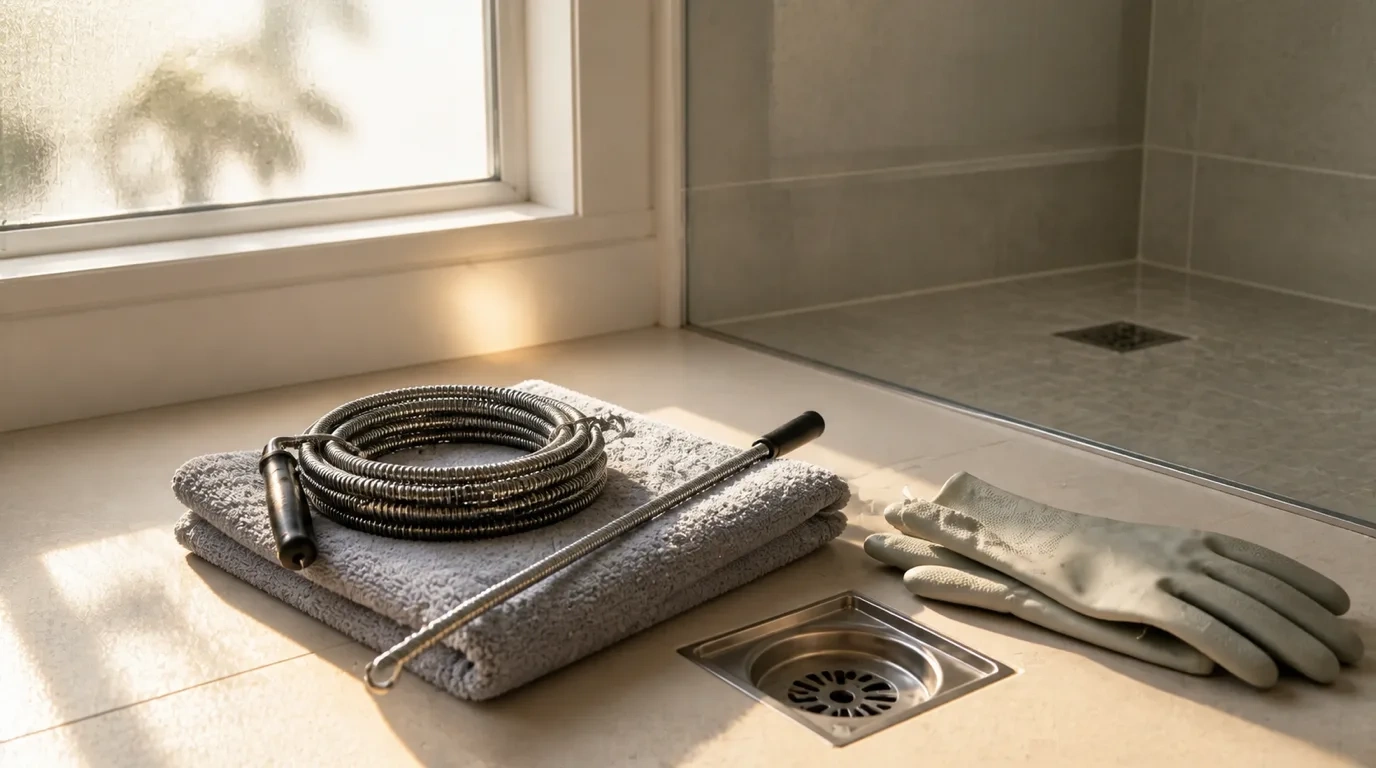
It is useless on a toilet, so it is a second purchase rather than a replacement. The plastic handle is short by design, so you work close to whatever you are unblocking, and it has the lowest rating in this guide. For a hair clog sitting well down a shower waste, a plunger of any size is the wrong tool; that is a job for a drain snake or auger.
Which toilet plunger should you buy?
Match the situation to the pick rather than chasing the highest rating. These tools are shaped for different problems.
What should you look for in a toilet plunger?
Head shape first, handle second, storage third. Everything else is detail.
Head shape. There are three designs worth your money. A flange plunger is the classic bell with a rubber sleeve folded out of the base that seats in the outlet; it is cheap, common and fine. A beehive or tiered plunger is a stepped cone that narrows towards the tip, so it self-centres in the outlet and seals across a wider range of bowl shapes, which is why it is our top pick. An accordion plunger is a hard bellows that shifts a lot of water but is harsh on porcelain and awkward to seat. A plain flat cup, the kind with no flange, is a sink tool and will not seal an Australian pan.
Handle length and material. Longer is better up to about 45 cm, because it keeps your hands out of the bowl and lets you push from your shoulders rather than your wrists. Plastic is normal and fine; aluminium, as on the Neiko, gives you a stiffer push with no bow. Telescoping and adjustable handles trade a little rigidity for storage, which is a fair swap in a small bathroom.
Storage and drips. This is the spec people ignore and then regret. A sealed holder means the plunger gets put away properly, out of sunlight and off the floor. An open caddy drips. No caddy at all means you need a cupboard spot where a wet cone can stand.
Rubber quality. Softer rubber seals better but tears sooner. Look for a single moulded head with no thin flange to split, and if a listing does not say what the head is made of, assume the cheapest option.
One plunger or two. Most households want two: a full-size one for the toilet and a small cup for basins and the laundry, and they should look different so they never get swapped. Our home tool kit guide covers what else belongs in the cupboard.
How do you clean and store a toilet plunger?
Rinse it in the bowl, flush, then let it drain and dry before it goes away. That is most of the job.
After you have cleared a blockage, plunge two or three times in clean water to rinse the cup, then flush and hold the head in the flowing water for a few seconds. If you want to disinfect, a bathroom spray followed by a rinse is plenty. Do not stand the head in neat bleach, because it hardens and cracks the rubber, and that is what kills a plunger.
Dry matters more than clean. A plunger that goes into a bag or a sealed caddy soaking wet will smell within a week. Give it ten minutes clear of any pooled water first. Keep it out of direct sun too, because rubber perishes in UV and a plunger parked on a sunny laundry windowsill goes hard and chalky in a couple of summers.
Replace it when the rubber stops springing back, splits at the fold, or feels stiff. A perished cup cannot hold a seal, and you will blame the blockage when the tool is what failed.
One more thing worth knowing: if water rises in your shower or floor waste when you flush, or more than one fixture is slow at once, stop plunging. That pattern points at the main sewer line, often tree roots in an older Australian property, and no plunger reaches that far.
You'll also want
A plunger is the first tool, not the only one. These are the things that make the job less unpleasant.
The competition: what we looked at and left out
Plenty of plungers came close. Here is why they are not on the list.
The Clorox 620027 Toilet Plunger and Hideaway Caddy is a sensible design and well reviewed, but the caddy is bulkier than the OXO for the same idea. The anzapack rubber plunger with wooden handle is the cheapest thing in the category, but its plain cup is the flat design that struggles with a modern pan.
The LDR 512 double thrust force cup and the CUQOO heavy duty flexible plunger both have followings, but sat on thinner Australian review histories than our picks at similar money. The Thruster horseshoe unblocker targets an unusual trap shape and sits below 4 stars, too much of a gamble for a tool you only use in an emergency.
Bunnings sells the Plunger the Great GP101, which turns up first for this search and is a legitimate heavy-duty option, but it is not on Amazon Australia so we could not price or rate it on the same basis as everything else here. Worth a look if you are already in the store.
Finally, electric plungers and pressure blasters keep appearing here. They can work, but they push hard on pipework you cannot see, and in an older house with clay or early PVC joints that is a risk we would not take as a first move.
Toilet plunger questions Australians actually ask
What kind of plunger works best on an Australian toilet?
A flange or beehive plunger works best on an Australian toilet. Most pans sold here have a rounded outlet sunk into the bottom of the bowl, and a flat cup cannot seal against that shape. A tapered beehive head sits down into the outlet and holds a seal while you push, so the force goes into the pipe instead of escaping around the rim.
How do you unblock a toilet with a plunger without making a mess?
Bail the bowl down to about half full first, then lower the plunger in on an angle so the cup fills with water rather than air. Seat the head, push down slowly to set the seal, then pump firmly six to ten times without lifting the cup clear of the water. Water pushes far better than air, and keeping the head submerged is what stops the splash-back.
Can you use a toilet plunger on a sink or shower drain?
You can, but it will not seal well and you should never move the same rubber between a toilet and a kitchen or laundry sink. Basin and shower wastes are much smaller than a toilet outlet, so a full-size cup sits on the flat surround and leaks air. A small 10 cm cup covers the opening properly and gives you a second, clearly separate tool.
When should you stop plunging and call a plumber?
Stop and call a plumber when more than one fixture is backing up, when water rises in the shower or floor waste as you flush, or when the bowl stays blocked after two or three honest attempts. Those signs point at the main sewer line rather than the pan, and a plunger cannot reach that far. Tree roots in older Australian sewer lines are a common cause.
Is a plunger or a drain snake better for a blocked toilet?
A plunger is the right first tool for a blocked toilet and a drain snake is the right second one. Plungers move a soft blockage of paper or waste using water pressure, which is what most toilet blockages are. A snake or toilet auger is what you reach for when something solid is lodged in the trap, or when the clog is hair and soap further down a basin or shower drain.
How often should you replace a toilet plunger?
Replace a toilet plunger when the rubber goes hard, splits at the fold, or stops springing back into shape, which for most households is every few years. Rubber perishes faster if the plunger dries in direct sun or sits in neat bleach. A cracked cup cannot hold a seal, so it will feel like the blockage got worse when the tool is what failed.
More bathroom and home maintenance guides
A plunger is one item on a much longer list. These guides cover the rest of the bathroom and the maintenance kit behind it.
About the author
Anish Puri founded NestPath in 2026 after going through the Australian first-home-buyer process himself. NestPath focuses on Australian first-home buyers because the existing review sites are American, generic, or both. Anish handles editorial selection across the homeowner hub. Reach out: hello@nestpath.com.au